
Youth4Future
What is it?
Youth4Future is a capacity development project jointly implemented by the International Training Centre of the ILO (ITCILO) – ACTRAV and the European Trade Union Confederation (ETUC) and co-funded by the European Union.
The project seeks to strengthen and modernise social dialogue by empowering young trade union leaders and integrating youth perspectives into decision-making processes.
Youth4Future addresses key challenges faced by young workers, such as precarious employment, digital and green transitions, work-life balance, and underrepresentation in social dialogue.
How does it work?
Youth4Future operates through a series of collaborative capacity-development and strategic training activities aimed at enhancing youth inclusion in trade union structures.
The Youth4Future project combines digital resources, knowledge development and national level engagement to promote more youth inclusive social dialogue.
This project utilises and generates a range of tools, strategies, and good practices that help to inform broader policy and organisational change.
Key components include:
- Development of digital tools (e.g. e-Manuals and e-Toolkits) focussing on youth inclusion
- Design and implementation of online and in-person learning experiences
- Support for national strategies and pilot initiatives to improve youth employment conditions
Key information
Empowering Young Trade Union Leaders
Structured support to help young trade union unionists and leaders engage meaningfully in social dialogue and policy discussions.
Tools for Inclusion
Creation of accessible digital resources to enhance youth representation in trade unions and labour institutions.
National Engagement
Pilot activities and strategy development across partner countries to address youth employment challenges and document good practices.
How to contact us:
For more information about Youth4Future, please get in touch with the ITCILO ACTRAV Programme.
Training activities
Here below you can read a short description of our training activities held during the implementation of the project.
Design Sprint, 8-9 July 2025 (Turin, Italy)
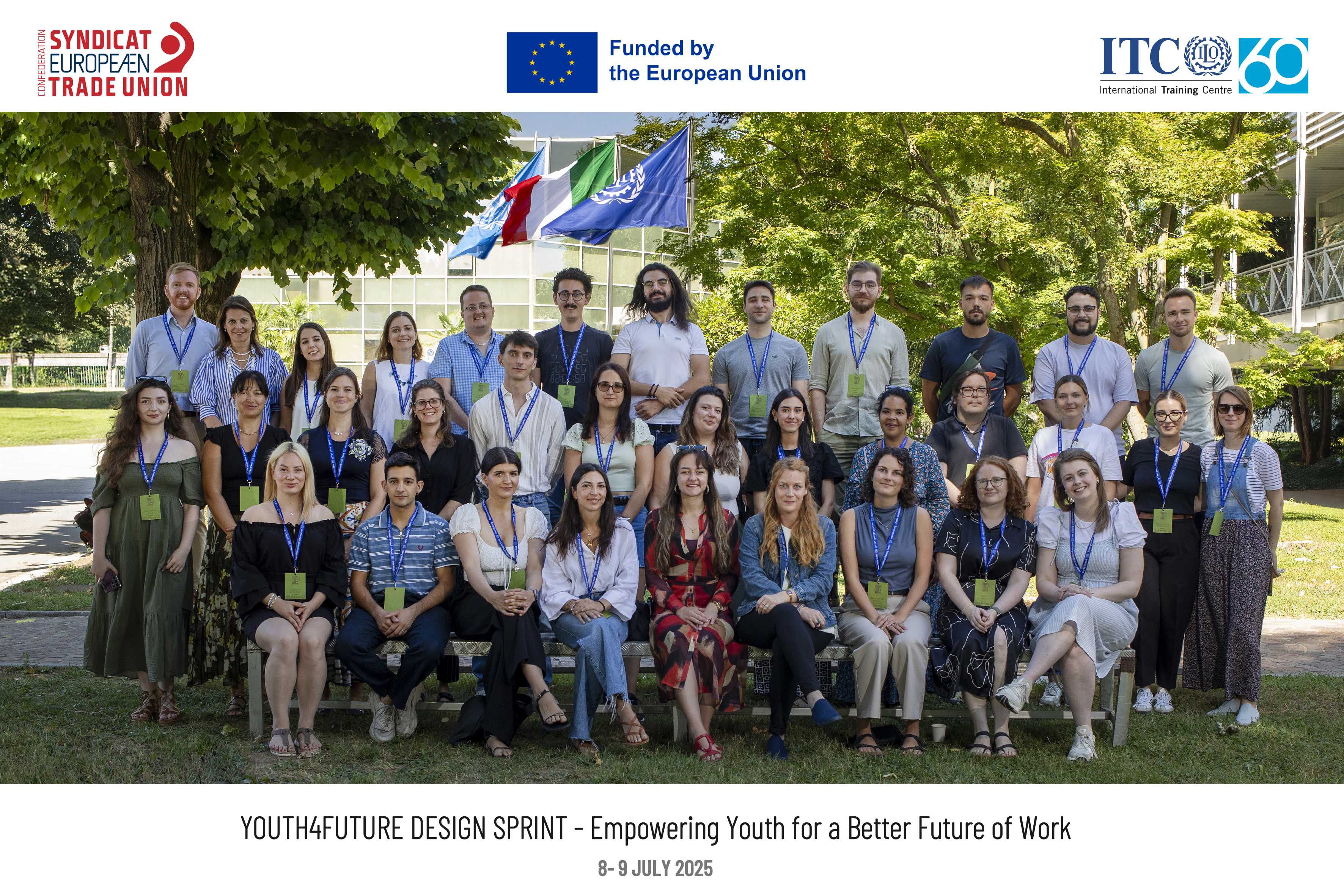
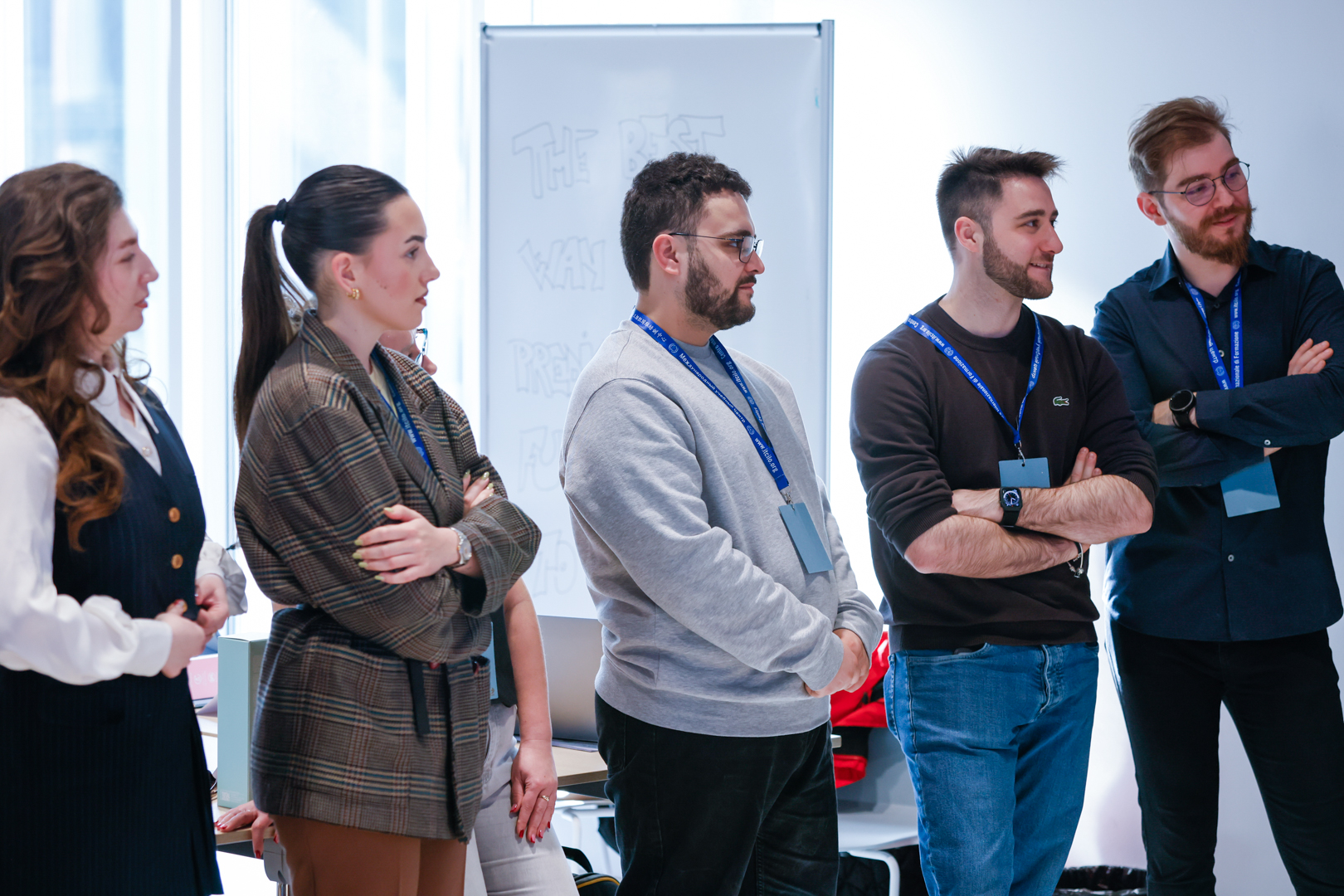
The Youth4Future Design Sprint was structured as a two-day, in-person workshop hosted at the ITCILO in Turin on 8–9th July 2025. It brought together 25 young trade unionists from the ETUC Youth Committee and affiliated organisations. Facilitated by ITCILO and supported by the ETUC, the Sprint aimed to collaboratively design learning objectives that would shape the future Youth4Future training pathway. The Design Sprint’s outputs included:
- A peer-driven network of young trade union leaders committed to developing youth inclusion in social dialogue processes.
- A collaboratively developed set of learning objectives grounded in the real needs and expectations of youth structures within trade unions.
By prioritising participation, ownership, and collaboration, the Sprint ensured the relevance of future training activities but also significantly enhance participant motivation and engagement in the project’s subsequent phases.
Modernization of Labour Market and Youth Employment, 27-28 October (Vienna, Austria)
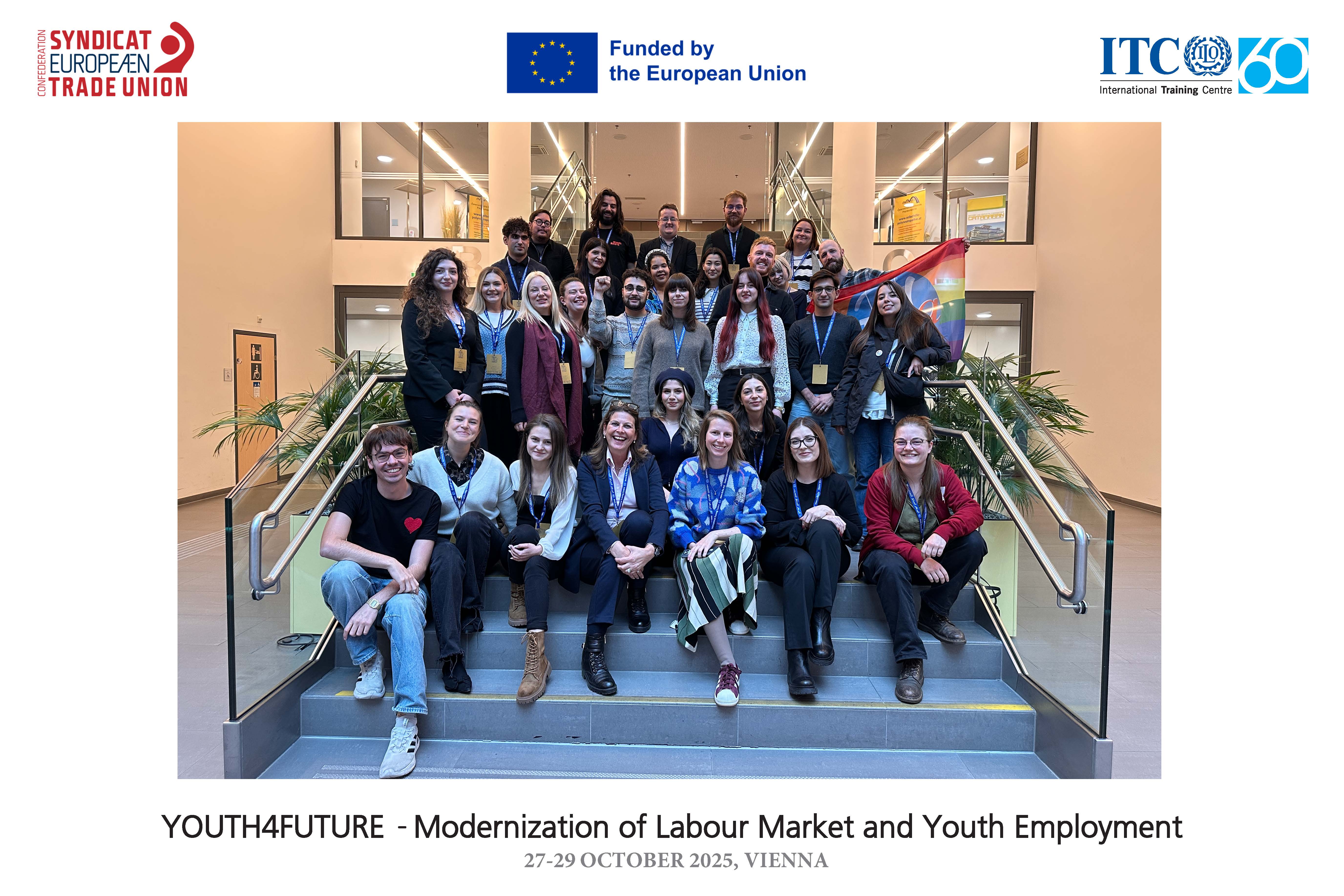
The training activity on Modernization of Labour Market and Youth Employment held in Vienna, formed the second face-to-face milestone in the Youth4Future (Y4F) pathway, following the Design Sprint held in Turin in July 2025 and the completion of four online MOOCs via the ITCILO eCampus. This phase focused on key themes relevant to labour market modernisation and youth employment, connecting European-level strategies and policy with national youth realities of the participants.
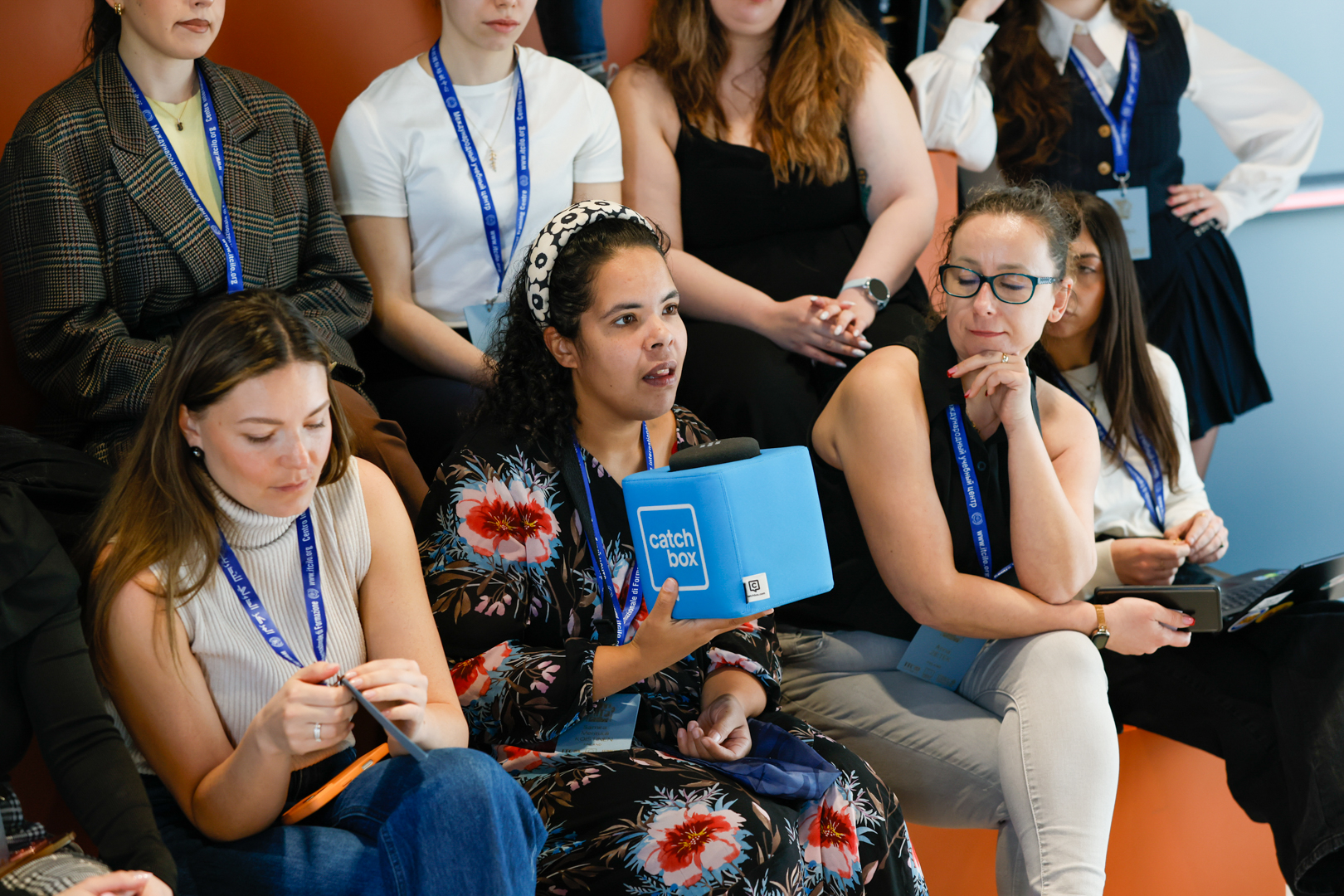
The training brought together 25 young trade unionists from ETUC-affiliated organisations to deepen their understanding of policy linkages, enhance collective strategy building, and strengthen youth representation within ETUC affiliated trade unions for 2 and half day. The pleanry sessions combined expert presentations, peer learning opportunities, and practical expert workshops, creating a collaborative environment for participants to exchange relevant insights and co-develop action-oriented mini plans for implementation in their own unions. This was then complemented by the online week where participants had to complete a mini action plan submission and join a group webinar.
Green and Digital Transitions & Their Impact on Young Workers' Jobs, 23-25 March (Turin, Italy)
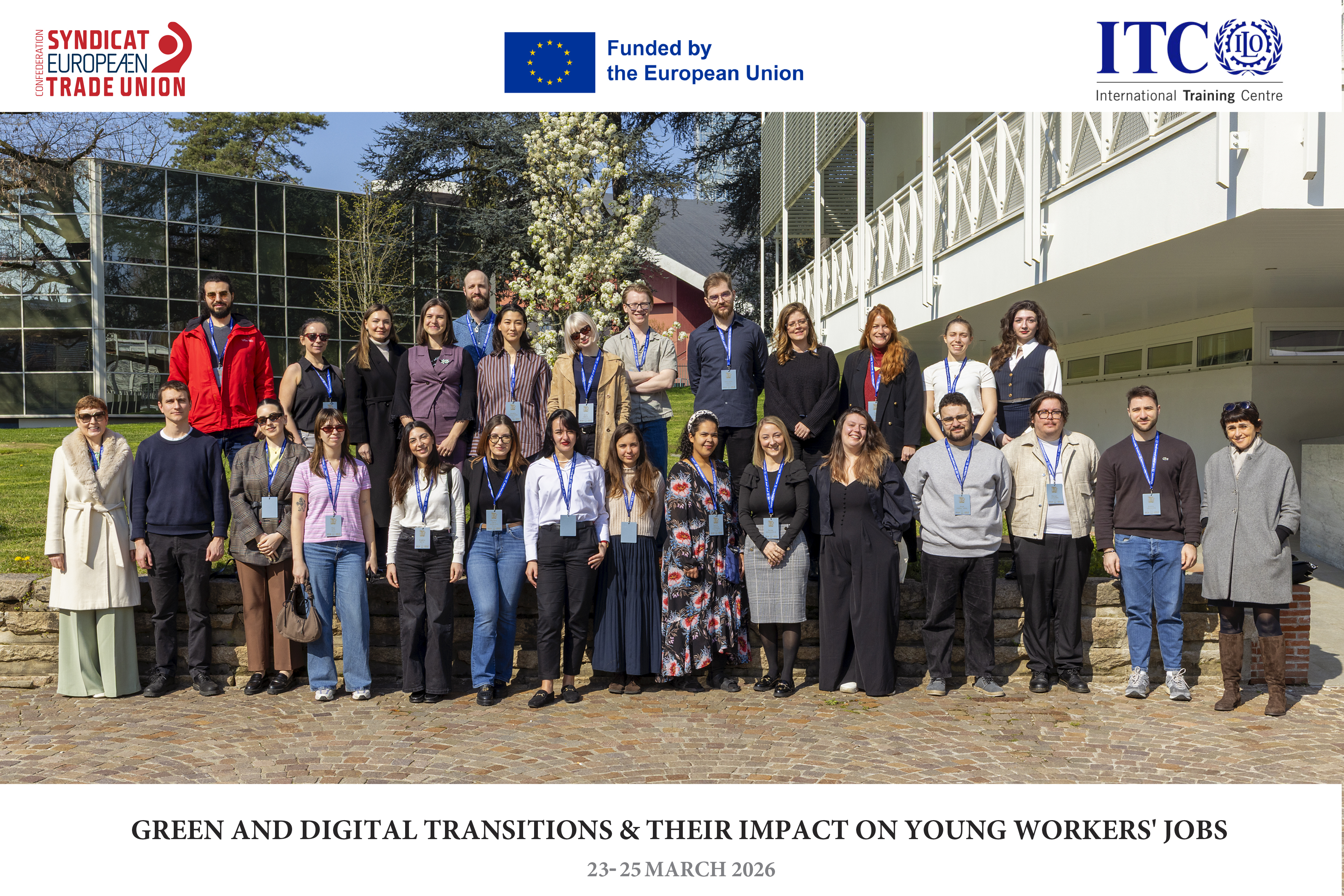
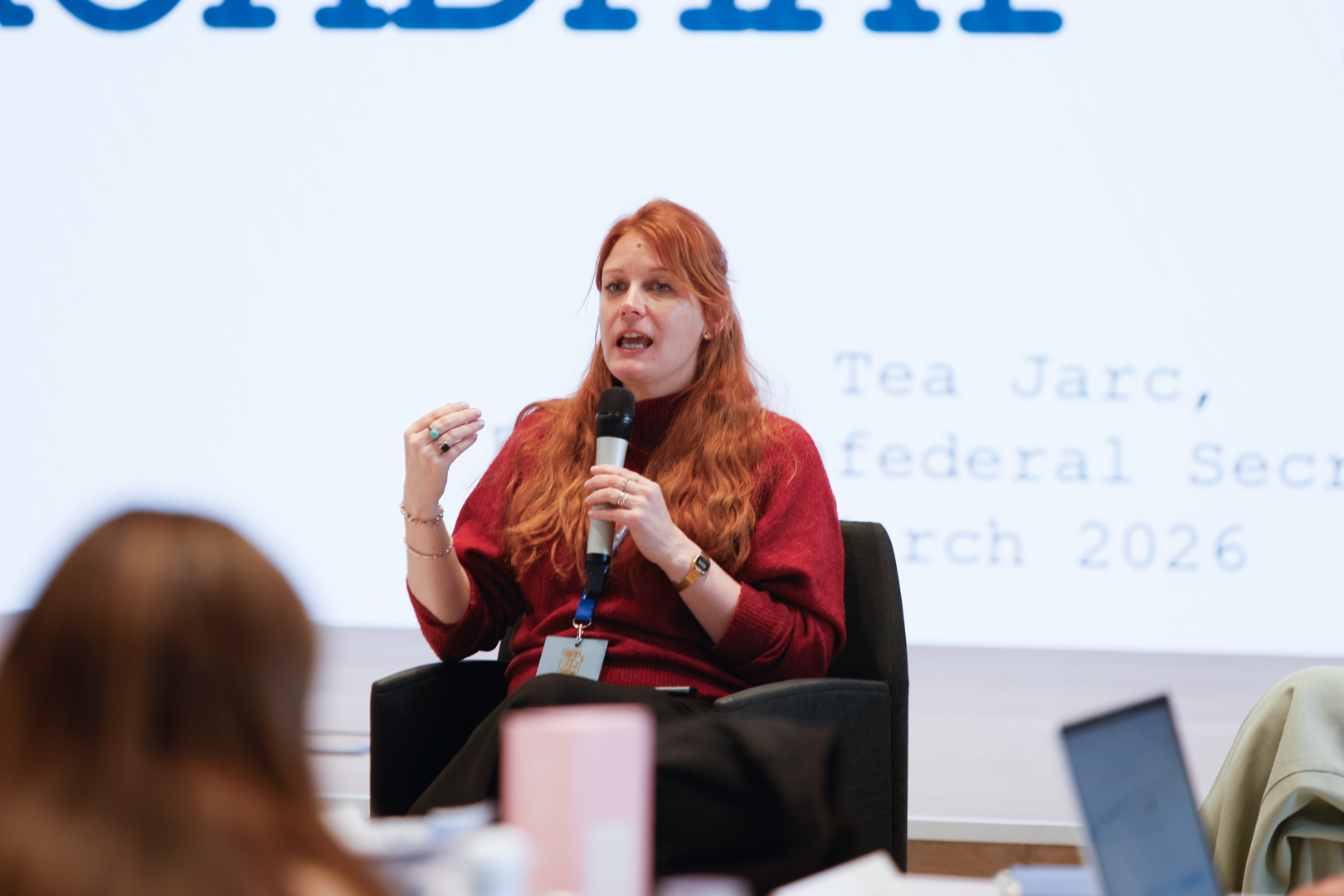
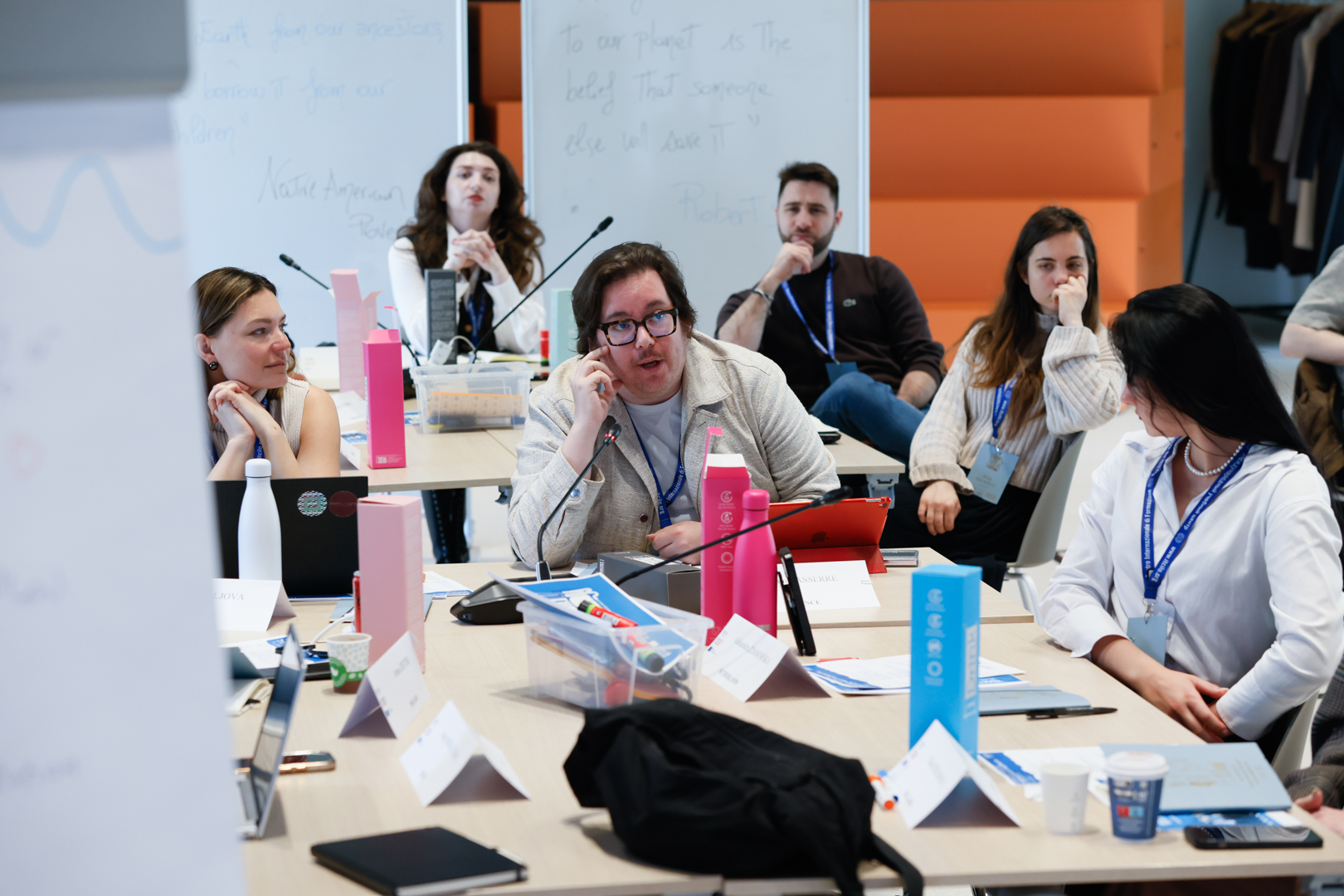
The training activity on Green and Digital Transitions & Their Impact on Young Workers' Jobs held in Turin, formed the third face-to-face milestone in the Youth4Future (Y4F) pathway. This phase focused on key themes relevant to understand how the green transition affects young workers. Together, during the plenary sessions, participants had the time to discuss together on how to:
- Build skills to defend youth interests in the twin transitions
- Tackle skills mismatches and future labour market challenges
- Develop real trade union strategies for quality youth jobs
- Strengthen confidence to take part in social dialogue
The training brought together 22 young trade unionists from ETUC-affiliated organisations to focused on the role of trade unions in shaping fair and inclusive green and digital transitions. Particular attention was given to quality jobs, trade union renewal, the challenges and opportunities of AI and algorithmic management, digital organising, and foresight. This was then complemented by the online week where participants had to additional resources to deepen their knowledge and join a group webinar with key experts on communication and trade union relations.
Youth-inclusive Social Dialogue and Collective Bargaining , 27-29 May (Helsinki, Finland)
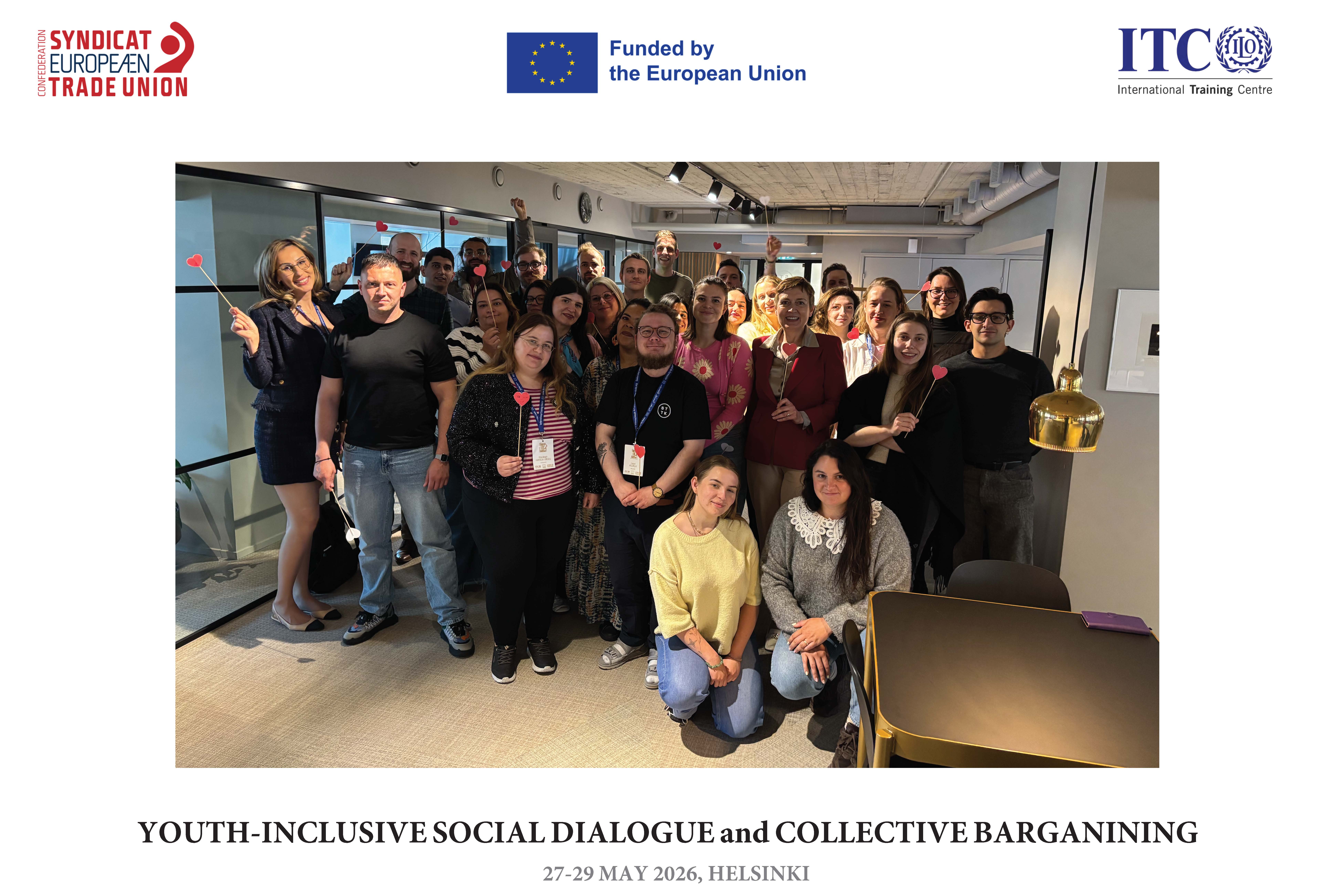
The training activity on Youth-inclusive social dialogue and collective bargaining held in Finalnd, formed the fourth face-to-face milestone in the Youth4Future (Y4F) pathway. The aim of the training is to equip young trade unionists with knowledge and practical skills on social dialogue and collective bargaining, to see possibilities for interventions on youth topics in bargaining, and to develop practical tools to build the capacity of the participants and their Youth Structures in this field.
The training brought together 30 young trade unionists from ETUC-affiliated organisations to focused on the role of trade unions. This was then complemented by the online week where participants had access to additional resources to deepen their knowledge and join a group webinar.
Resources
Have a look at the resources developed during the project.
Masterclass on Quality Work for Youth
The masterclass produced by ITCILO ACTRAV in collaboration with the ETUC explores what “quality work” truly means for young people today. Through 8 video lessons, we dive into real issues facing young workers - precarity, digitalisation, transitions, collective bargaining, and more - through powerful stories and expert insights. Told through a mix of voices of young trade unionists and subject experts, this Masterclass is about more than facts - it’s about impact. Whether you're a young activist, a seasoned organiser, or new to the labour movement, this series is designed to inform, inspire, and mobilise you.
The videos are in English with subtitles available in 5 languages (English, Spanish, French, Italian, Romanian).
The Masterclass on Quality Work for Youth is hosted on ITCILO's e-learning platform eCampus, which users can access for free. It can be accessed via the following weblink: https://ecampus.itcilo.org/course/view.php?id=5554

Pocket-sized EToolkit on Quality Jobs for Youth in changing labour markets
The Pocket-sized E-toolkit has been developed in parallel to the implementation of the training activities. It will provide a set of ‘tools’ on what young workers’ representatives need to know in order to successfully reach out and protect the rights of young people. It involves thematic briefs, checklists, tips for negotiations and it is available in 5 languages: English , French, Spanish, Italian, and Romanian.