Coming Full Circle: From ITCILO Alumni to Leaders in Ethiopia’s Legal Sector
Coming Full Circle: From ITCILO Alumni to Leaders in Ethiopia’s Legal Sector
Fourteen years after studying in Turin, two ITCILO alumni return as partners in life and in a leading Ethiopian law firm.
12 February 2026
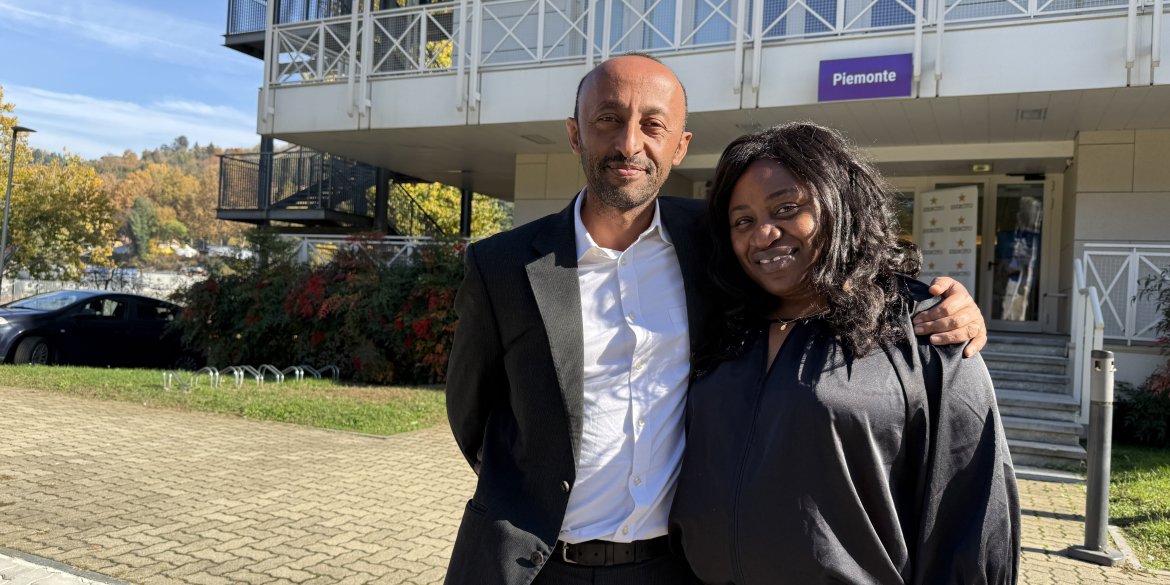
When Marina and Tamrat walked through the ITCILO campus, they did so with the ease of people who once lived, studied and planned their future here. Fourteen years ago, they arrived from Addis Ababa, Ethiopia to pursue the LLM in International Trade Law, Contracts and Dispute Resolution at the Turin School of Development. They shared a simple ambition: build something that could last.
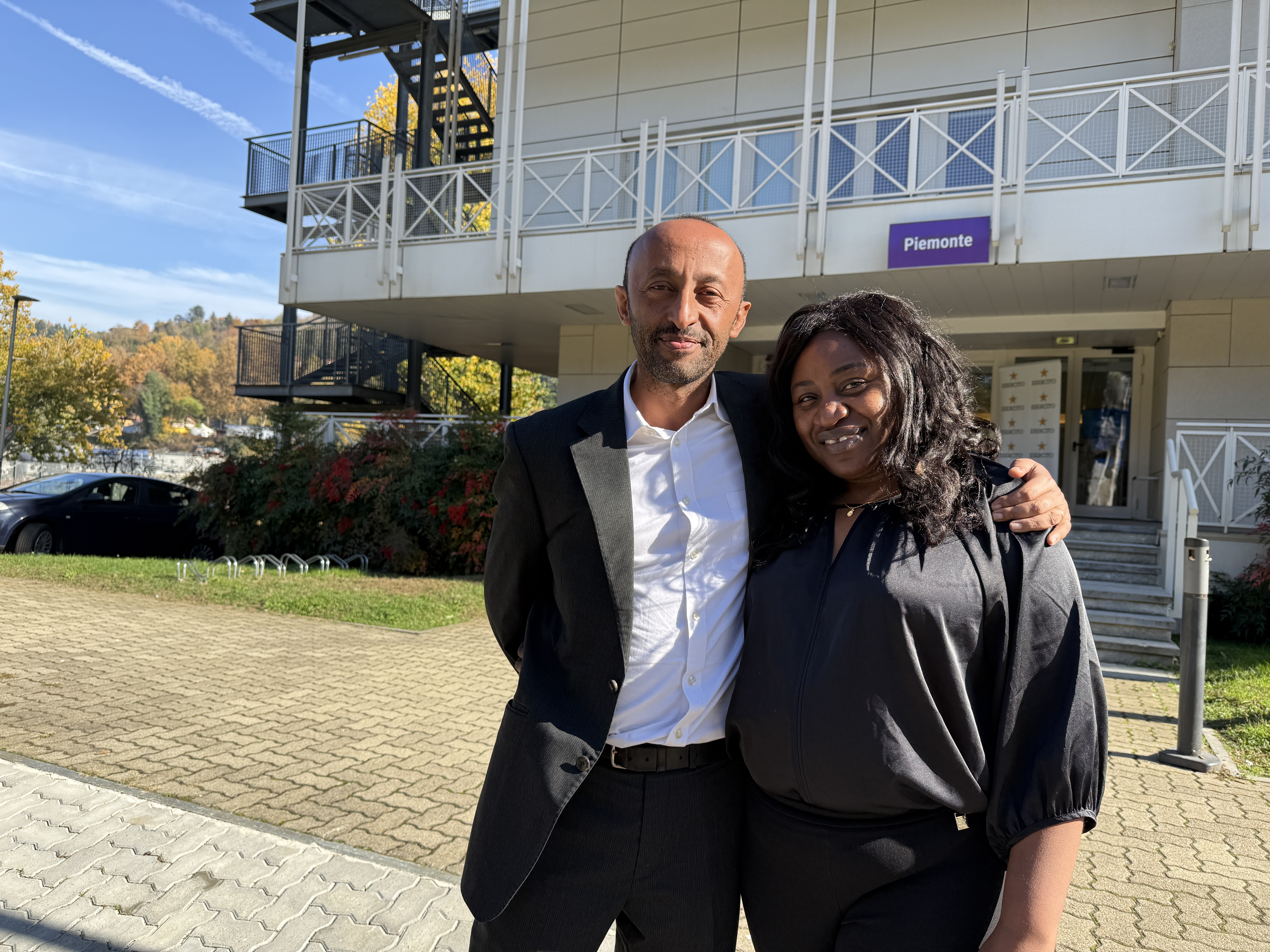
On 5th November 2025, they returned not as students, but as partners in one of Ethiopia’s leading law firms, working alongside Dentons, the world’s largest law firm. They arrived in Turin with their two daughters, aged eleven and nine, to revisit the place where their professional journey took a decisive turn.
At the time, Marina and Tamrat were already practising together in Addis Ababa, advising on commercial law and international transactions. When the Master’s programme appeared on their radar, the timing was tight and the opportunity almost passed them by.
A story that began far from Turin
Marina is originally from Kenya and studied law at the University of Nairobi. She began her career in litigation but moved to Ethiopia at twenty-nine, looking for professional exposure she could not find at home. “I told myself I would go for one year and return,” she said. “That one year became twenty.”
Tamrat, born and raised in Addis Ababa, studied law at Addis Ababa University, then the country’s only law school. As he started working on commercial cases involving foreign investors, he became aware of how much more there was to learn. “With these kinds of files,” Tamrat recounted, “you recognize the gaps.That is when a Master’s becomes necessary.”
They met while working in one of the few practices advising foreign investors in Ethiopia. Marina joined the firm after moving from Kenya, and Tamrat worked there at different stages early in his career. “Our friendship solidified there,” Marina recalled.
A Master’s that widened their world
The opportunity to study at the Turin School of Development came unexpectedly. Tamrat remembered visiting the Italian Cultural Institute in Addis Ababa for an exhibition on Abebe Bikila, Ethiopia’s legendary Olympic marathon runner.
“I saw a notice board with a call for applications and the possibility of a scholarship,” he said. “That day was the deadline. We applied, and shortly after, we were admitted.”
The LLM introduced them to a way of learning they had not experienced before. “The fact that most of the course was taught by practitioners made it fascinating,” Tamrat explained. “People would come from London for one intense day, then another lecturer from Turin. It was practical, and we could relate everything to our work.”
The programme was structured in two phases, starting with a distance-learning component that strengthens legal writing, research and analysis, followed by in-person modules in Turin led by academics and practitioners working on real cases. “They came with actual files,” Tamrat recounted. “You could immediately see how theory and practice connect.”
For Marina, the balance mattered. “The online part pushed us academically, and the in-person classes brought perspectives and discussions you cannot get from books,” she said.
Living and studying in Italy for six months expanded their professional horizon. “If you only work in your own country, that is all you see,” Marina reflected. “Here, we built a network.” Some of those connections later translated into concrete work. A former classmate who joined Accenture reached out for legal support in Ethiopia. “That is exactly what we had hoped for.”
Life on campus left lasting memories. They lived at the ITCILO, studied intensively and travelled in Europe for the first time.
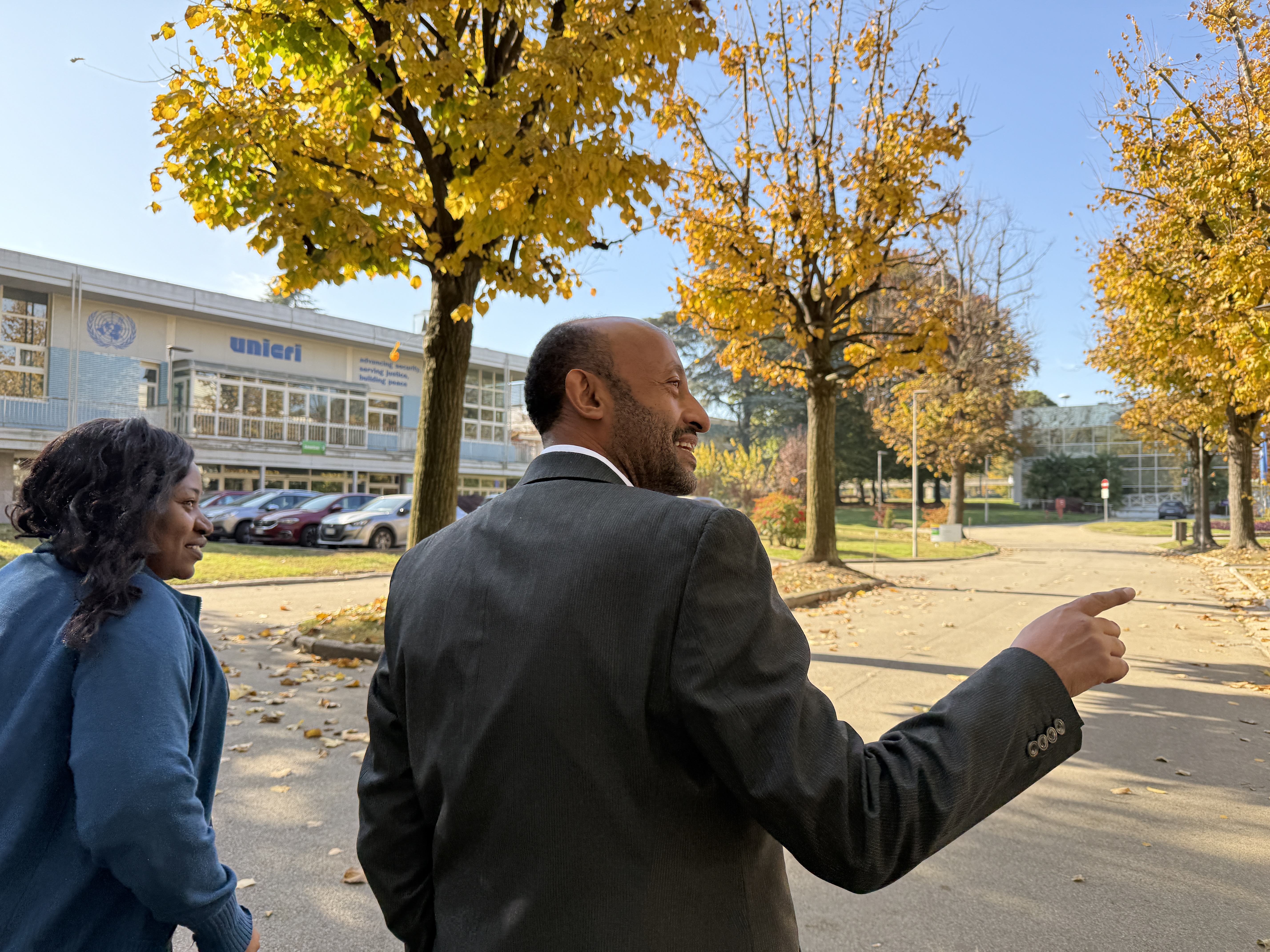
Walking through the campus on 5th November 2025, Marina smiled. “I like consistency,” she said. “You build a relationship with places.”
From alumni to founders
Back in Addis Ababa, equipped with new skills and an international outlook, the idea of starting their own firm no longer felt out of reach.
Tamrat recalled a comment from a classmate in Turin. “He told me, go home and give your old boss a competition. At the time, I was not confident. But within two or three years, we became one of the top firms working with foreign investors.”
From handling trademark cases at home to opening an office across the street from Marina’s former employer, the firm steadily grew. They formed partnerships with major UK and South African firms, advised on international finance transactions, and developed long-term clients in trade, investment and corporate law.
“Those handling large transactions need local expertise,” Tamrat said. “We became that expertise.”
Both were clear that their story is as much about patience as it is about ambition.
“Starting small is not a weakness,” Marina stated. “Young lawyers are often quick to open their own practice, but you need time to learn and to earn clients’ confidence. Without a network, you do not get the work. And without work, you cannot succeed.”
For Tamrat, the key is usefulness. “Those who are useful are those who are paid,” he said. “Build skills. Build contacts. Think about how you can help others. If you do that, success follows.”
Returning as a family
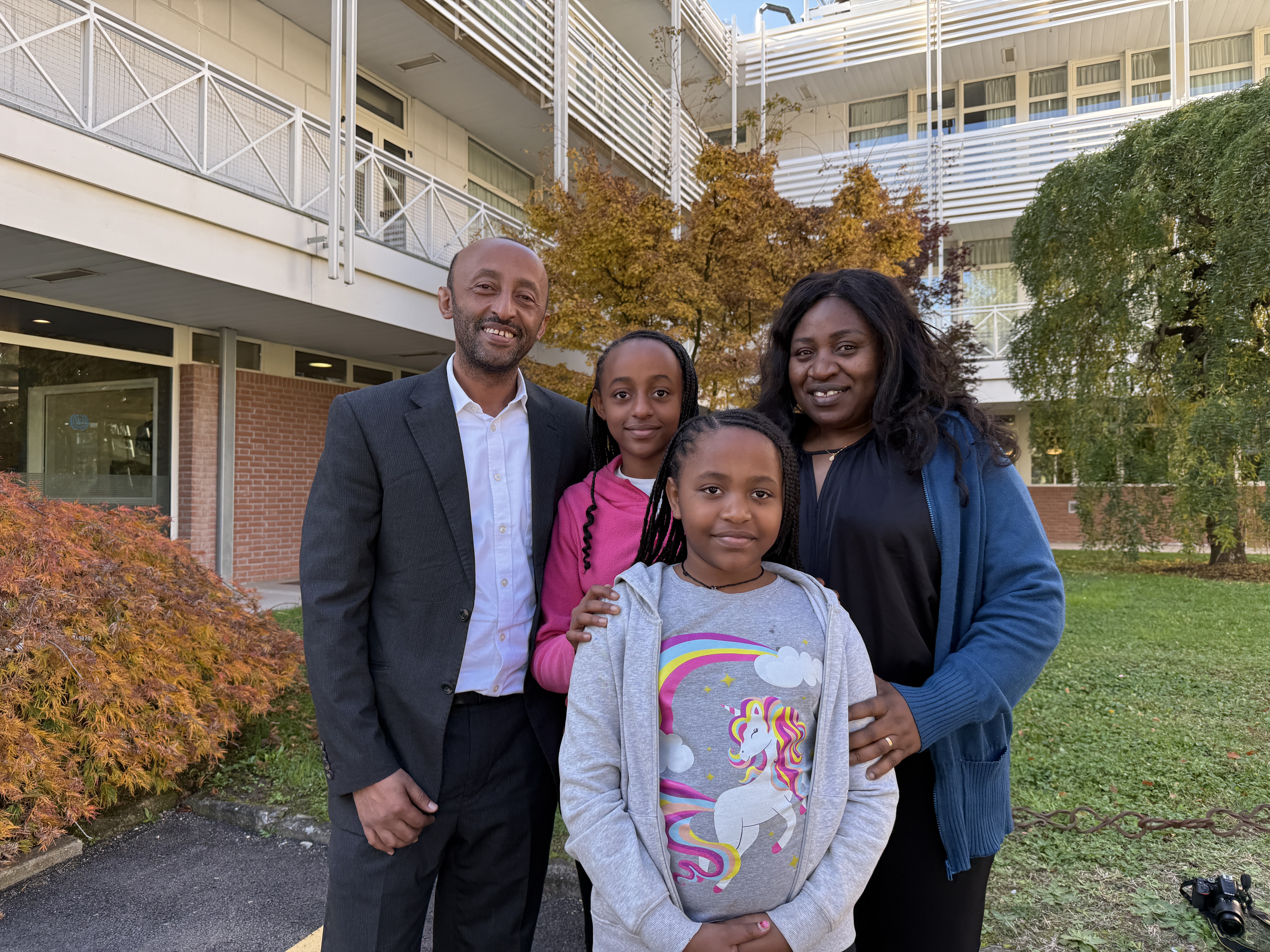
This return to Turin was different. Marina and Tamrat walked the ITCILO campus with their daughters, who were discovering Europe for the first time. “We wanted them to imagine a wider world,” Tamrat said. “Coming as tourists would not have been possible, but a work trip made it happen.”
Standing outside their former classrooms, Marina gestured toward the door where it all began. “The chances of returning to a school are usually very small,” she maintained. “So coming back here means a lot. The drive was his,” she added, pointing at Tamrat, “but I supported it.”
More than a decade later, the partnership that started in Addis Ababa and was shaped in Turin continues to grow. Their visit closed a circle, bringing them back to the place where they first learned to navigate the global legal landscape they now operate in together.
They still remembered their first visit to Rome, when they came across a plaque honouring Abebe Bikila. “It felt like a sign,” Tamrat said. “You look up and see something familiar from home. You think: This was meant to be.”
For Marina, pursuing the Master’s was only possible thanks to financial support. “We actively looked for programmes with scholarships,” she said. “Accommodation and living costs being covered made all the difference. It allowed us to focus fully on learning and on experiencing Europe for the first time.”
Fourteen years later, they returned not only as ITCILO alumni, but as proof of what that experience made possible.
Could Turin be the turning point in your professional journey? Discover our Master’s programmes and take the next step today.
Questions? Write to us at turinschool@itcilo.org.


