Social Health Protection

Photo © Unsplash/National Cancer Institute
Social Health Protection
ADDRESSING INEQUITIES IN ACCESS TO HEALTH CARE
5 April–7 May 2027
Key features
LATEST TRENDS
Learn from international social health protection experts.
PARTICIPATION
Advanced learning experience to further strengthen your competencies.
CERTIFICATION
Move closer to obtaining the Diploma for Social Protection Managers.
Introduction to the course
The right to social health protection is not yet a universal reality. Despite laudable progress during the COVID-19 pandemic, coverage has stalled since 2020, highlighting important implementation gaps. This online foundation course focuses on addressing inequities in access to health care within the context of national social health protection systems, including floors. This hybrid course focuses on addressing inequities in access to health care within the context of national social health protection systems, including floors. It offers a comprehensive exploration of social health protection and its role in achieving universal health coverage (UHC) and universal social protection (USP) within the framework of the 2030 Agenda. Participants will assess global and national trends in coverage, gain insights into the ILO's guiding principles, and review real-world examples from countries around the world. We will focus on technical strategies and practical implementation options for coverage extension, exploring sustainable financing mechanisms that promote equity and resource distribution, with a particular emphasis on pre-payment, risk pooling, and minimizing out-of-pocket expenses. Special attention will be given to strategies for reaching vulnerable and hard-to-reach populations, along with discussions on the scope of benefit packages and levels of financial protection. Please note that the course is offered in English and French. You will be able to access all learning resources and follow live tuition sessions in your preferred language.
Who attends this course?
Executives, managers, planners, financial officers, and other professionals responsible for working in social health protection schemes (whether contributory or non-contributory), in both governmental and non-governmental sectors. Representatives of employers' and workers' organizations who sit on the board of social health insurance institutions are also welcome. Social health protection practitioners and policymakers directly involved in the oversight of social health protection systems. Individuals working in research roles on social health protection and health financing can also benefit from participating in this training activity.
Blended track
Participants who choose the blended learning modality will first complete three weeks of online learning. This will be followed by one week of face-to-face learning at the ITCILO campus in Turin, Italy. Please note that this option requires you to travel to Italy during the fourth week of the course. The programme will then conclude with a final online week.
Opting for the blended modality offers additional benefits: enhanced access to ILO experts in social health protection, and the chance to take part in dynamic group activities, discussions, and exercises. You will also have the opportunity to exchange knowledge and experiences with fellow participants from different countries.
Fully online track
Participants opting for this modality will be able to follow the course entirely online through the ITCILO’s eCampus over five weeks, for an estimated total of 60 learning hours. You will be required to complete a series of self-paced modules on core topics in social health protection as well as attend two live tutor-led sessions per week (during weeks 1,2,3 and 5 of the course). In week 4 of the course, daily tuition sessions will be streamed live from Turin (from 9:00 to 12:30 UTC+2, Italy time).
What will I learn?
- Learn more about social determinants of health.
- Understand the scope and the significance of the financing gap for social protection (SDG 1.3) and health (SDG 3.8).
- Explore the essential dimension of human resources in health and the implications for social health protection.
- Frame national social health protection strategies and programmes in international normative frameworks.
- Understand the rationale for health and wellbeing of sickness and maternity benefits while looking at the implications of various financing mechanisms on the coverage and adequacy of the benefits.
- Explore, analyse, and compare different models for revenue collection with practical examples and case studies.
- Assess different approaches and technical options for extending coverage – especially to informal workers and migrants and refugees – and broadening risk pooling.
- Benefit packages: understand the formulation process – selecting a range of health interventions and cost coverage.
- Learn about different approaches to purchasing health services in the context of social health protection schemes.
- Understand the importance of robust governance, management, and administration of social health protection programmes to leverage the resources and structures offered by broader social protection and health systems.
- Identify the latest trends and the important role of emerging technologies in social health protection.
- In-depth, participatory workshops on coverage extension, monitoring health insurance and actuarial modelling for health will be offered as part of the blended modality of this course.
Why should I join?
- Learn from international social health protection experts grounding theory and practice in international standards as well as practical country experiences.
- Join a global network of social protection and health professionals to share learning and best practices.
- Engage in a highly interactive digital learning environment hosted on the ITCILO’s eCampus, offering a wealth of online resources, self-paced modules, and case studies, as well as weekly live sessions led by highly experienced trainers, and individual and group exercises to foster collaboration and knowledge sharing.
- Join a week of dynamic residential training to further enhance your learning, if you opt for the blended modality of the course.
- Successful participants receive an ITCILO Certificate of Achievement.
- This course is an eligible course for the Diploma for Social Protection Managers. To achieve the Diploma, successful candidates must complete four courses within a five-year period and undertake a Capstone project.
What participants say

This course has enriched my technical advisory role as Ethiopia works to expand coverage to the poor and people in the informal economy. I would recommend this programme to anyone who is interested because of its relevance, the guaranteed expertise in terms of delivery, and finally its practicality.
Mr. Kingsley Addai Frimpong
Country Health Economist, WHO Ethiopia
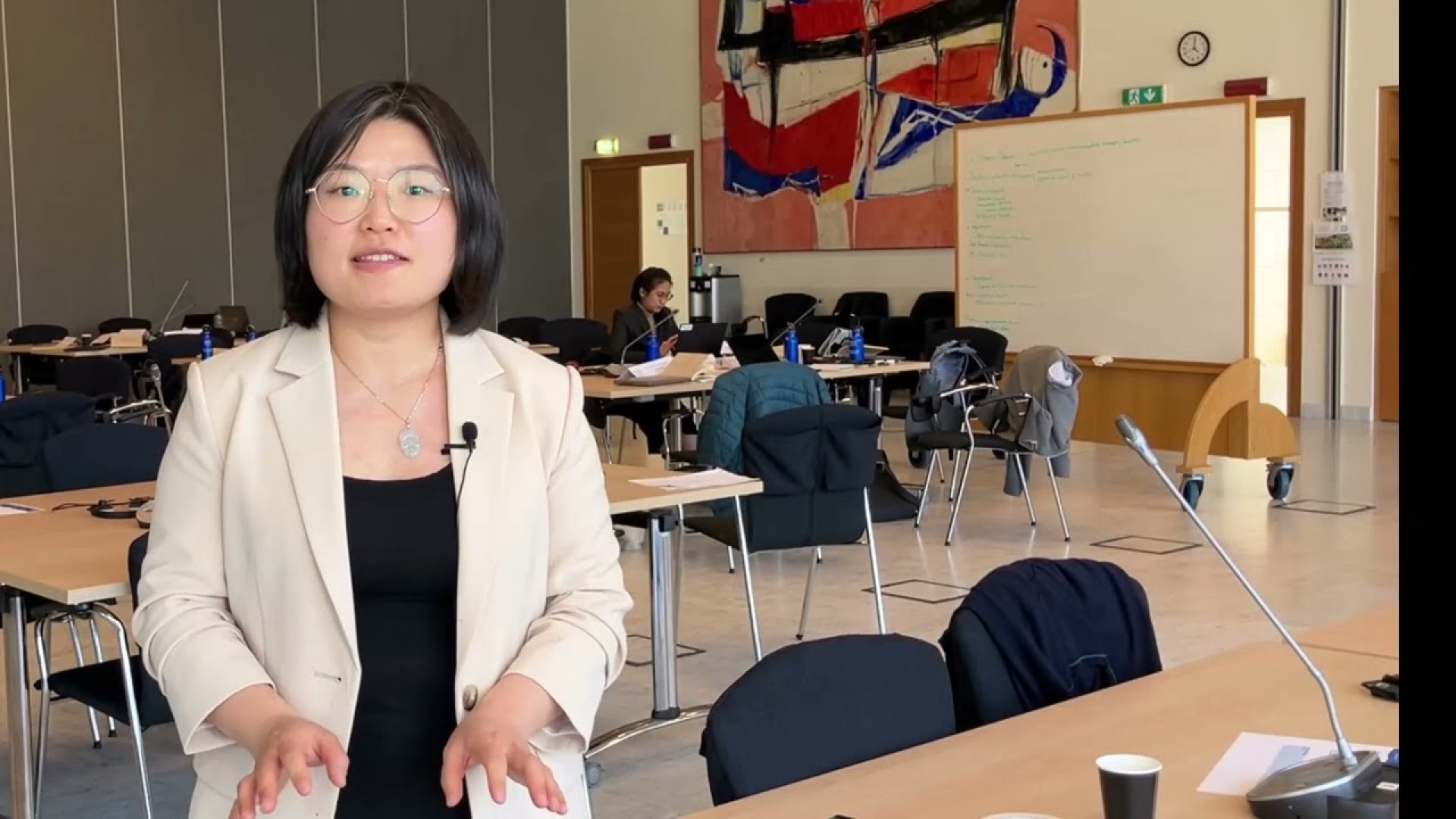
I enjoyed the training course very much. It covers all aspects of social health protection. Financing and benefit packages were my favourite because I work in these areas, and it will contribute to my future work.
Ms Gui Cao
Associate Professor, Research Office of Healthcare and Long-term Care Insurance Chinese Academy of Labour and Social Security
What experts say
Join the course
Submit your application or contact us for further information through the links available on this page.
Prove your skills with a Diploma
This course is part of a Diploma programme. To achieve the Diploma, successful candidates must complete four courses within a five-year period and undertake a capstone assessment.