From Ideas to Implementation: Inside the #HackTheDivide Incubation Journey
From Ideas to Implementation: Inside the #HackTheDivide Incubation Journey
4 young innovators redesign their vision for Africa’s digital future.
28 janvier 2026
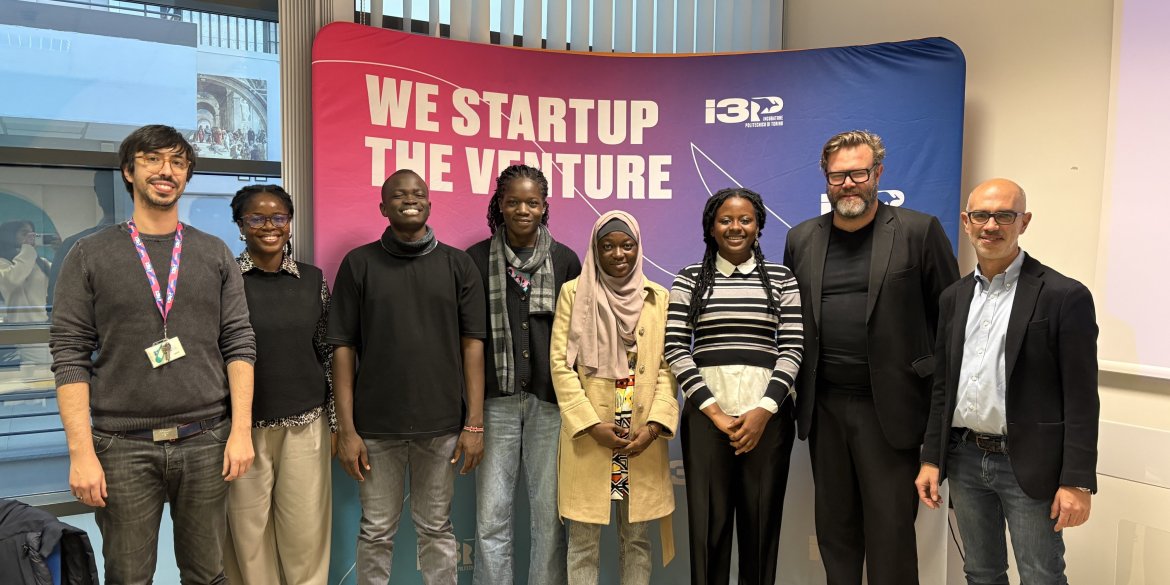
L-R: Ludovico Del Carretto (Business Consultant, I3P), Arekpitan Ikhenaode (Learning Innovation Programme, ITCILO), the four members of Team Linka (winners of #HackTheDivide), Tom Wambeke (Learning Innovation Chief at ITCILO), and Giuseppe Scellato (Chairman at I3P).
The journey towards a fair digital transition is not sporadic. It unfolds through inclusive dialogue, cross-sector collaboration, and sustained investment in people and skills, ensuring that technological change works for everyone, not just a few.
ITCILO, with the support of the Ministry of Foreign Affairs and International Cooperation of Italy, organized the incubation week for the winners of #HackTheDivide, held in Turin from 8–12 December 2025, which marked a significant moment in this journey. Co-organised with I3P - the Incubator of the Polytechnic of Turin, as part of the “Skills for Fair Digital Transitions in Africa” event, the programme represented a milestone for the winning team, transforming early-stage ideas into stronger, more grounded solutions ready to engage with real-world markets, institutions, and funding landscapes.
#HackTheDivide winning team comprised of Aichatou Soumana (Niger), Brian Gillo (Kenya), Mary Achieng (Kenya), and Priscilla Fianu (Ghana). Their solution, Linka, provides AI-powered skills matching for rural and informal workers—tackling the widespread invisibility of experience-based skills, persistent skills mismatch, limited upskilling opportunities, and limited access to decent work.
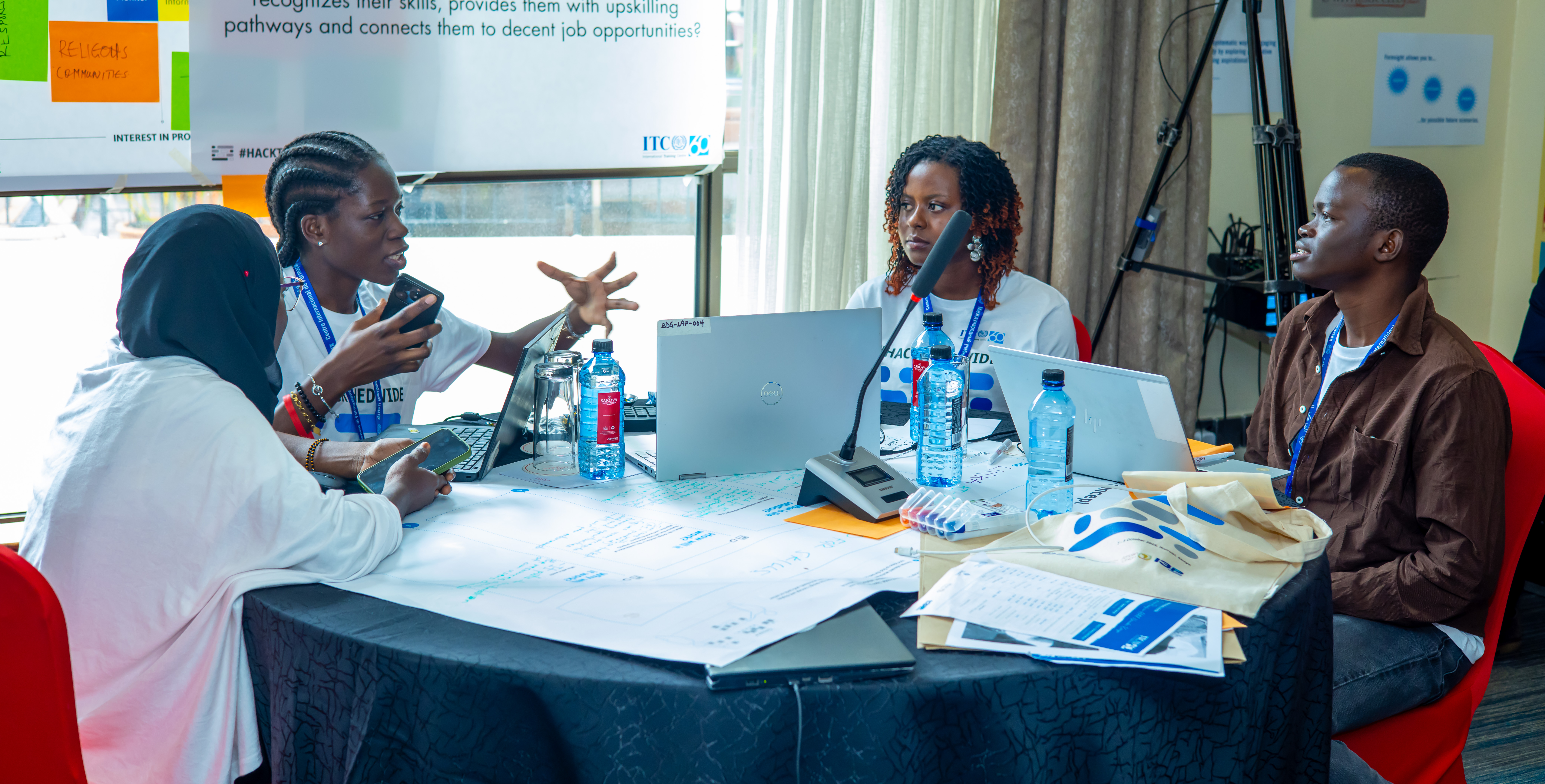
Team Linka at the #HackTheDivide Hackathon (7-8 October, 2025) in Nairobi, Kenya.
24 young African digital innovators from countries targeted by Italy’s Mattei Plan and Italian Development Cooperation to co-create solutions for digital inclusion, employment, and social impact—the incubation week marked the next step: refining ideas and strengthening solutions.
This progression reflects the broader vision articulated during the Skills for Fair Digital Transitions in Africa event, where policymakers, practitioners and innovators came together to explore how digital inclusion can become a driver of decent work, entrepreneurship, and equitable growth. At the heart of the Nairobi–Turin exchange lay a central question: how can digital transitions be intentionally shaped to leave no one behind? The incubation week in Turin was a practical attempt to answer this question.
Offering more than typical hackathon incubation experiences, the five-day incubation programme became a living laboratory where innovation was anchored in people-centred digital transformation.
Setting the Foundation
The week began at the ITCILO Innovation Lab with keynote sessions introducing Team Linka to ITCILO’s approach to innovation. These sessions set the tone for the week, grounding the programme in the Centre’s commitment to inclusive, collaborative, human-centred digital transformation.
What surprised me is how deeply technology can carry dignity when building with the right mindset.
Aichatou Soumana
Led by I3P’s Ludovico Del Carretto, the afternoon shifted to hands-on work, focusing on problem definition and solution fine-tuning. Through user persona development and value proposition design, the team clarified who their solution serves and how it delivers value.
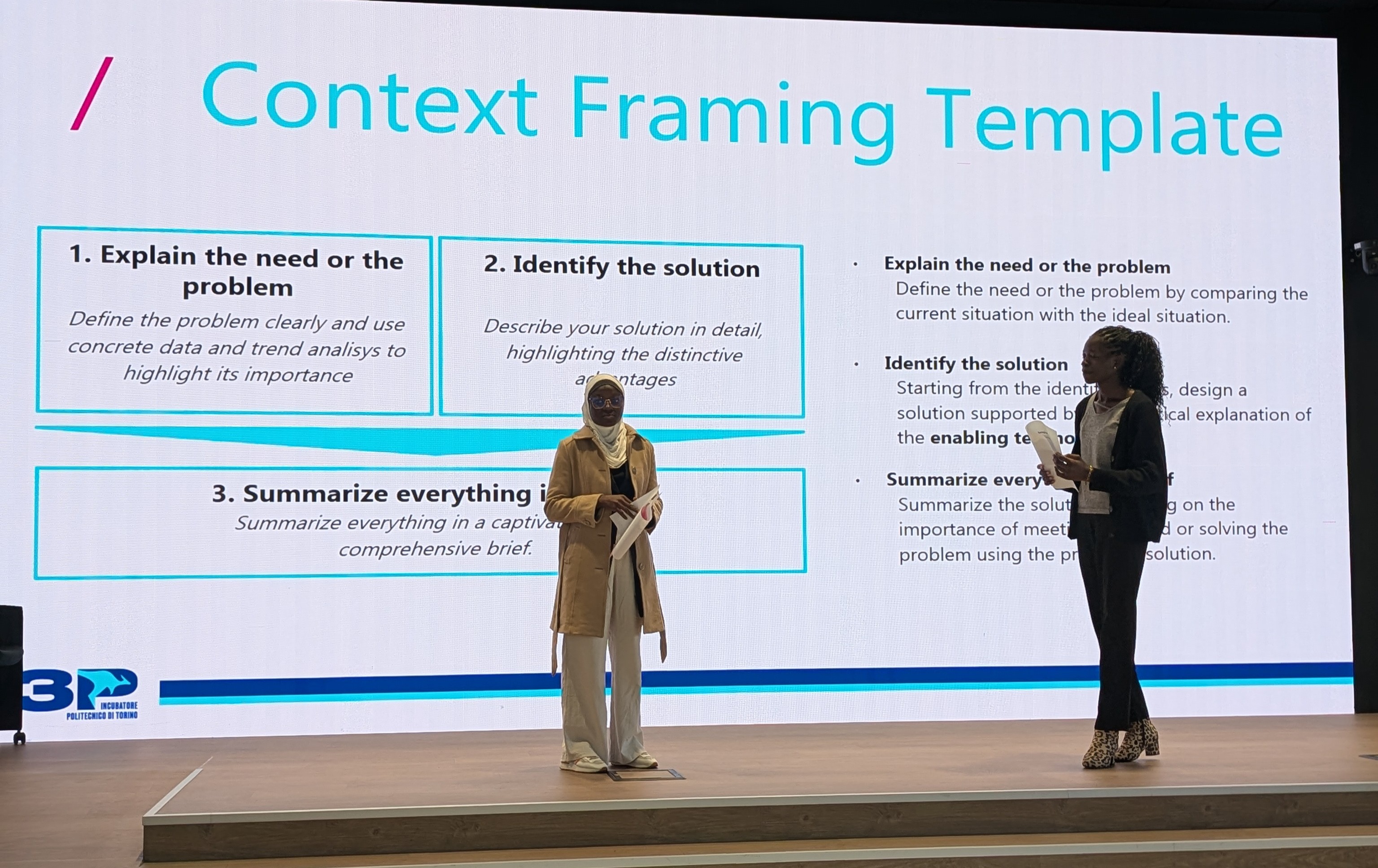
Team Linka clarify their solution through a series of iterative exercises from I3P.
The experience has been mindblowing. I didn’t know that the problem really mattered. I focused more on the solution. Now, I know that the problem is the core of anything you are trying to solve.
Brian Gillo
Participants also took part in a virtual reality demonstration, offering a glimpse into emerging digital tools and their potential for social impact, while showcasing ITCILO’s experimentation with immersive technologies.
Four days at I3P: From Concept to Viability
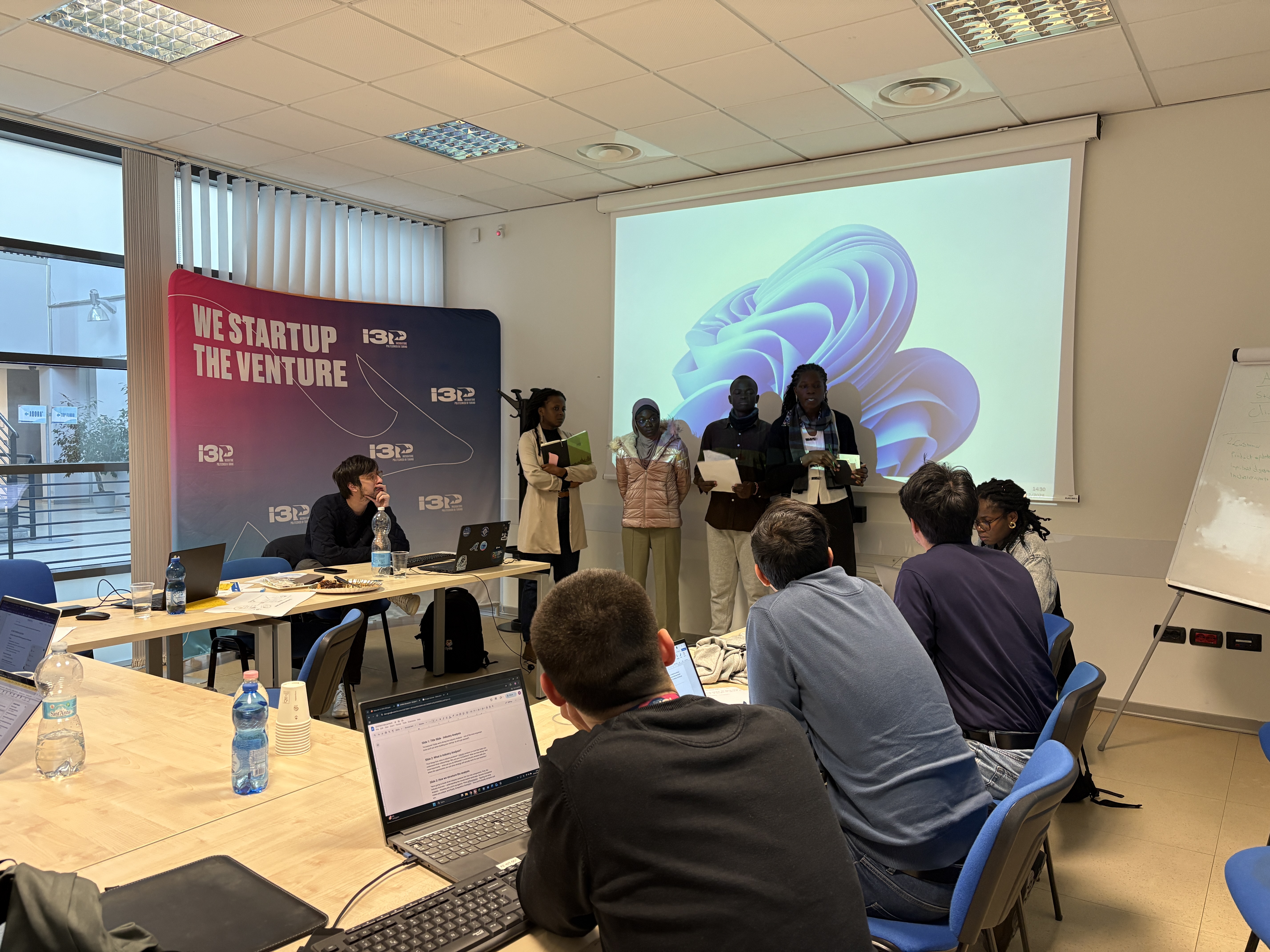
Team Linka pitch their solution to members of I3P.
For the remainder of the week, the team worked at I3P, refining their ideas through macro- and micro-market analysis, competitive positioning, and strategic planning. They developed business model canvases and strengthened the financial, operational, and marketing foundations needed to turn their concepts into a sustainable venture.
I was surprised by how little I knew about starting a business.
Priscilla Fianu
Beyond the classroom, the incubation experience included visits to Cottino Social Impact Campus and Links Foundation, as well as networking with startups within I3P. These exchanges connected participants directly to Turin’s innovation ecosystem, grounding theory in practice and exposing them to the realities, trade-offs, and collaborations that underpin successful ventures.
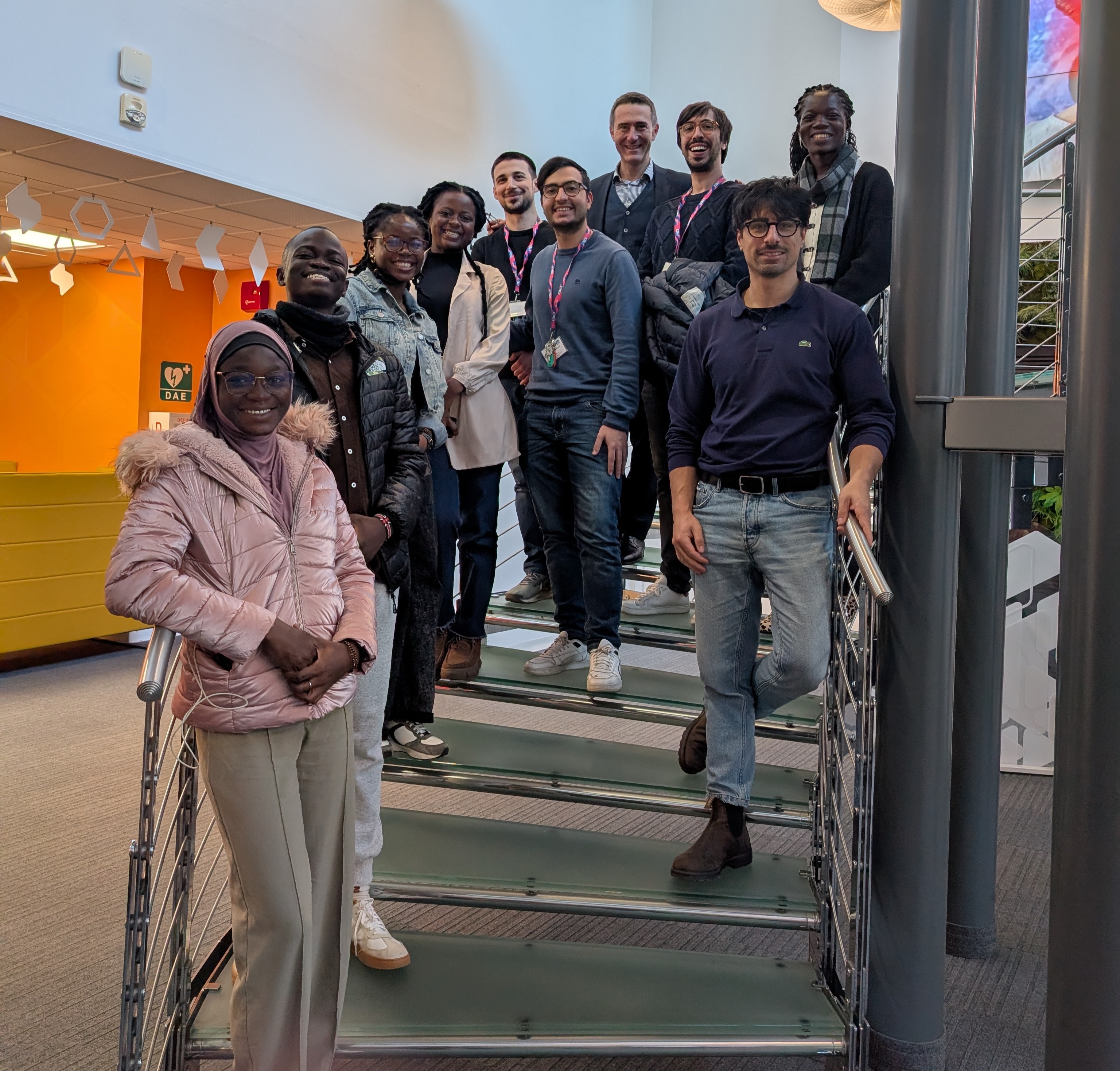
A visit to the Cottino Social Impact Campus.
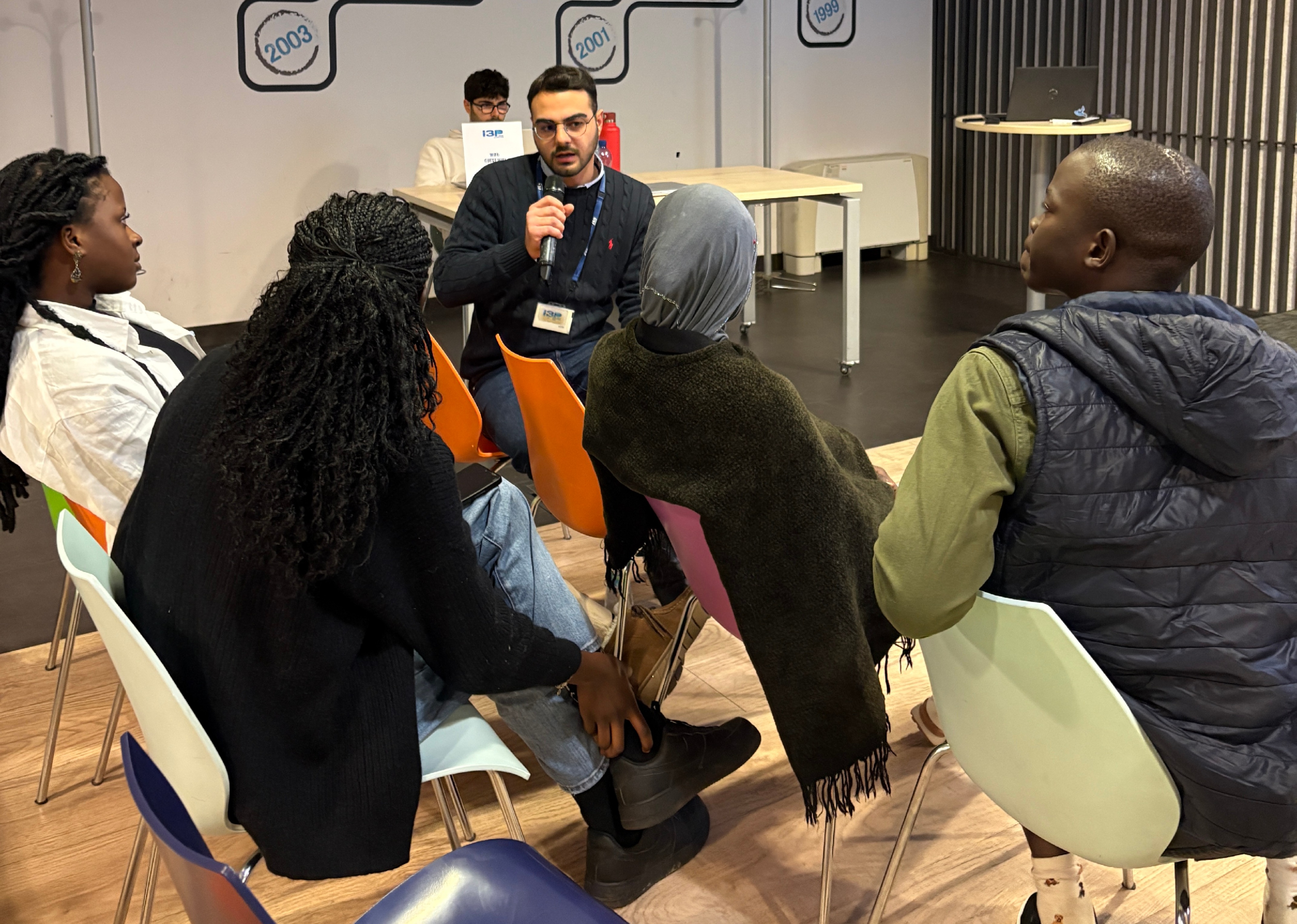
Team Linka interact with other startup founders at I3P.
The team also engaged with members of the Investors Club, gaining insights into investor expectations, funding dynamics, and what it takes to move from prototype to scale. Rather than focusing solely on funding, discussions centred on readiness: clarity of vision, robustness of models, and the ability to communicate impact convincingly.
Being here at I3P, we’ve had the privilege of interacting with a lot of startup founders, and I was surprised that most of them have been willing to sit with us and walk us through most of the technical things and help us understand the things we’re working on. We’ve gained a lot of perspectives and have had to pivot because of the insights we have obtained.
Mary Achieng
Pitching sessions and an internal “stress test” challenged participants to present under simulated high-pressure conditions. Entrepreneurs-in-Residence Guido Meak and Adriano Marconetto provided targeted feedback, helping Team Linka refine their narrative, sharpen their value proposition, and address gaps in their business and impact logic.
With I3P and ITCILO, I have learned not just to redefine problems but also to analyse markets. I have learned to trust my judgments and to create a solution that really makes a difference.
Aichatou Soumana
Carrying the Work Forward
Over five intense days, the #HackTheDivide winners moved from early-stage concepts to clearer, stronger, and more investable solutions. Through workshops, mentorship, ecosystem visits and peer learning, the incubation week provided not just technical skills, but confidence, clarity, and a deeper understanding of how innovation can serve people from different walks of life.
My creative thinking skills have really been shaped throughout this experience. I’ve really gained a lot: in critical thinking, and in the steps I can take to shape a problem with the people in mind. Right now, I feel like I can think critically about what a problem really is and how I can solve it using creative thinking skills.
Brian Gillo
As the programme concludes, the journey continues, carrying forward a shared ambition to bridge digital divides and contribute to the broader agenda of building fair, inclusive, and skills-driven digital transitions. ITCILO will keep supporting young African innovators to create and promote digital solutions for social justice, seizing opportunities to advance the Decent Work Agenda.


