
Building a culture of innovation in international organizations
Innovation
Building a culture of innovation in international organizations
A collaborative initiative to support innovators, build community-led networks, and generate institutional solutions in times of change
Overview
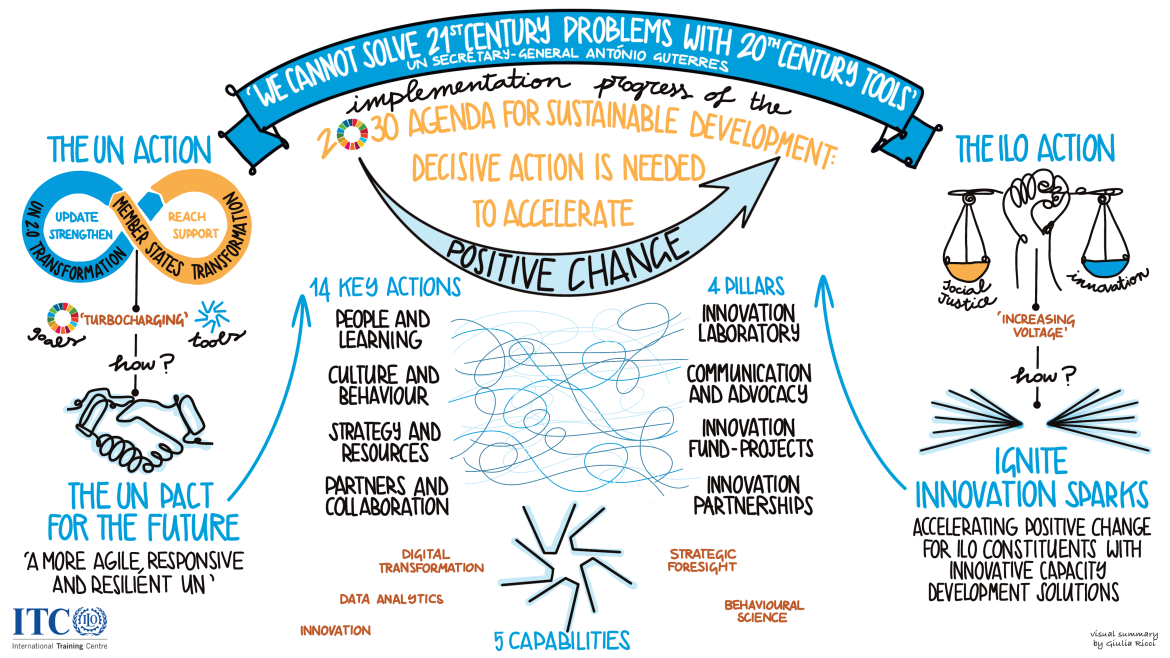
Organizations working in international development face a shared pressure: the problems they exist to solve are moving faster than the systems designed to address them. Geopolitical shifts, technological disruption, and changing constituent needs require institutions to build a genuine capacity for renewal from within. The challenge is rarely a lack of ideas. It is giving those ideas the conditions to grow: the structure, the backing, and the community that turns a hunch into a working tool. The ITCILO has developed an approach to exactly this, drawing on its direct experience co-designing and running the ILO Innovation Scouts Network, the first staff-led innovation programme in the ILO's history.
What we offer
We work with organizations to design and implement internal innovation strategies, building the ecosystems that allow staff-led ideas to evolve from concept to prototype to scale. Our support is tailored to where an organization is starting from. It can span the full arc of an innovation initiative or focus on a specific phase, from early diagnostic work through to programme design, facilitation, funding mechanisms, and evaluation.
What we do
The collaborative process to bring sustainable institutional innovation is structured around five key areas:
- Assess and address institutional innovation
Every organization has staff with ideas worth backing. We design and run the diagnostic process that finds them: mapping innovation needs, launching internal calls for interest, and applying structured tools, including the UN Innovation Diagnostic, to identify staff with both the drive and the readiness to develop their ideas.
ILO Case: With the ILO, this process surfaced over 140 Innovation Scouts from across regions, disciplines, and levels of seniority, defining a cohort of 20 that reflected the organization's full diversity.
- Facilitate events and community-building
Ideas develop faster in good company. We design and facilitate the in-person launch experiences that turn a selected cohort into a working community, combining structured sessions on innovation culture and the UN 2.0 Quintet of Change with open space for networking, peer challenge, and early idea crowdsourcing.
ILO Case: For the ILO, the residential kick-off week at the ITCILO campus in Turin gave the first cohort of Scouts a shared language, a common identity, and a foundation of trust that carried through the months that followed.
- Lead immersive learning and virtual exchanges
The energy of a launch event is easy to lose. We put in place the digital infrastructure and facilitation rhythms that sustain connection between participants across geographies and busy schedules.
ILO Case: Fostering connection and collaboration with the ILO Scouts, combined interactive social learning platforms and immersive virtual reality (VR) meetings to keep the network engaged, reflective, and connected to each other long after they had returned to their respective offices.
- Manage pilot innovation projects
Good ideas need more than encouragement; they need structure. We design and manage internal innovation funds end to end: establishing selection criteria, running the project selection process, providing financial guidance and reporting templates, and tracking progress against milestones.
ILO Case: In the ILO, this meant taking seven Scout proposals through a full funding cycle, from rough concept to working prototype, with the rigour of a managed grant process and the flexibility that early-stage innovation requires.
- Curate impact communication and knowledge-sharing
Innovation that stays internal rarely scales. We design the communications and knowledge-sharing strategies that bring results into the open: multimedia storytelling, event programming, and public speaking coaching that demonstrate what staff-led innovation looks like in practice.
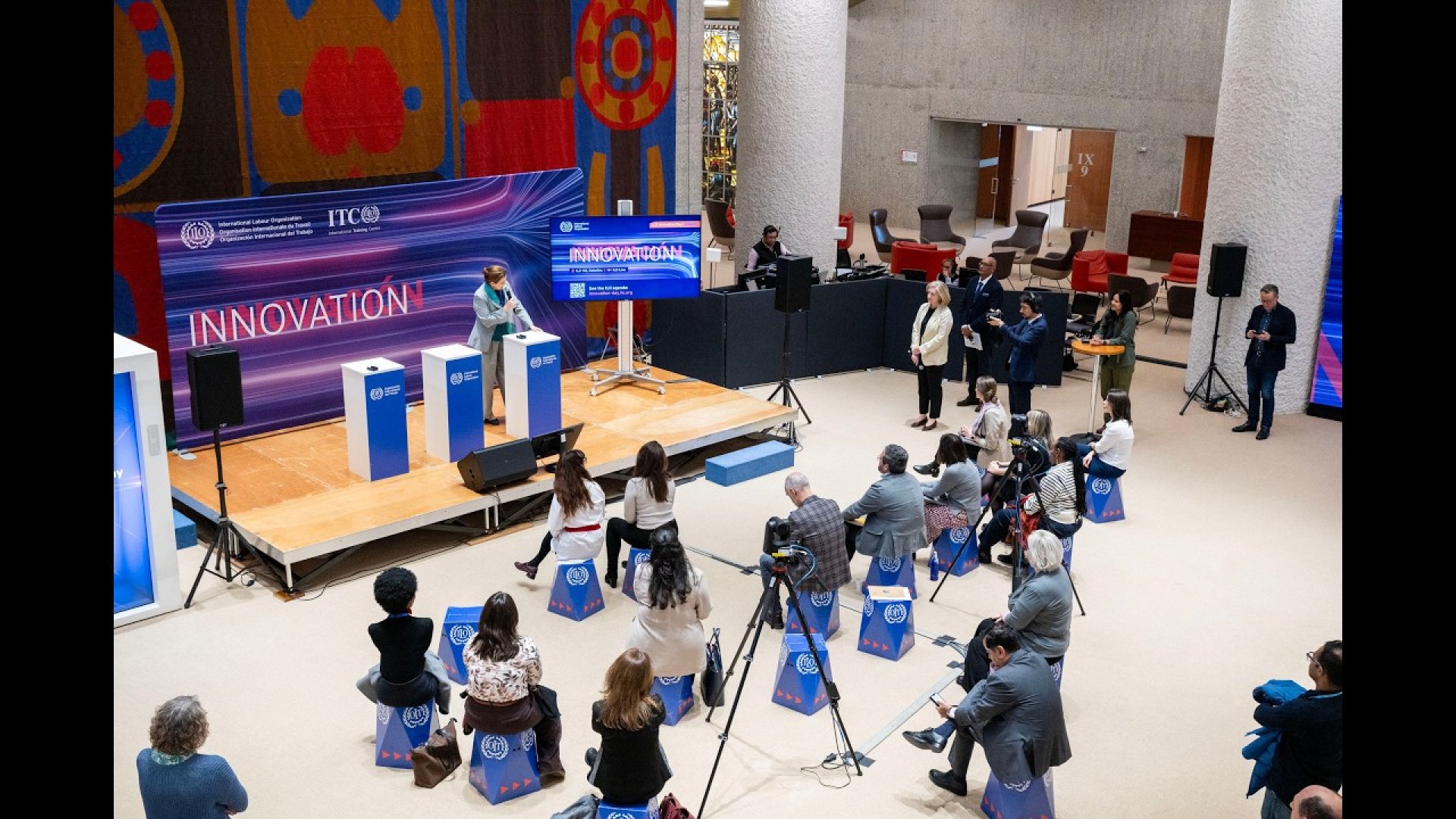
ILO Case: For the ILO, this included the working-out-loud strategy documenting the Scouts' journey, coaching staff to deliver TED-style talks, and supporting the ILO's first-ever Innovation Day, a full-day institutional event that gave the Scouts and dozens of colleagues beyond them a stage.
Looking to drive institutional innovation?