
Inside the ILO's first innovation network
Inside the ILO's first innovation network
Scaling a culture of innovation within the UN’s oldest specialized agency
23 April 2026
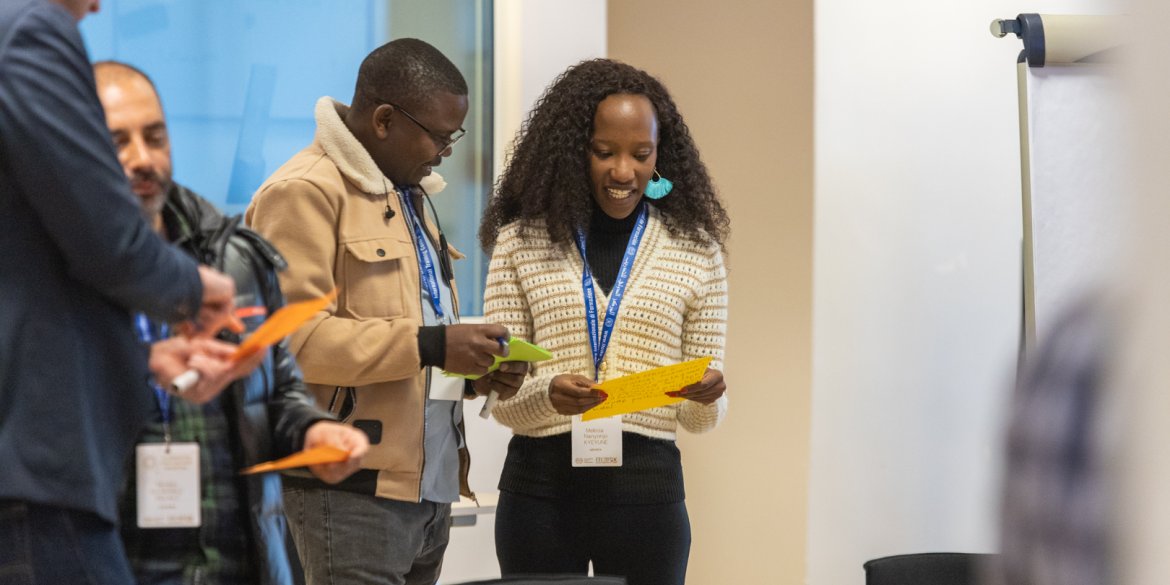
The Alps are barely visible through the winter haze when the first ones arrive on campus. They come from New Delhi, Kampala, Bogotá, Geneva; all from different offices, different roles, and different technical backgrounds. What they share is harder to name: a particular energy, a sense that the organization they work for is ready to move differently, and a desire to be part of how. By the end of the week, they have a name, Innovation Scouts, and something more useful than a label: a network.
The spark behind the network
The ILO's mandate has not changed in more than a century. Decent work. Social justice. What has changed is the speed of everything around it: geopolitical shocks, evolving labour markets, and technology reshaping entire sectors faster than policy can follow. The organization's response was to invest in the people already inside it. To ask its own people, the project coordinators, technical officers, and field staff who face reality, what they would experiment with if they had the space to do so.
That investment took shape as Innovation Sparks, the ILO's hub for creative thinking, powered by the ITCILO and aligned with the ILO's Strategy on Knowledge and Innovation. Over twenty staff from across the organization were chosen to form the first cohort of the ILO Innovation Scouts Network and brought to Turin in January 2025 to exchange early ideas and pressure-test them in real time together with the UN Innovation Network. They left with rough proposals and a direction. More importantly, they left with a common identity: changemakers in a UN agency that’s over 100-years-old.
This week, I felt a spark during the Innovation Scouts kick-off event. During the event, we learned practical tools and tips to craft and communicate our ideas more effectively.
Cristina Maldonado
ILO Technical Officer, FUNDAMENTALS
From “what if” scenarios to “aha” moments
In the following months, they gathered again, this time from wherever in the world they happened to be, stepping into a fully immersive space through virtual reality (VR) headsets and digital avatars. Each Scout presented their evolving project, while others stopped, asked questions, and made connections to refine those concepts.
“There’s real potential to connect our work in Colombia with what’s happening in Kenya,” noted Carlos Salgado, National Project Officer, reflecting on emerging synergies with Stephen Mwangi, National Project Coordinator. What the VR sessions made visible was that people working on similar problems in different corners of the world are, in practice, potential collaborators. The network was leveraging its collective intelligence to bring these projects into reality.
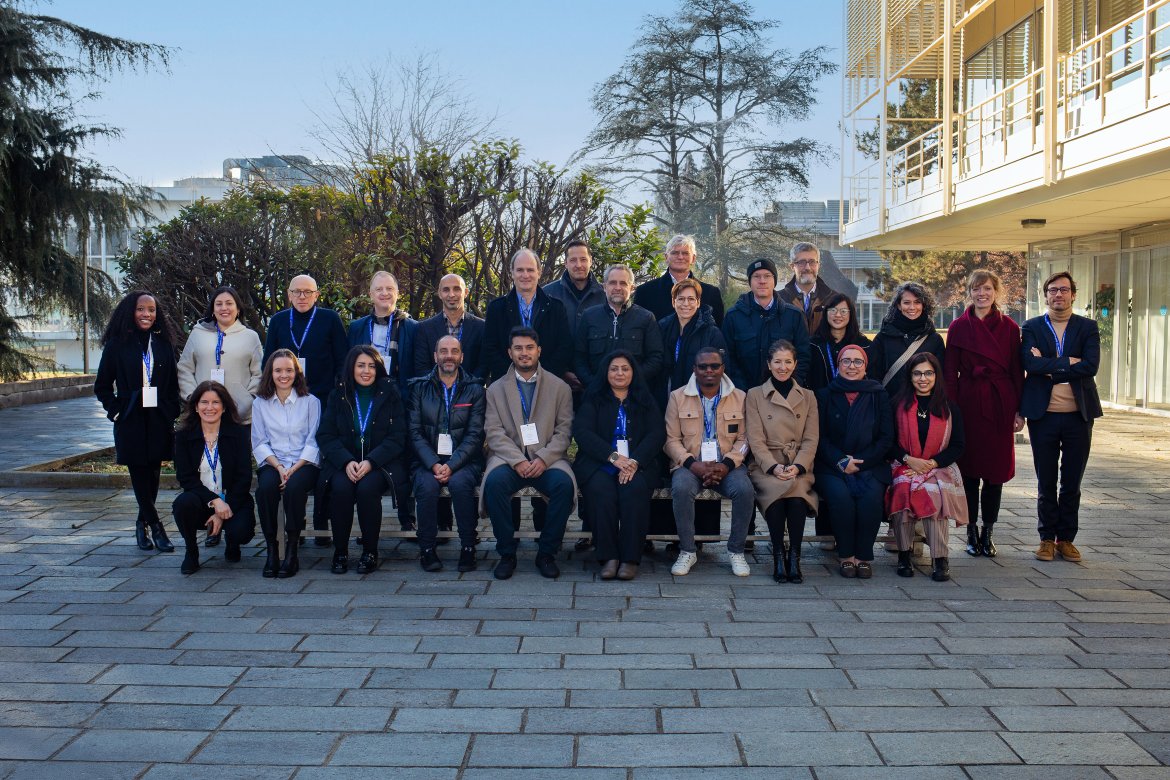
With seed funding from the ITCILO Innovation Fund, seven proposals moved from sketch to prototype. Each initiative addressed a specific challenge in the Scout’s context and proposed an innovative solution, whether through events, platforms, or methods:
- Cristina Maldonado’s Innovate4Change: Business as unusual in the Global Conference on the Elimination of Child Labour in Morocco disrupts the traditional conference format through immersive VR movies, interactive AI avatars, and foresight-grounded workshops.
- Across Kenya's vocational education sector, trainers spend hours on lessons that could take minutes. TVET AI, developed by Stephen Mwangi in Kenya, puts curriculum-aligned AI lesson generation in their hands, freeing instructors to focus on what no algorithm can replicate.
- The workers who most need a voice in labour policy are often the least likely to be in the room. Melissa Kyeyune's Workverse builds a VR environment where youth, women, refugees, and informal workers in Uganda can step into social dialogue and test ideas from the inside.
- Rather than responding to disruption after it lands, Rafael Peels' AI-Powered Foresight helps the ILO and its constituents adopt a forward-thinking approach by using disruptions as thought experiments to shift from reactionary adaptation to long-term anti-fragility.
- Saule Issabekova's E-OSH Cooperation Platform in Kazakhstan addresses a quiet problem: occupational safety and health expertise scattered across offices and inboxes that never connect. The platform turns that siloed knowledge into something shared and searchable across borders.
- The Jobs and Social Protection Innovation Challenge, by Julien Magnat and Bernd Mueller, translates complex policy frameworks into tools people can pick up and use through challenge-based innovation.
- Justin Smith developed the concept that gave the entire network a stage: the ILO's first-ever Innovation Day, giving every Scout, and dozens of colleagues beyond them a stage to showcase what they had built.
Four of the seven projects reached the 113th session of the International Labour Conference to present to delegates and colleagues not finished products, but working prototypes with documented learning behind them. As ITCILO Director Christophe Perrin noted, “We are proud to contribute to this broader effort through the Innovation Fund, which helps transform ideas into working prototypes.”
A culminating celebration
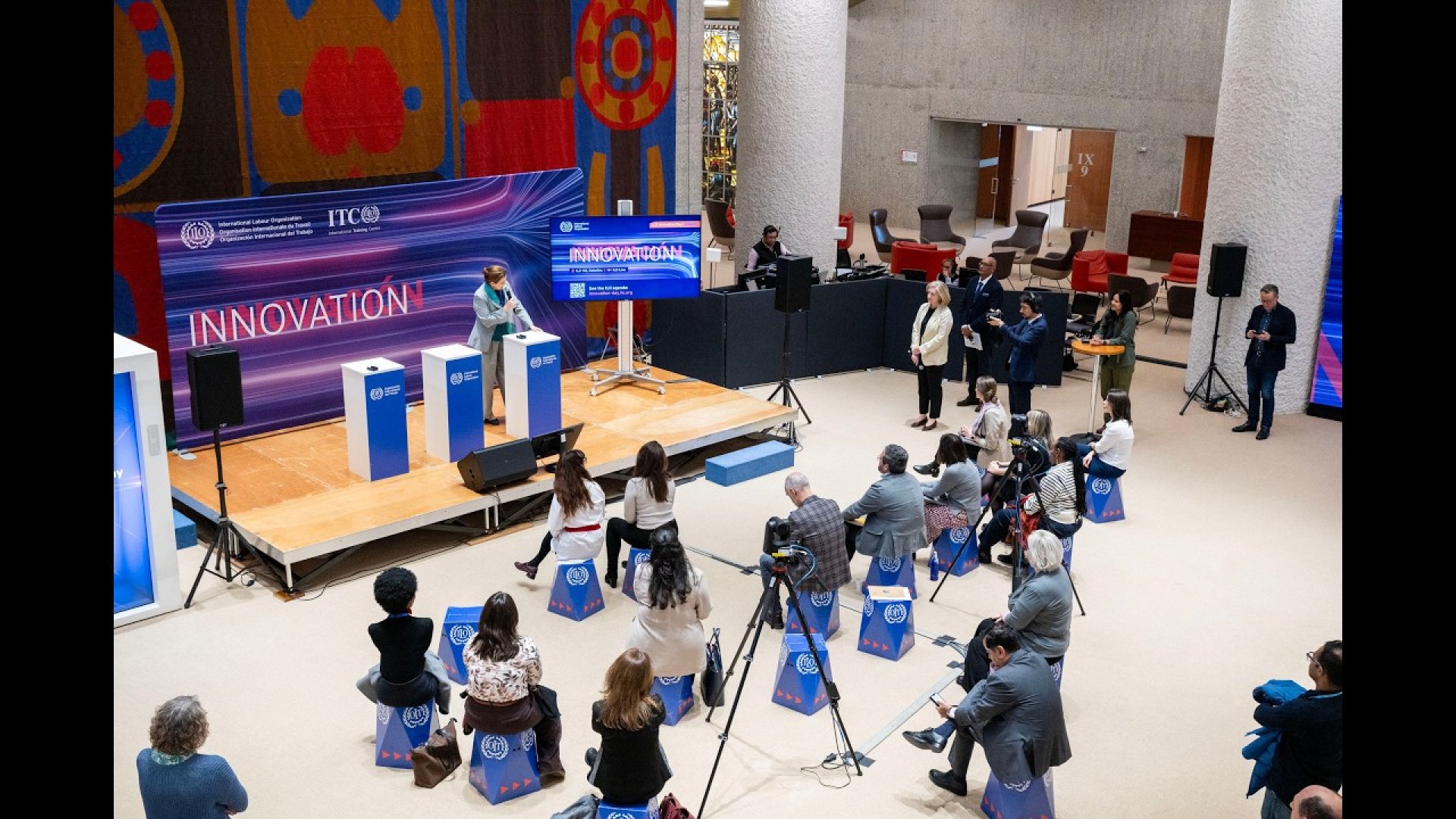
The Gobelins space at ILO Headquarters has hosted official events for decades, framed by a 110-metre tapestry that is one of the building's defining features. On 3 March 2026, it became something else: a full-day showcase of the organization’s commitment to innovation. Holograms linked colleagues abroad to the main stage. An LED screen carried remote speakers from locations around the world. Exhibition stands lined the hall with global artwork, friendly robots, and interactive AI avatars.
Over 30 innovation talks filled the first-ever ILO Innovation Day. The Scouts were among the speakers, presenting their project results and serving as ambassadors of how the ILO innovates through people, processes, and products. “Because of the Innovation Day, I got to talk to different colleagues in different spaces of work. They are now asking me about my project [the ILO Workverse],” shared Melissa Kyeune, National Project Coordinator in Uganda, “This wouldn’t have been possible without this day.”
What a year builds
What began as a first cohort of around twenty is now a proof of concept for something larger: that international organizations can move with purpose and agility in a time of change, that staff closest to the work are often best placed to improve it, and that innovation, properly supported, compounds.
The ITCILO contributed the conditions, the Innovation Sparks initiative, the Innovation Fund, and the campus in Turin, as part of a shared commitment with the ILO to build systems rather than episodic solutions. What the Scouts brought to that partnership was irreplaceable: the specific knowledge of people close to the problem, the credibility of staff ready to generate incremental change, and the willingness to propose ambitious ideas that later became working tools.
The ILO has been advancing decent work for over a century and the Scouts are part of how it will do so for the next one.
Is your organization ready to innovate?


