Master in TVET for the Digital Economy

Photo © Adobe Stock/HappyEva/ChatGPT
Mestrado
Master in TVET for the Digital Economy
INNOVATING TECHNICAL AND VOCATIONAL EDUCATION FOR THE DIGITAL ERA – 1ST EDITION
11 Janeiro–31 Dezembro 2027
O curso está disponível em English
Apresentação do Mestrado
The Master in TVET for the Digital Economy the only graduate programme that combines ITCILO's global outreach and ILO's policy expertise with Korea's unique industry-embedded TVET model. It is a forward-looking graduate programme designed to prepare educators, trainers, policymakers, and development professionals to lead technical and vocational education and training (TVET) systems in a digitalizing world. It equips participants with the knowledge and tools to design, deliver, and manage TVET programmes that respond to the evolving labour market demands, drawing on innovative pedagogies, digital technologies, and globally informed skills strategies. A distinctive strength of the programme is the collaboration between the International Training Centre of the ILO (ITCILO) and the Korea University of Technology and Education (Koreatech). As the training arm of the International Labour Organization, ITCILO serves as a global knowledge-sharing hub, translating ILO standards, policies, and global research into capacity-building programmes for governments, social partners, and institutions worldwide. ITCILO is also a global hub for learning innovation in TVET and skills development, with a longstanding tradition of supporting countries, institutions, and social partners in navigating skills transformation. Koreatech, a globally recognized pioneer in engineering-based TVET with deep, long standing collaborations with employers, technology leaders, social partners, and public institutions across Korea's dynamic industrial ecosystem. Koreatech brings a distinctive comparative advantage through its strong technical depth, applied research, and direct links to industry, which will ground the Master programme in cutting edge, practice oriented digital TVET. The ITCILO's global mandate, international outreach and policy expertise, combined with Koreatech' s advanced technological and industry-linked expertise, creates a unique learning environment that blends international perspectives, applied knowledge, industry engagement and best practices to advance inclusive, high-quality skills development for the digital economy.
Perfil dos participantes
The Master in TVET for the Digital Economy is designed for professionals and graduates who are currently working in, or aspire to lead, skills development and workforce transformation in a digitalizing world. It is particularly suited for: TVET educators, trainers, and instructors seeking to integrate digital technologies, innovative pedagogies, and industry relevant practices into their teaching and training roles. Managers and leaders of TVET institutions (public or private) who are responsible for modernizing programmes, governance, and delivery systems in line with digital transformation. Policymakers, public officials, and practitioners working in ministries of education, labour, skills authorities, or development agencies involved in TVET, skills, and employment policies. Experts and consultants in skills development, workforce development, and lifelong learning who wish to strengthen their strategic and applied expertise in the digital economy. Industry and social partner representatives involved in apprenticeships, workbased learning, or employer led training initiatives. Recent graduates and early career professionals with backgrounds in education, social sciences, economics, engineering, ICT, or related fields who aim to build a career in TVET, skills policy, or digital workforce development. The programme welcomes participants from diverse national and professional contexts who are motivated to contribute to inclusive, future ready, and labour market relevant TVET systems at local, national, and international levels.
What topics does this Master cover?
The Master prepares students to lead technical and vocational education in an increasingly digitalized world. The topics of the master include the following:
- TVET Systems & Digital Transformation
- Pedagogy & Learning Design for Digital TVET
- Inclusive Digital Skills Pathways
- Research Methods for TVET Innovation
- Skills & Labour Market Intelligence
- EdTech, Simulation & Work-Based Learning Platforms
- Governance, Policy & Financing of TVET
- Korean Digital Innovation in TVET: Cultural Industry Training
What will I learn?
By the end of the Master in TVET for the Digital Economy, participants will learn to:
- Understand the future of work and the digital economy, including major trends shaping skills demand, labour markets, and occupations.
- Examine how digitalization, automation, and artificial intelligence are transforming TVET systems, occupations, and skills, including the evolution of traditional trades and the emergence of new digital and AI enabled skill profiles.
- Explore digital transformation and Industry 4.0 concepts as they relate to the modernization of TVET systems and programmes.
- Apply global labour and skills policy frameworks, drawing on ILO standards, international experiences, and comparative insights shared through ITCILO.
- Use data, evidence, and international good practices to understand monitoring and evaluation approaches for TVET and skills initiatives.
Methodology
The Master in TVET for the Digital Economy is built on three methodological pillars: learning innovation and technology, a highly interactive approach, and deep peer learning among a fully global participant group. It adopts a blended learning methodology that combines rigorous content with practical, application‑oriented approaches designed to actively engage participants. Artificial intelligence (AI) and machine learning are embedded within the learning methodology of the Master as both a subject of study and a pedagogical enabler. Participants will engage with AI supported learning tools and platforms to experience personalized learning pathways, adaptive content, and data informed feedback, while also critically examining the implications of AI for teaching, assessment, and skills development. AI enabled learning analytics, digital collaboration tools, and selected generative AI applications support research, problem based learning, and project development, enabling participants to develop practical understanding of how emerging technologies can enhance the quality, relevance, and effectiveness of TVET in the digital economy.
The programme draws on the ITCILO’s role as the training arm of the ILO and a global centre of learning innovation. It leverages its global knowledge-sharing mandate, training portfolio, and ILO policy expertise, together with contributions from UN agencies, international organizations, and global experts, as well as Koreatech’s advanced academic and applied expertise in technology-driven TVET and digital learning. The Distance Learning phase consists of mandatory online lectures and interactive learning activities delivered through a virtual platform. These sessions combine expert inputs, guided discussions, and collaborative learning, and are scheduled in advance. The Residential phase is delivered in person and focuses on experiential and hands‑on learning through case studies, workshops, group exercises, and peer exchange. It deepens learning through direct engagement with Korean TVET institutions and industries, intensive peer exchange across an exceptionally diverse international cohort, and applied project work addressing real-world challenges in TVET and skills development for the digital economy.
Faculty
In line with the training approach of the Turin School of Development, the Master in TVET for the Digital Economy offers participants the opportunity to engage with a highly diverse and international faculty. Resource persons are selected on the basis of their proven professional experience, technical expertise, and engagement with real world TVET and skills development challenges in the digital age.
The faculty comprises:
- Academic staff, leading experts and researchers from Koreatech who serve as main lecturers in several modules and contribute advanced expertise in technology driven TVET, digital learning systems, engineering based education, and strong industry linked and applied research practices.
- Experts from the ILO and the ITCILO, providing policy oriented perspectives, international labour standards, and global comparative experience on skills development, TVET systems, and the future of work.
- Officials from the UN system and other international organizations, bringing insights into global development frameworks, international cooperation, and digital transformation initiatives.
- Practitioners and subjectmatter experts from the field, sharing handson experience and applied knowledge from TVET innovation, workforce development, and industry contexts.
This combination of academic excellence, global policy leadership, and practical experience ensures a rich, interdisciplinary learning environment firmly anchored in both theory and practice.
Degree
The programme comprises 30 credits under the Korean higher education credit system and is delivered in accordance with the academic regulations of ITCILO & Koreatech. Participants who successfully meet all academic requirements of the programme will be awarded a Master of Science (M.Sc.) in TVET for the Digital Economy, conferred by Koreatech and with ITCILO recognition on the certificate. The final degree will be awarded to participants who fulfill the following conditions:
- Completion of all administrative requirements and documentation as prescribed by ITCILO and Koreatech.
- Successful completion of all coursework and assessments, demonstrating attainment of the required learning outcomes and competencies.
- Submission and successful defence of a capstone project/thesis, meeting the established academic standards, quality requirements, and deadlines set by ITCILO and Koreatech.
The programme’s academic rigor, international orientation, and alignment with university-level standards, support the global recognition and professional advancement of graduates.
Structure and Content
This one-year master’s programme is intensive by design. It combines three phases: a distance learning component, a face-to face component, and thesis/capstone project phase.
- DISTANCE LEARNING PHASE (JANUARY – JUNE 2027)
- RESIDENTIAL LEARNING PHASE (JULY – AUGUST 2027)
- HOME - BASED RESEARCH FOR THESIS/PROJECT WORK (SEPTEMBER – DECEMBER 2027)
Students learn and practice through an online platform and live webinars. Mandatory online lectures every week (typically two or three webinars a week). A few absences are allowed, but regular attendance is required.
The five modules of the distance learning phase will include the following:
Module 1 – TVET Systems & Digital Transformation
The participants will learn to:
- Understand the structure, evolution, and global diversity of TVET systems, including international models and reform approaches.
- Analyse how digital transformation is reshaping skills systems, workforce development, and TVET provision.
- Identify key drivers, challenges, and opportunities associated with the digitalization of TVET systems.
- Assess digital readiness and institutional capacity at system and organizational levels.
- Design and integrate digital transformation strategies across TVET systems, institutions, and programmes.
- Plan and lead change management processes to support effective and sustainable digital transformation in TVET organizations.
Module 2 – Pedagogy & Learning Design for Digital TVET
Participants will learn to:
- Apply learner centred and competency based pedagogical approaches in digital TVET
- Design effective digital, blended, and hybrid learning experiences
- Integrate assessment strategies aligned with digital and work based learning
- Use instructional design principles to enhance learning outcomes in TVET
Module 3 – Inclusive Digital Skills Pathways
Participants will learn to:
- Design inclusive digital skills pathways for diverse learner populations
- Address gender equality, social inclusion, and access gaps in digital TVET
- Promote lifelong learning and upskilling/reskilling strategies
- Align inclusive skills development with decent work and sustainable development goal
Module 4 – Research Methods for TVET Innovation
Participants will learn to:
- Apply qualitative and quantitative research methods relevant to TVET and skills development
- Design and conduct applied research to support TVET innovation
- Analyze data and evidence to inform policy and programme design
- Develop research skills to support the capstone project/thesis
Module 5 – Skills & Labour Market Intelligence
Participants will learn to:
- Understand labour market dynamics and digital skills demand
- Use labour market intelligence (LMI) tools and data sources
- Identify emerging occupations and digital skill needs
- Translate labour market evidence into TVET curricula and policy decisions
The residential phase is delivered at Koreatech in the Republic of Korea over six intensive weeks. It combines classroom‑based modules with up to nine field visits to Korean TVET institutions, training centres, and industry partners, giving participants direct exposure to one of the world’s most advanced systems for industry-linked technical education. Modules 6–8 are structured to move from educational technology and platform design, through governance and financing frameworks, to an in‑depth engagement with Korea’s own TVET ecosystem — with field visits integrated throughout. Will consist of the following three modules.
Module 6 – EdTech, Simulation & WorkBased Learning Platforms
Participants will learn to:
- Explore educational technologies relevant to TVET and skills training
- Apply simulation, virtual labs, and digital learning platforms in technical training
- Design technology enabled workbased learning and apprenticeship models
- Evaluate the effectiveness of EdTech solutions for skills development
Module 7 – Governance, Policy & Financing of TVET
Participants will learn to:
- Understand governance structures and policy frameworks for TVET systems
- Analyze financing models and investment strategies for digital TVET
- Apply ILO standards and international policy frameworks to national contexts
- Strengthen social dialogue and stakeholder coordination in skills development
Module 8 – Korean Digital Innovation in TVET: Cultural Industry Training
Participants will learn to:
- Examine Korea’s TVET and skills development ecosystem
- Analyze Korean best practices in digital innovation and industrylinked TVET
- Understand TVET models supporting cultural and creative industries
- Transfer and adapt Korean experiences to other national and regional context
Capstone Project / Thesis Seminar I–II
Participants will:
- Develop and refine a capstone project/thesis addressing a realworld TVET or skills challenge
- Apply research methods, policy analysis, and digital innovation concepts
- Receive academic supervision and peer feedback
- Produce a high quality applied research or practice oriented output
Tuition Fees
The tuition fee is Euro 9.900
The fee includes:
- Programme development and management.
- Training materials and documentation.
- Use of training facilities and support services.
Important Note: Board, lodging, travel expenses, transports and personal expenses for the period in (residential phase venue to be confirmed) are not included in the cost of participation.
Subsistence Fees
The subsistence package includes the following components:
- €317 for accommodation in a KoreaTech dormitory (42 nights) and bedding set
- €1,167 for meals, including breakfast, lunch, and dinner
- €59 for programme events, including the welcoming and closing events
Subsistence fees for the Master cover accommodation, meals, and programme‑related events for the duration of the residential phase, provided that participants stay on campus using the KoreaTech dormitories.
The total subsistence fee amounts to €1,543, covering full board and essential services during the residential period. Participants who choose not to stay in the KoreaTech dormitories and opt for off‑campus accommodation will be responsible for independently arranging and covering their own accommodation, meals, and related expenses.
Airport transfers to and from the campus may be organized separately by KoreaTech for an additional fee. Participants wishing to make use of this service are required to contact the Master’s Secretariat in advance to arrange the transfer.
Partial Scholarships
- A limited number of partial scholarships is available, on a competitive basis, for eligible students based on their profile and background.
- Participants, who wish to apply for a partial scholarship, are required to specify it on the application form.
- The selection criteria for the award of partial scholarships will include academic and professional qualifications, organization, country of origin and gender balance.
Minimum Entry Requirements
Applicants to the Master in TVET for the Digital Economy are expected to meet the following minimum requirements:
EDUCATIONAL BACKGROUND:
A recognised Bachelor’s degree or equivalent from an accredited higher education institution in education, social sciences, economics, engineering, ICT, human resources, public policy, or other relevant disciplines.
PROFESSIONAL EXPERIENCE:
Prior professional experience in TVET, education and training, skills development, labour market policy, workforce development, or related fields is highly desirable but not strictly mandatory.
LANGUAGE PROFICIENCY:
As the programme is delivered in English, applicants must demonstrate a sufficient level of proficiency in English (spoken and written) to actively participate in academic activities and complete assessments.
MOTIVATION AND RELEVANCE:
Applicants should demonstrate a clear motivation to contribute to TVET and skills development in the context of the digital economy, as well as the relevance of the programme to their current or future professional roles.
BASIC DIGITAL LITERACY:
Participants are expected to possess basic digital skills to engage effectively in online learning, digital collaboration, and technology enabled coursework.
Final admission decisions are made in accordance with the academic and administrative criteria prescribed by ITCILO and Koreatech, ensuring a diverse and qualified cohort of participants.
For more information, please contact the Master Secretariat.
Payment, Cancellation & Refund Policy
The ITCILO’s payment, cancellation and refund policy can be consulted on the following website: https://www.itcilo.org/applications-payments-cancellation
Campus Life: Koreatech
A LEADERSHIP HUB FOR TVET INNOVATION AND INDUSTRIAL EXCELLENCE IN KOREA
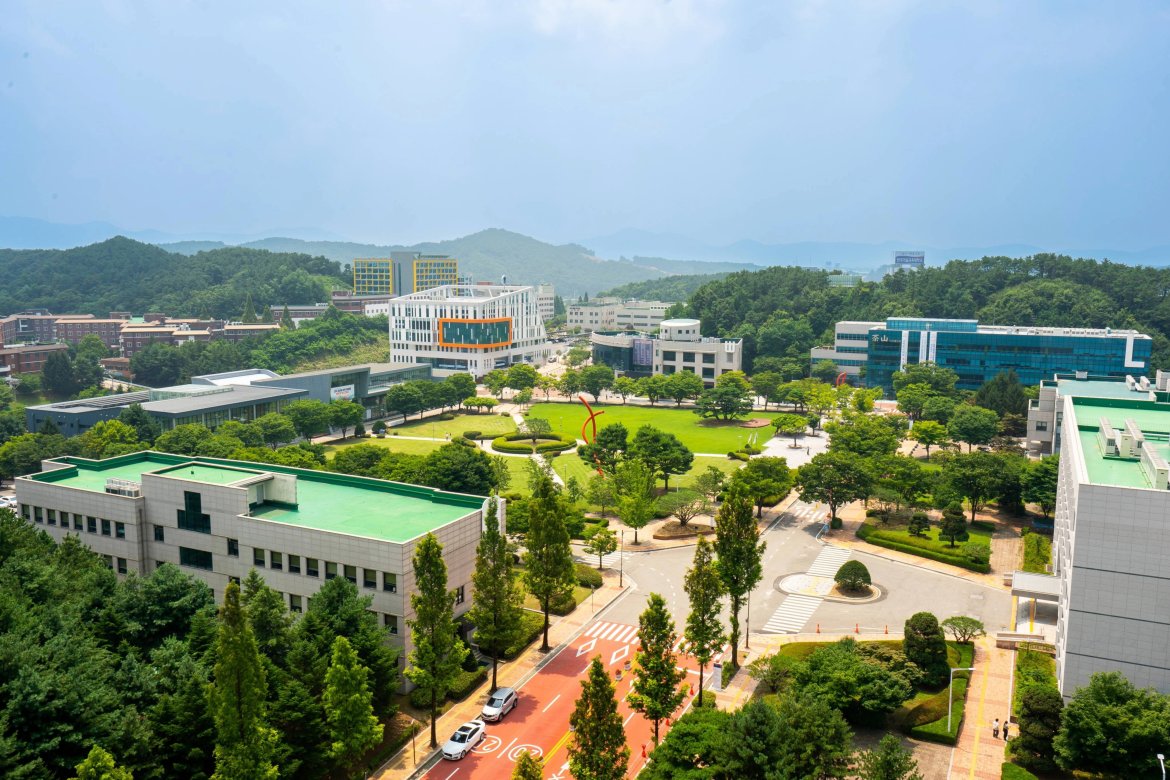
- Specialized TVET Institution: Korea’s premier university for engineering‑based TVET and HRD, established by the Ministry of Employment and Labor.
- Theory–Practice Integration: A hands‑on academic environment designed to bridge the gap between classroom learning and industrial application.
- Global Knowledge Exchange: A dedicated space for international professionals to engage with Korea’s advanced vocational training systems.
ENVIRONMENT AND SURROUNDINGS
Experience a focused academic atmosphere at the KOREATECH campus, a hub for Korea’s leading TVET infrastructure. Students have direct access to specialized facilities such as the Smart Learning Factory and the Online Lifelong Education Center (STEP). These spaces provide a unique setting for exploring the digitalization of vocational training and the modernization of technical education.
HOUSING, DINING, AND CONVENIENCE
To ensure a productive and comfortable stay, all international participants are provided with private single rooms in the on‑campus dormitory. The campus offers essential amenities, including dining halls, cafés, convenience stores, a university library, fitness centres, a health clinic, and campus‑wide Wi‑Fi access, supporting all aspects of participants’ daily and academic life.
STUDY TOURS AND KOREAN CULTURAL EXPERIENCE
The residential phase includes specialized study tours to Korea’s industrial hubs and training centres. These visits allow participants to observe digital technologies and innovative TVET policies in real‑world economic contexts. Beyond the classroom, there will also be opportunities to explore Korean culture and heritage, offering a well‑rounded experience of Korea’s unique blend of tradition and innovation.