
How the ITCILO is supporting trainers from Tanzania and Denmark to rethink capacity development
How the ITCILO is supporting trainers from Tanzania and Denmark to rethink capacity development
Artificial intelligence reshapes the way we design, deliver, and evaluate blended learning
27 mars 2026
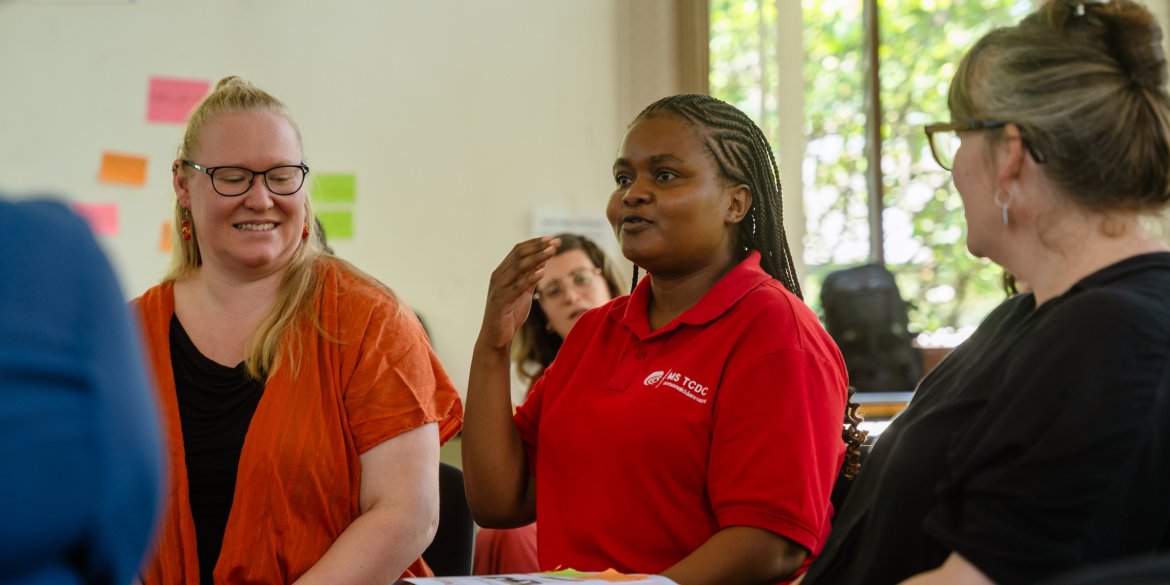
Nobody arrives at a workshop on artificial intelligence feeling neutral about it. Some come curious, some come skeptical, and some come carrying the particular anxiety of someone who suspects the ground has shifted under their profession and has not yet found their footing. The thirty trainers who gathered in Arusha, Tanzania, were some combination of all three.
A gap that was widening fast
For training institutions, the past few years have not been kind to the status quo. The rapid expansion of artificial intelligence, the proliferation of digital learning tools, and a growing expectation among learners for flexible, personalised experiences have collectively outpaced what many organisations were built to deliver.
MS Training Centre for Development Cooperation (MS TCDC), the renowned Pan-African training centre situated in Tanzania, and the Danida Fellowship Centre (DFC), Denmark's leading provider of capacity development programmes for development professionals, found themselves at precisely this crossroads. Both institutions had accumulated years of expertise in face-to-face facilitation. Both had made early steps into virtual delivery. And both recognised that something more fundamental was needed: a new way of thinking about what training can be.
Blended learning, the intentional combination of in-person and online elements to create flexible, learner-centred experiences, offered part of the answer. But knowing what blended learning means in principle and knowing how to design, deliver, and evaluate it in practice are two entirely different things. Add artificial intelligence to the picture, and the gap widens further.
The ITCILO's response was a programme built around three ingredients that, taken together, amount to something more than a training methodology. They are a philosophy for how adult learning can work when the technology in the room is genuinely new.
1. Make learning playful
There is a long-standing assumption in professional training that seriousness signals rigour, but that’s not always the case. Game-based techniques are proven to enhance engagement, boost motivation, and keep learners coming back, even adults.
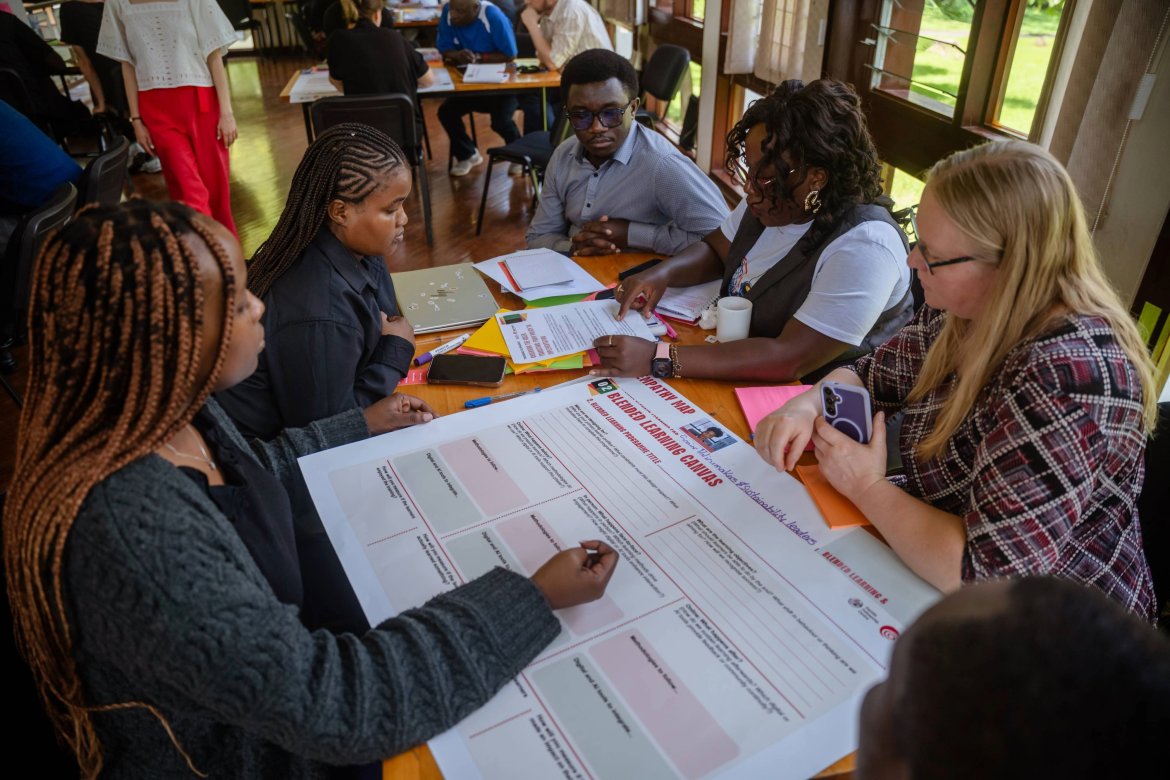
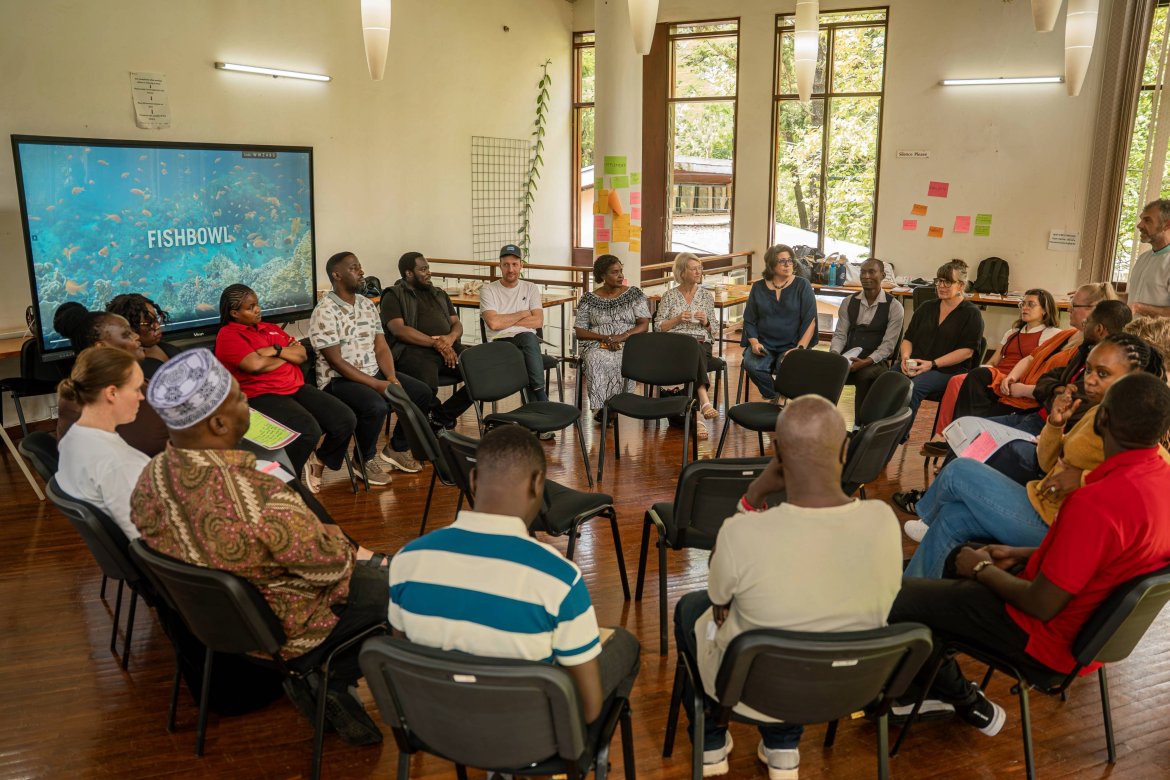
On the first morning in Arusha, participants arrived to find the room deliberately staged wrong. Chairs faced forward in rows. The projector was off. Flipcharts were hidden. The participants' task was to figure out why the dynamic in the room had failed. Divided into space investigators, technology auditors, and pedagogy detectives, they moved through the room collecting evidence. The exercise was built around the Radcliffe model, which frames effective blended learning across three dimensions: space, technology, and pedagogy. It made visible what trainers often overlook: that the room itself communicates before anyone has said a word.
The light competitive spirit, investigative formula, and show-don’t-tell approach to learning proved to be effective solutions to introduce three key elements for successful blended formats. Introducing gamification into a learning cycle makes the experience active and memorable, in turn improving knowledge retention.
2. Put AI to work, phase by phase
Rather than presenting AI as a collection of tools to be added to an existing workflow, the programme positioned AI as a system-level partner; present at every stage of the training cycle, changing what is possible at each one.
Participants leveraged AI avatars to sharpen their understanding of learner needs, prompting language models to stress-test their assumptions about who their learners could be and what invisible pressures they could be operating under. At no point was AI presented as a replacement for the trainer's judgment. The programme was consistent on this. Where participants found AI most useful, they also found it most limited; fast to generate, but unable to notice the participant in the back row who had gone quiet.
We can make the promise of changing one little thing every time we run a training. This makes it more practical and achievable.
Ida Nielsen
Capacity Development and Learning Specialist, Danida Fellowship Centre
The goal, as the ITCILO framed it throughout, was the capacity to critically ask, at each stage of designing or delivering a training: when could AI support and when could human judgment shine?
3. Design for inclusion first
One of the more persistent risks in conversations about AI and learning technology is the implicit assumption of access; that participants have reliable internet, capable devices, institutional platforms that work, and the digital confidence to navigate all of the above.
The ITCILO built digital inclusion into the architecture of the workshop. Participants explored AI tools built around small language models capable of running in low-connectivity environments, asynchronous formats that do not depend on simultaneous online presence, and low-tech applications designed to reduce rather than widen the gap between digitally confident and less confident learners.
A dedicated session mapped available technologies against specific purposes within each group's training scenario. A set of curated disruptors, like unreliable internet connection or a participant without a smartphone, forced groups to adapt their blended learning plans and find solutions that held up under real-world pressure.

Video originally featured in the Danida Fellowship Centre article.
What comes next
For the ITCILO, this partnership with MS TCDC and DFC represents a model for how workshops can serve as a space for exchange that makes change feel possible, practicable, and shared. Keeping the programme playful, experimental with AI, and digitally inclusive provided an opportunity for meaningful co-creation.
The question of how AI reshapes the role of the trainer does not have a settled answer. This programme offered a room full of curious individuals, a structured space for inquiry, and the tools to begin finding out.
Interested in the tailored training?


