
ITCILO Inclusion Day Explores the Power of Cultural Intelligence
ITCILO Inclusion Day Explores the Power of Cultural Intelligence
Inclusion Day 2026 challenged colleagues to focus on the everyday actions that build trust, psychological safety, and a truly inclusive workplace.
ITCILO
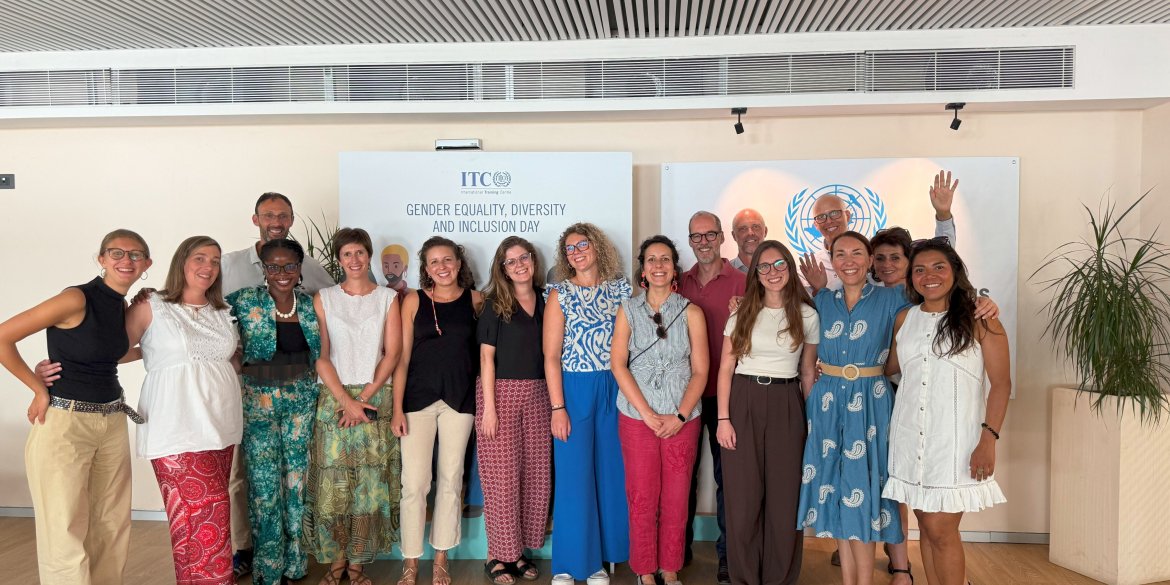
On 9th July, Inclusion Day 2026, brought together staff, diversity focal points and external experts to explore how cultural intelligence can help create a more respectful, inclusive and psychologically safe workplace. The event forms part of the Centre's broader work on gender equality, diversity and inclusion (GEDI), linking directly to the new GEDI Action Plan 2026-2029 and other ongoing efforts to strengthen disability inclusion.
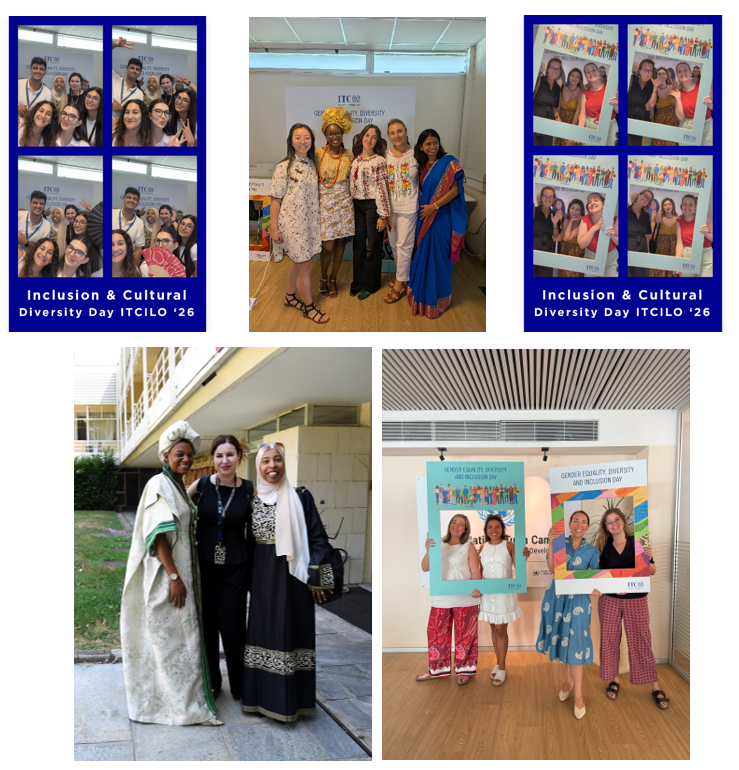
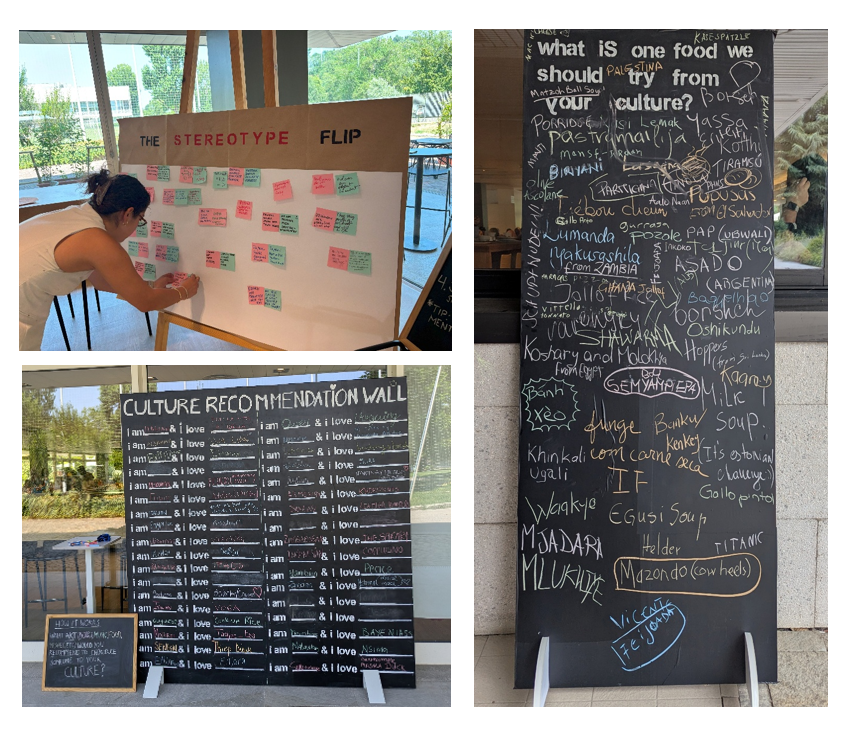
As part of the event, colleagues were invited to showcase their cultural heritage by wearing traditional or culturally significant attire, contributing songs to a multicultural playlist, and taking part in a range of interactive activities across the campus. These included a cultural recommendations wall, where staff shared books, films and other favourites from their culture; a food recommendations board and a "stereotype flip" activity encouraging participants to challenge common assumptions.
ITCILO
Moving beyond "culture fit"
Opening the event, Maud Ritz, Gender Specialist at the ITCILO, stressed that this year's programme deliberately moved beyond recognising diversity as an institutional asset to examining how everyday behaviours shape colleagues' experiences.
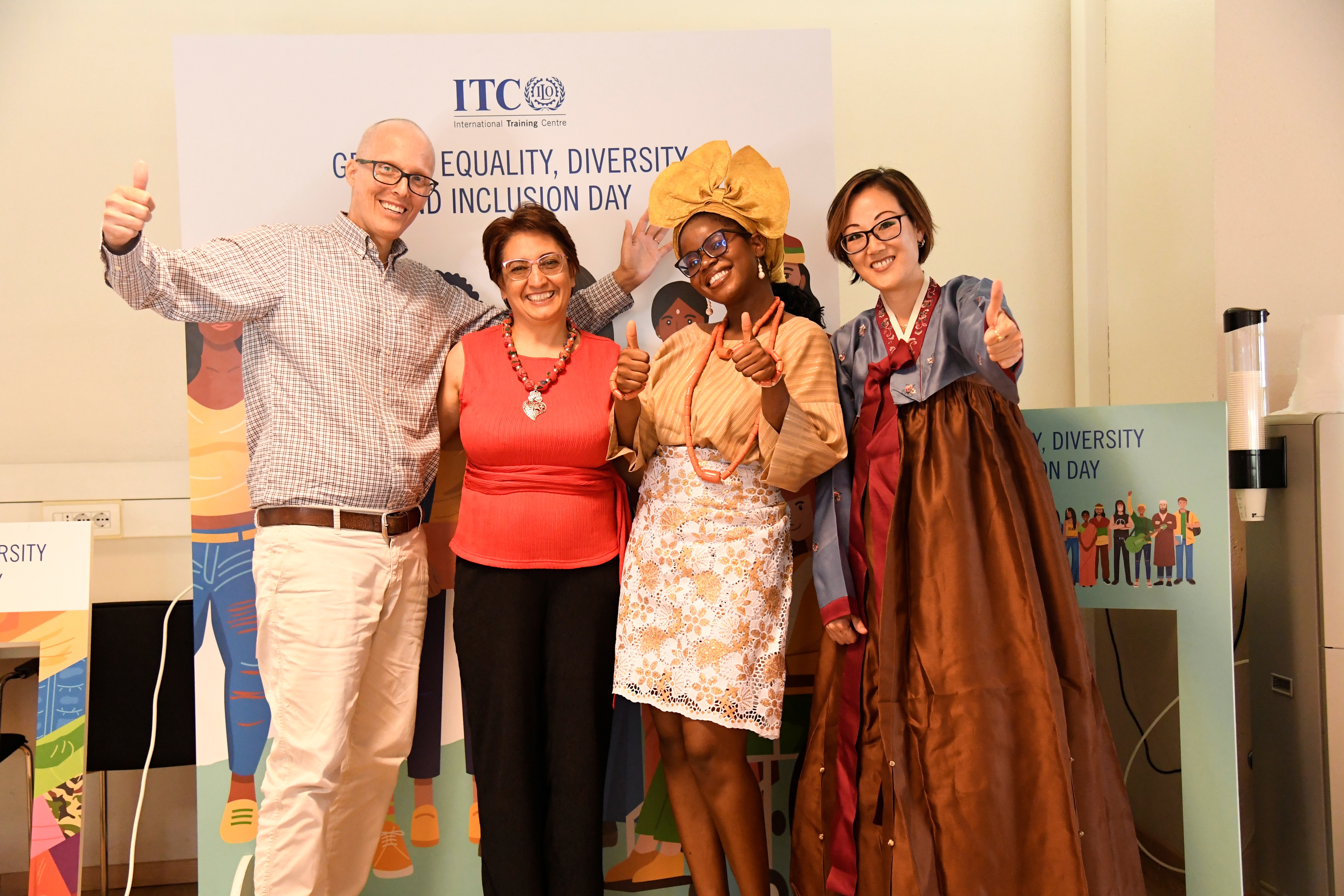
Moderated by Arekpitan Ikhenaode, Communication and Advocacy Officer with the Learning Innovation Programme, the opening panel explored how organisations can move beyond celebrating diversity to building workplaces where different perspectives foster innovation, collaboration and a stronger sense of belonging.
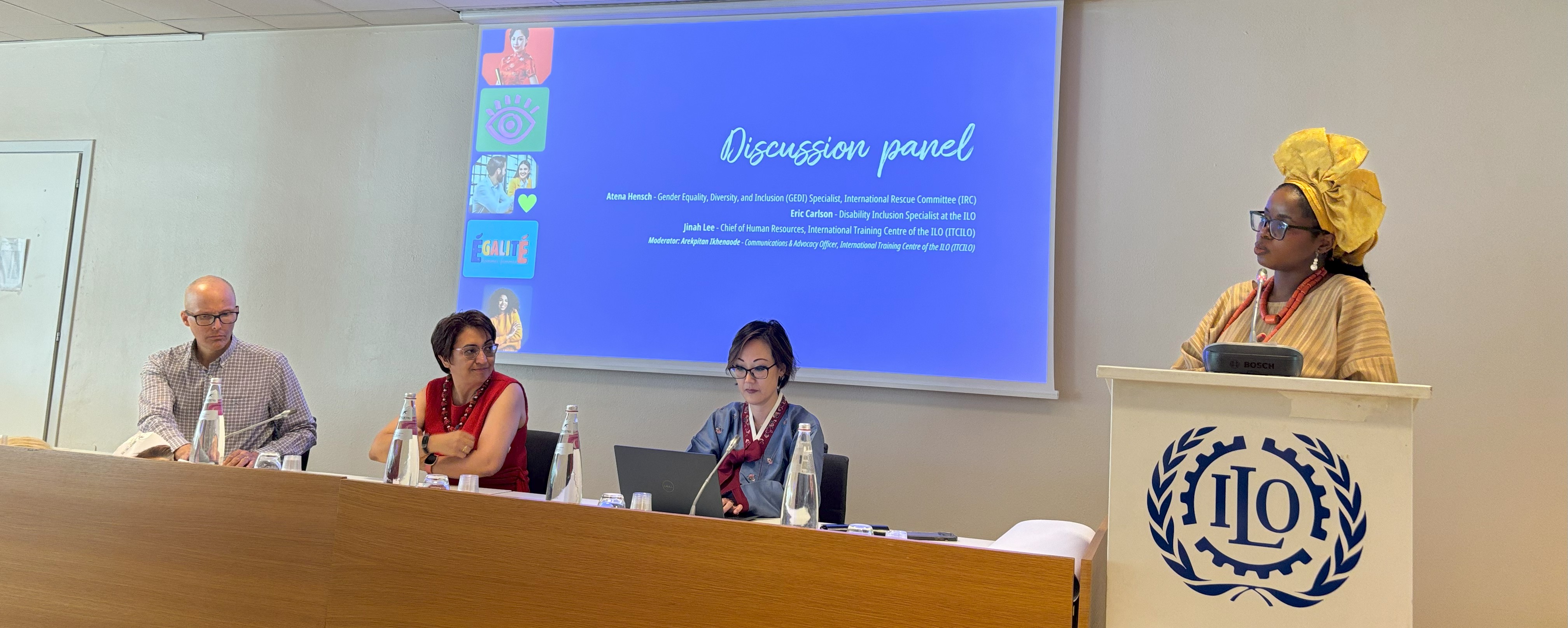
Atena Hensch, Senior Advisor - Europe Gender Equality, Diversity and Inclusion (GEDI) for the International Rescue Committee (IRC), challenged one of the most common assumptions made in recruitment and workplace decision-making.
"There is no one concept of culture fit. We have to think about value fit." – Atena Hensch
Hensch explained that decisions often attributed to "gut feeling" are, in reality, influenced by unconscious biases such as affinity bias. Instead of asking whether someone fits an existing culture, organisations should examine whether decisions are grounded in evidence, shared organisational values and genuine reflection.
Respect, trust, and open communication
Eric Carlson, Disability Specialist in the ILO's Gender Equality, Diversity and Inclusion Branch, encouraged participants to think of diversity in its broadest sense. Drawing on personal experience, he reflected on how identities (including religion, disability, gender, sexuality, politics and culture) influence the way people work and experience the workplace. Rather than expecting managers to understand every aspect of every colleague's identity, Carlson argued that respect, trust and open communication are the foundations of inclusion.
“What if instead we try to create a work environment where we can all express our needs, and there's a culture of calling things out when they're not working for us, when we feel unsafe?” – Eric Carlson
He summed up this approach simply as the "Yeah, sure” approach to intersectionality and inclusion: creating workplaces where colleagues feel comfortable expressing their needs and where those needs are met in good faith.
Embedding inclusion across the employee journey
“Diversity in itself is not a goal, and diversity for the sake of diversity is not a goal. The goal is a workplace where we have systems and a culture that support everyone to be the best version of themselves.” – Jinah Lee
From an institutional perspective, Jinah Lee, Chief of Human Resources Services, highlighted how diversity and inclusion are being integrated across recruitment, onboarding, staff development and organisational culture. Comparing diversity to ingredients, inclusion to a recipe and belonging to the finished cake, she outlined several initiatives already underway, including expanded geographical diversity in recruitment, an internship programme for persons with disabilities, accessibility training, neurodiversity discussions, and induction workshops for newcomers amongst others. However, she stressed that policies alone cannot create an inclusive workplace.
"A respectful workplace is not created by a poster, a motto on the wall or a policy on the intranet. It is built with our daily interactions: how we communicate, how we listen to each other and how we manage our disagreements." – Jinah Lee
Building cultural intelligence
Throughout the discussion, speakers repeatedly returned to the concept of cultural intelligence (CQ): the ability to work effectively across different cultural contexts.
"One way to build cultural intelligence is to question our own assumptions. Ask yourself: Where did I get this information? Why do I think this way? And how many people from this culture do I know who don't fit the stereotype I'm assuming?" – Atena Hensch
Carlson similarly argued that inclusion is less about mastering every aspect of diversity and more about recognising the humanity of the person in front of us.
"We should be working towards a culture where we can call the bad stuff out. We can treat the person in front of us with dignity, and we can listen together to co-create the changes that make sense for them." – Eric Carlson
For Lee, building cultural intelligence starts with curiosity.
"Be as curious about other people as you are about yourself. Avoid making quick assumptions or judgements. Diversity goes beyond nationality, religion or culture; it's about recognizing that everyone is living a different reality, and no two realities are the same." – Jinah Lee
The Mingle Matrix: Experiencing cultural intelligence in action
The panel discussion was followed by an interactive "Mingle Matrix" exercise facilitated by Hensch, allowing participants to experience different communication styles and cultural norms through role play. Participants adopted contrasting behaviours (including differences in personal space, communication pace and conversational style) and reflected on how quickly assumptions can arise during everyday interactions.
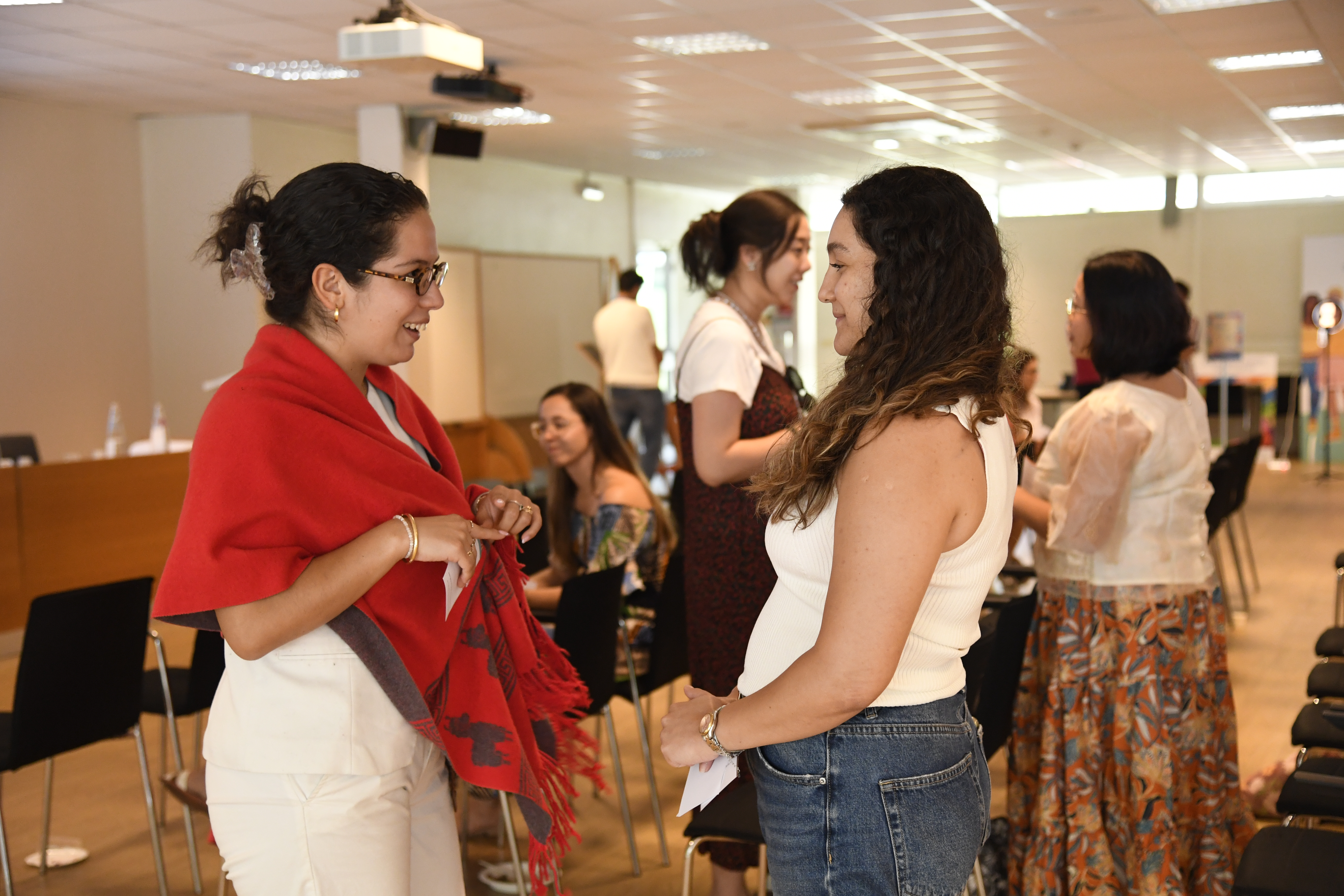
The exercise prompted discussions on how cultural differences can influence meetings, teamwork and leadership, while reinforcing the importance of psychological safety, empathy and active listening.
Building on the concept of cultural intelligence, Hensch described four interconnected dimensions (drive, knowledge, strategy, and action) and encouraged participants to move beyond awareness towards intentional behavioural change.
Walking the talk
Closing the event, ITCILO Director Christophe Perrin reaffirmed that diversity alone is not enough.
As our workforce becomes more diverse, inclusion cannot mean simply expecting new colleagues to adapt to existing ways of working. It also means questioning our own habits, norms, sometimes assumptions, and creating space for different ways of communicating, contributing and belonging.
Christophe Perrin
Director, ITCILO
The day concluded with a call for colleagues to carry the conversation beyond a single event; embedding respect, curiosity, cultural intelligence and inclusion into every interaction across the Centre.
ITCILO


