Strengthening OSH and Labour Inspection in the Southern Mediterranean
Strengthening OSH and Labour Inspection in the Southern Mediterranean
Representatives from Algeria, Egypt, Morocco and Tunisia exchange national experience and identify priorities for the next stage of regional cooperation.
2 November 2026
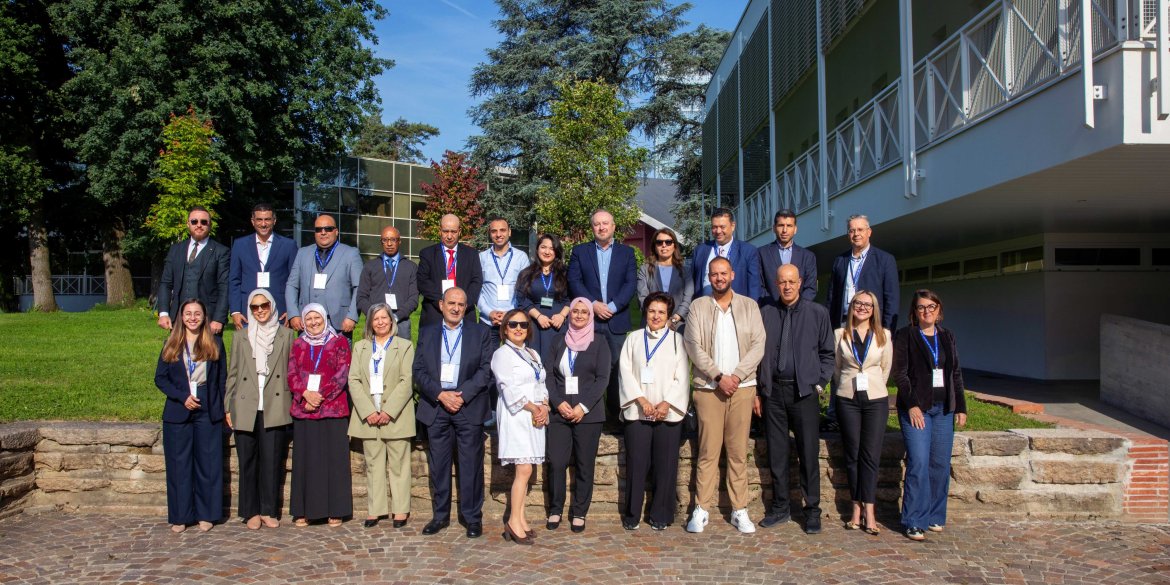
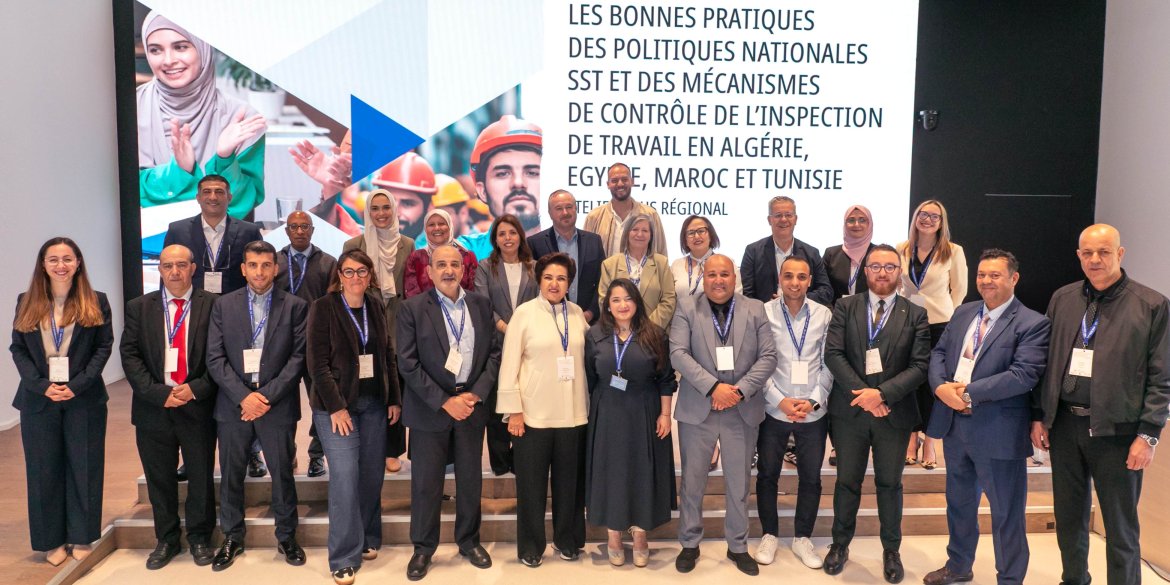
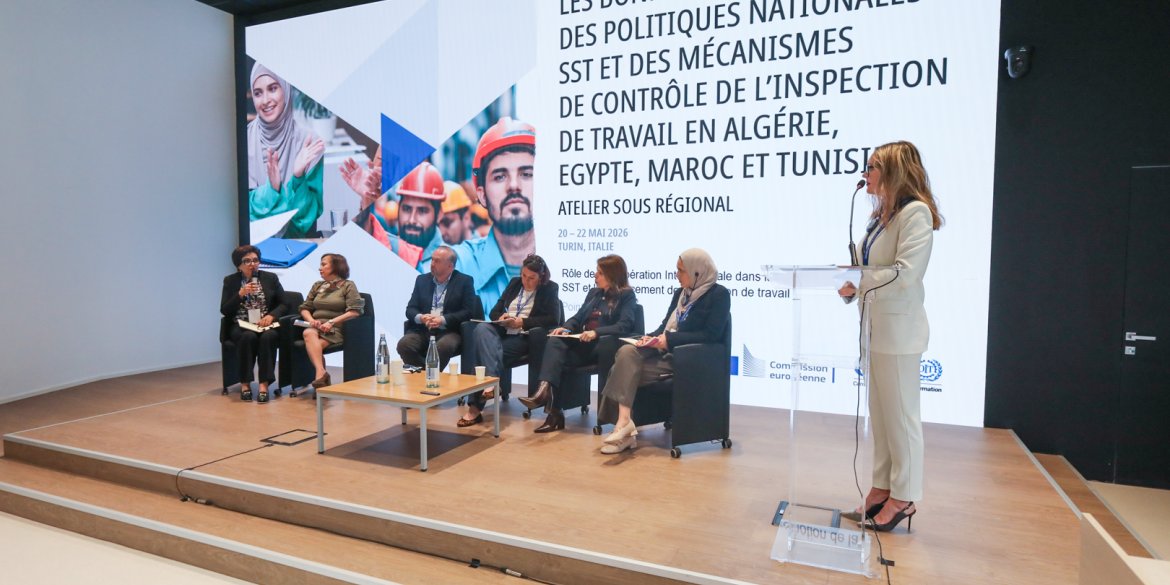
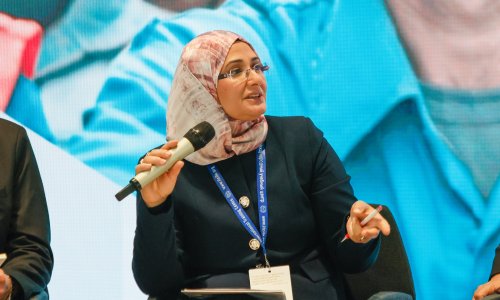
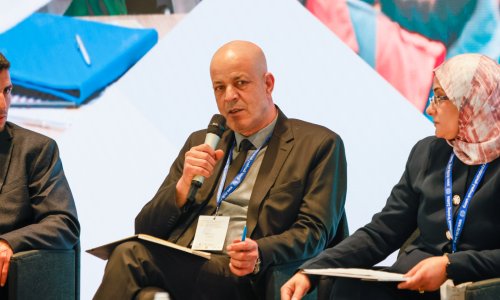
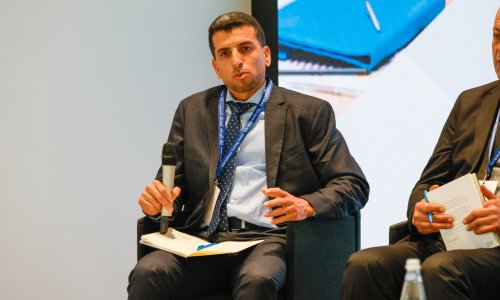
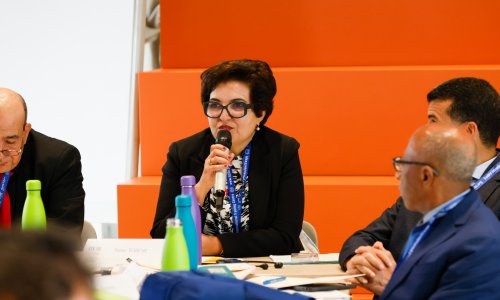
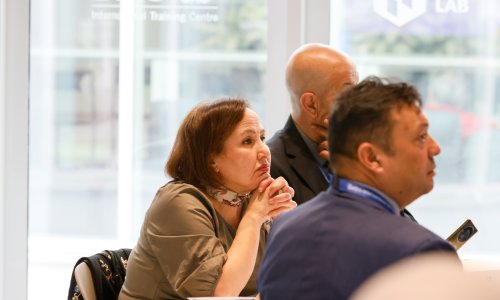
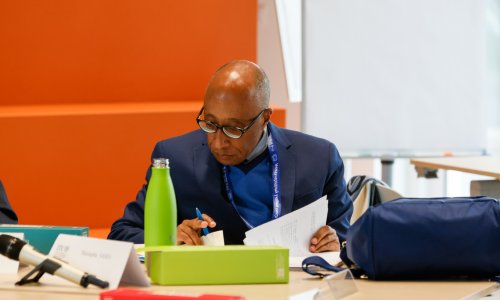
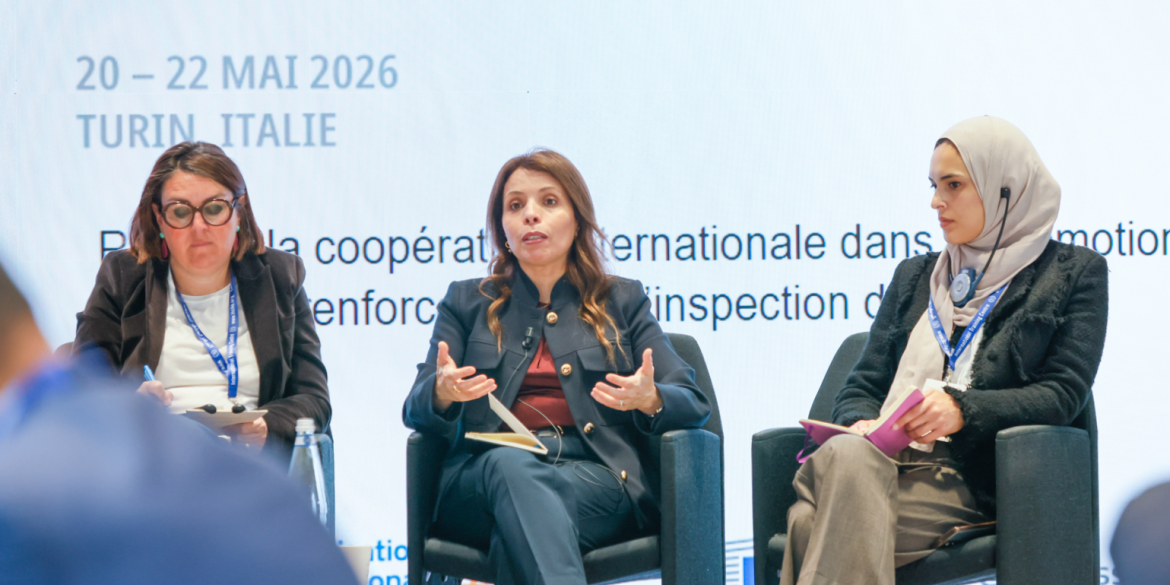
From 20 to 22 May 2026, representatives from Algeria, Egypt, Morocco and Tunisia met at the Innovation Lab of the International Training Centre of the ILO (ITCILO) in Turin for a sub-regional workshop on good practices in national occupational safety and health policies and labour inspection mechanisms.
Funded by the European Union, the workshop was organized within Phase II of the project "Promoting Occupational Safety and Health in Southern Neighbourhood Countries to Ensure Safe and Healthy Work for Vulnerable Workers” and was implemented by the ILO through its flagship programme Safety + Health for All.
Its purpose was to capitalize on the achievements of Phase II, compare national approaches and create a structured basis for the transition towards Phase III.
A project evolving across countries and sectors
The project began in late 2022 with Algeria, Morocco and Tunisia with an initial focus on agriculture. Phase II, launched in December 2024, expanded the initiative to Egypt and extended its sectoral focus to construction.
The second phase aimed to strengthen labour inspection systems, support the development and implementation of action plans in agriculture and construction, improve national OSH policies and legal frameworks, promote international labour standards and facilitate regional knowledge exchange.
Project records document work across several complementary areas: strategic compliance planning, inspector training, national OSH profiles and strategies, awareness of international labour standards, dialogue with employers' and workers' organizations and exchange between participating countries. More than 500 national and regional stakeholders were reached through activities on OSH, labour inspection, and social dialogue.
The national trajectories were different.
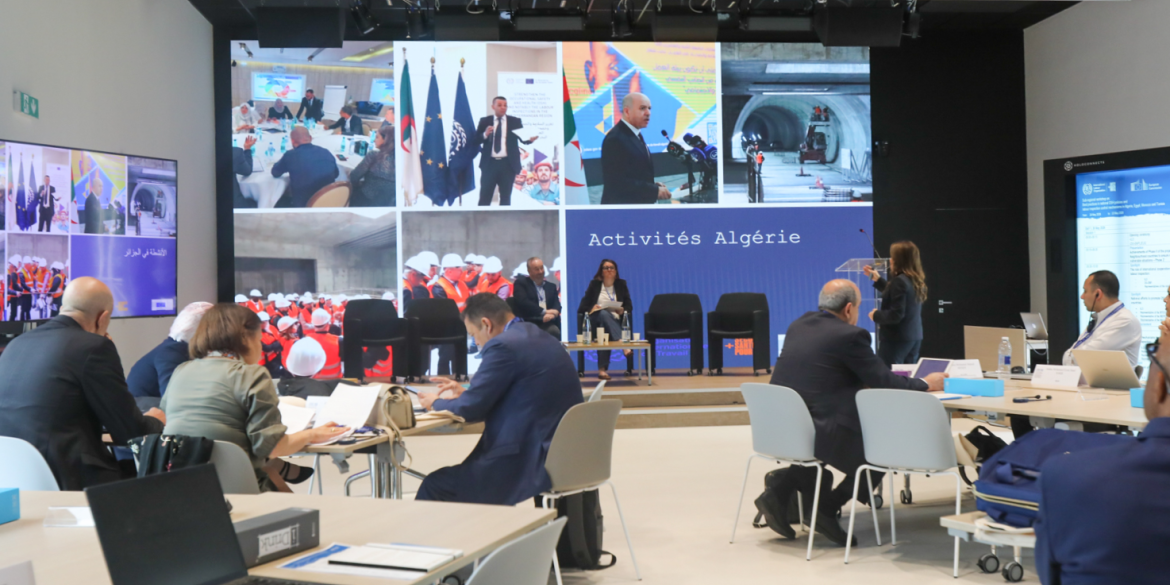
In Algeria, the project supported training on strategic compliance planning and inspection techniques, including work in the construction sector, and the creation of a task force of labour inspectors.
In Egypt, it supported the development and validation of the country's first national OSH profile and technical work, through two workshops, towards the preparation of a first national OSH strategy and programmes.
In Morocco, activities supported an exchange of experience with Spain on strategic planning for labour inspection and the development of a pilot inspection plan, alongside coordination among national institutions, social partners and United Nations agencies.
In Tunisia, three capacity-building workshops on strategic compliance planning were complemented by an awareness day on the national OSH strategy and a dedicated OSH promotion day for construction workers, contributing to renewed discussions around the national OSH policy and its institutional validation process.
The Turin workshop provided an opportunity to bring these experiences together.
The first day looked back at Phase II.
Participants reviewed project achievements, examined the contribution of international cooperation and compared national efforts to promote occupational safety and health. They also discussed how strategic planning for compliance was being integrated into labour inspection and how social partners were contributing to OSH and inspection-related work.
Connecting occupational safety and health with labour inspection
One of the recurring themes was the relationship between OSH policies and the effectiveness of labour inspection.
The project had supported the use of strategic compliance planning to help inspectorates identify priority risks and sectors and combine targeted inspection with awareness raising, technical tools, cooperation with other actors, and follow-up mechanisms.
A range of challenges was identified in agriculture and construction, including informal work, insufficient protective equipment, risks of falls, chemical exposure, climatic hazards and seasonal or precarious employment.
Participants therefore examined how inspection can be planned more strategically and how national OSH frameworks, prevention measures and inspection practice can reinforce one another.
The workshop then moved from objectives towards practical arrangements.
Groups selected a priority objective and developed a simple mechanism that could help advance it. Suggested options included committees, protocols, tools, training, data collection, campaigns, targeted inspections and regional exchange.
For each mechanism, participants were asked to clarify who would be involved, how it would function, what conditions were required and which simple indicator could demonstrate progress.
The aim was not to prepare complete project proposals, but to begin translating broad priorities into workable institutional arrangements.
Giving social dialogue a practical role
Social partners were part of both the project and the workshop methodology.
Government institutions, labour inspection and OSH authorities, national employers' organizations and representative workers' organizations, alongside ILO experts and representatives of the European Commission participated in the discussion.
The workshop considered where employers' and workers' organizations could contribute most effectively — including prevention, awareness raising, information sharing, training and follow-up — and what mechanisms could make their participation more structured and sustainable.
A dedicated session introduced innovative tools and examples of artificial intelligence in social security, OSH and labour inspection, drawing on international experience such as Albania's predictive inspection-targeting model, Brazil's use of generative AI for case-file analysis and of satellite and drone imagery to identify undeclared workplaces, and Germany's data-driven approach to accident prevention.
The presentation organized digital transformation around interconnected elements — purpose, data, methodology, tools, processes and people — with a central message: digitalization should begin by identifying the institutional problem to be solved, rather than by choosing a technology first.
The session also introduced newer capacity-building tools developed at the Centre's Innovation Lab, including immersive AI Avatar simulations designed to strengthen inspectors' interviewing and reporting skills. The material highlighted considerations such as data quality, confidentiality, skills, bias, maintenance and human oversight.
Preparing the next phase
On the last day, each country delegation worked on a concise national roadmap.
Each delegation was asked to identify up to two Phase II achievements to consolidate, a priority objective, a maximum of three actions, an innovation or tool to test, support required for the next phase, a simple progress indicator and one action that could be launched within one to three months after the workshop.
The workshop concluded by consolidating commitments around the national and sub-regional roadmaps for Phase III.
Three messages emerged from its conclusions.
- Promoting occupational safety and health and improving the effectiveness of labour inspection should be pursued together.
- Sustainable results require strategic planning, useful data, strengthened capacities and structured social dialogue.
- And, innovation is relevant when it addresses a concrete need and remains connected to institutional capacities.
The workshop therefore served as a bridge between phases of the project.
It brought together the experience accumulated since 2022, created space to compare national approaches and translated those lessons into practical priorities for Algeria, Egypt, Morocco and Tunisia.
The roadmaps developed in Turin provide the starting point for that next stage of work.