
Reimagining Labour Inspection: From Standards to Practice
Reimagining Labour Inspection: From Standards to Practice
How the ITCILO Academy combined international labour standards, field exposure, peer exchange and immersive learning to strengthen modern inspection systems.
4 November 2026
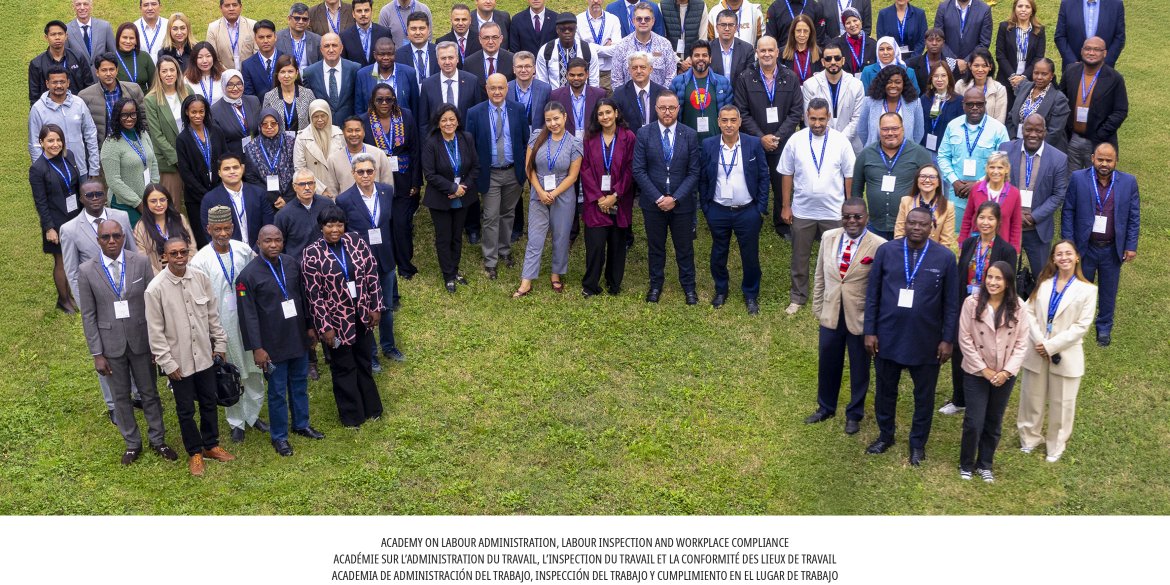
From 13 to 24 October 2025, the ITCILO Academy on Labour Administration, Labour Inspection and Workplace Compliance brought together labour inspectors, labour administration officials and workplace compliance practitioners for two weeks of intensive learning in Turin.
Labour inspection is operating in an increasingly complex world of work. Inspectorates are expected to uphold labour law and fundamental principles and rights at work, respond to new forms of employment and emerging risks, reach workers in informal and vulnerable situations, and make effective use of data and technology — while maintaining the trust, independence, and professional judgement on which credible inspection systems depend.
The Academy approached these challenges as interconnected. It combined international labour standards and institutional governance with sector-specific learning, study visits, peer exchange and immersive simulations. The result was a learning journey designed not only to deepen technical knowledge, but also to strengthen the practical and interpersonal capabilities that inspectors need in the field.
Stronger institutions for a changing world of work
The programme began with the role of labour administration and labour inspection as public institutions that contribute to decent work, effective labour market governance and the protection of rights at work.
Participants examined the mandate, functions and powers of labour inspection, the conditions required for effective inspection systems and the importance of linking legal authority with sound planning, institutional coordination and measurable results.
The ILO Guidelines on General Principles of Labour Inspection provided an important reference point for discussions on how inspection systems can remain effective, coherent and responsive as labour markets evolve.
Attention also turned to informality and the transition to the formal economy. Drawing on the ILO Transition from the Informal to the Formal Economy Recommendation, 2015 (No. 204), participants considered how labour inspection can contribute to extending protection and promoting compliance without losing sight of the economic and social realities that shape informal work.
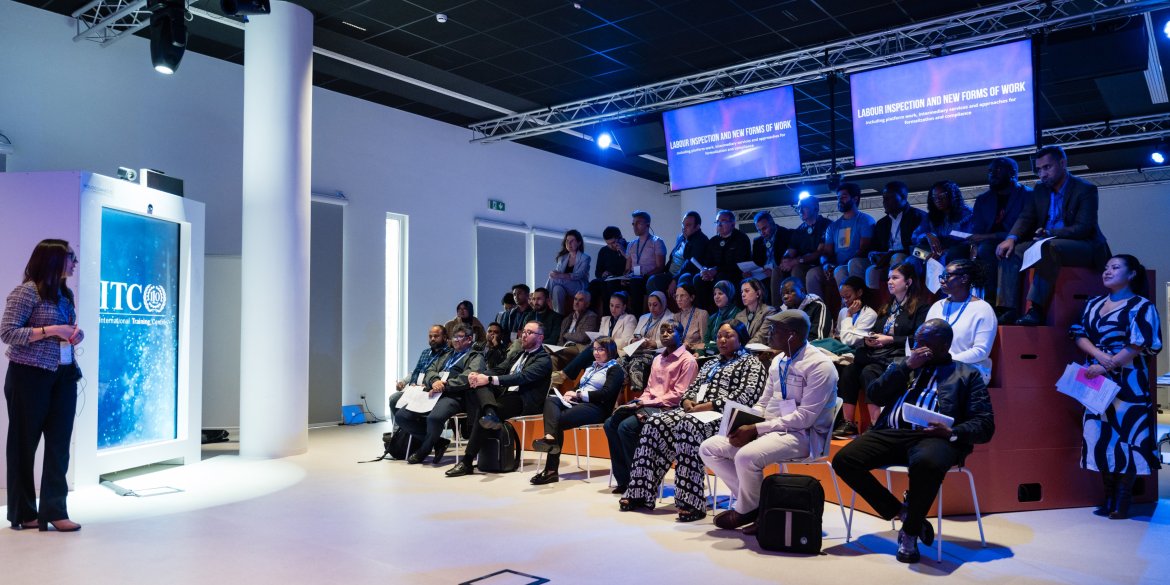
From mandate to strategic compliance
A recurring theme throughout the Academy was that inspection cannot rely on reactive enforcement alone. Participants explored how inspectorates can combine prevention, advice, enforcement, data and partnerships in a more strategic approach to compliance.
Sessions on impact indicators, planning and enforcement measures encouraged participants to consider how limited inspection resources can be directed where they can make the greatest difference. Later in the programme, this perspective was extended through work on strategic compliance planning and transformative digital technologies for labour administration and labour inspection.
Digital tools were presented not as an end in themselves, but as part of a wider process of institutional modernization. The emphasis remained on how data, technology and more adaptive planning can help inspectorates identify priorities, improve follow-up and make better-informed decisions.
Learning across sectors — and from each other
The Academy’s elective structure enabled participants to adapt the programme to their professional priorities. Electives addressed construction, rural areas including agriculture and mining, manufacturing, labour administration systems, and the links between labour inspection, social security and occupational safety and health.
These technical pathways were complemented by peer learning. A World Café created space for participants to compare national practices, discuss common dilemmas and examine how similar challenges are addressed in different institutional settings. This exchange was particularly valuable in a group bringing together professionals with different mandates, legal systems and levels of experience.
The learning then moved beyond the classroom. Depending on their elective track, participants visited a mine, a vocational training centre for the construction sector, and a manufacturing company. The visits provided a concrete setting in which to observe production processes, workplace organization, occupational risks and compliance challenges, and to connect technical discussions with the realities inspectors encounter in practice.






Rights at work in practice
During the second week, the programme placed particular emphasis on the Fundamental Principles and Rights at Work. Sessions addressed non-discrimination, freedom of association and the effective recognition of the right to collective bargaining, the elimination of child labour, the elimination of forced or compulsory labour, and occupational safety and health.
The discussions reinforced the role of labour inspection in translating rights and legal protections into workplace practice. They also highlighted the importance of coordination and cooperation among institutions, social partners and, where relevant, authorities across borders.
Labour mobility, risks of exploitation and cross-border collaboration were considered alongside occupational safety and health, accident investigation and digital governance.
Preparing for emerging risks and new forms of work
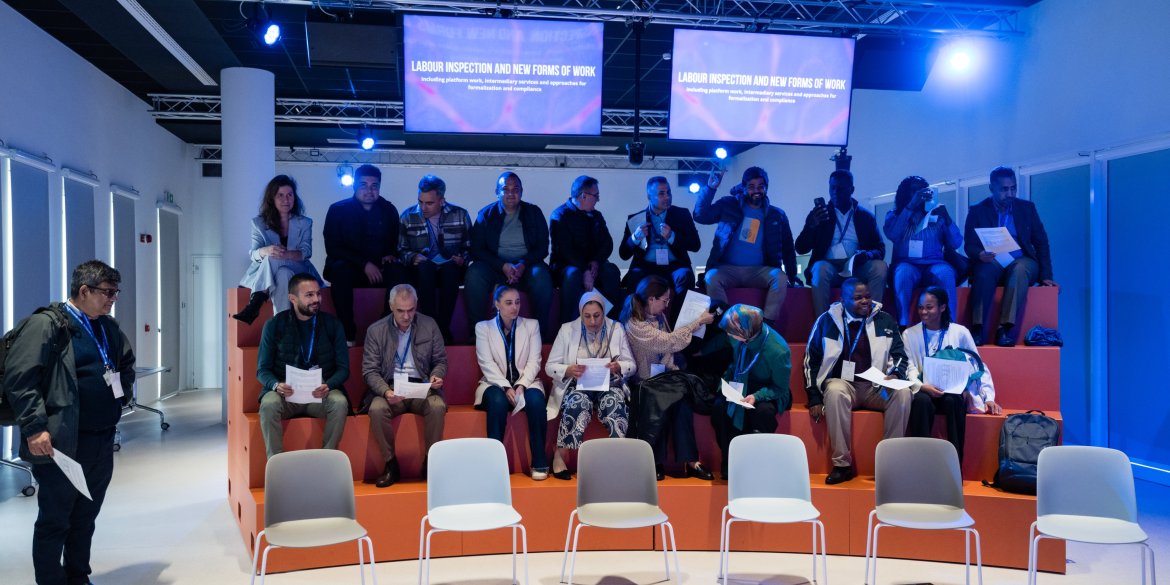
A second round of electives focused on issues that are increasingly shaping inspection practice: psychosocial risks, new forms of work, platform work, intermediary services, approaches to formalization and compliance, and occupational accident investigation.
These topics brought attention to areas in which employment relationships, responsibilities and risks may be less visible or more difficult to establish. They challenged participants to look beyond standard inspection routines and consider how evidence is gathered, how questions are framed and how professional judgement is exercised in complex situations.
The Academy’s immersive learning experiences were designed around the same challenge: how can inspectors practise the complexity of an inspection in a safe learning environment before confronting comparable situations in the field?
Participants worked through realistic scenarios using the ITCILO’s Cinema Room, Evidence Room and an AI-supported avatar. One scenario examined intermediary services and labour relations in a vanilla-curing supply chain. Another reconstructed an occupational accident on a construction site. A third focused on psychosocial risks in a hospital environment.
Participants had to observe carefully, analyse documents and physical evidence, identify inconsistencies, discuss competing interpretations and prepare for interviews. The AI-supported interaction added another dimension by allowing them to practise questioning, listening, tone and communication — capabilities that are essential when inspectors engage with workers, employers and other actors in sensitive situations.
Virtual and augmented reality activities provided further opportunities to explore workplaces, identify hazards and test observation and decision-making skills through interactive scenarios. Across these methods, participants underwent realistic practice without exposure to unnecessary risks.
From individual learning to institutional capacity
The Academy closed by returning to the future of labour inspection. The discussions underlined that modern inspection systems need more than new tools. They require capable professionals, clear mandates, strong institutions, cooperation and a continued ability to learn and adapt.
For participants, the two weeks connected international labour standards with the operational realities of inspection: how to plan, observe, analyse, communicate, enforce and prevent. For institutions, the Academy demonstrated how professional development can combine technical depth with peer exchange, field exposure and learning methods that mirror the complexity of real inspection work.
This approach is at the heart of the ITCILO’s work on labour inspection: supporting inspectorates and labour administrations to strengthen compliance, protect rights at work and build institutions that are prepared for a rapidly changing world of work.


