Communication for Development

Cover image © Unsplash
Communication for Development
From Strategy to Impact
23–26 Noviembre 2026
El curso está disponible en English
Próximas ediciones
Presentación del curso
Communication is most effective when it starts with strategy—not with tools. This four-day Communication for Development (C4D) programme takes participants from defining a communication challenge to developing a strategic communication solution.
Working in teams on a realistic client brief, participants explore audiences, messages, storytelling, products and channels while developing their own communication approach.
Through expert insights, collaborative workshops and hands-on practice, participants leave with practical tools, new ideas and a solution they can adapt to their own professional context.
¿Quiénes participan en este curso?
This course is designed for professionals who use communication to influence, engage or inspire others, including:
- Communication and public information professionals
- Development practitioners and programme managers
- Advocacy, policy and partnership professionals
- Donor relations and resource mobilization officers
- Monitoring, evaluation and learning specialists
- Learning and creative professionals supporting development initiatives
No advanced communication or design experience is required.
What can you expect?
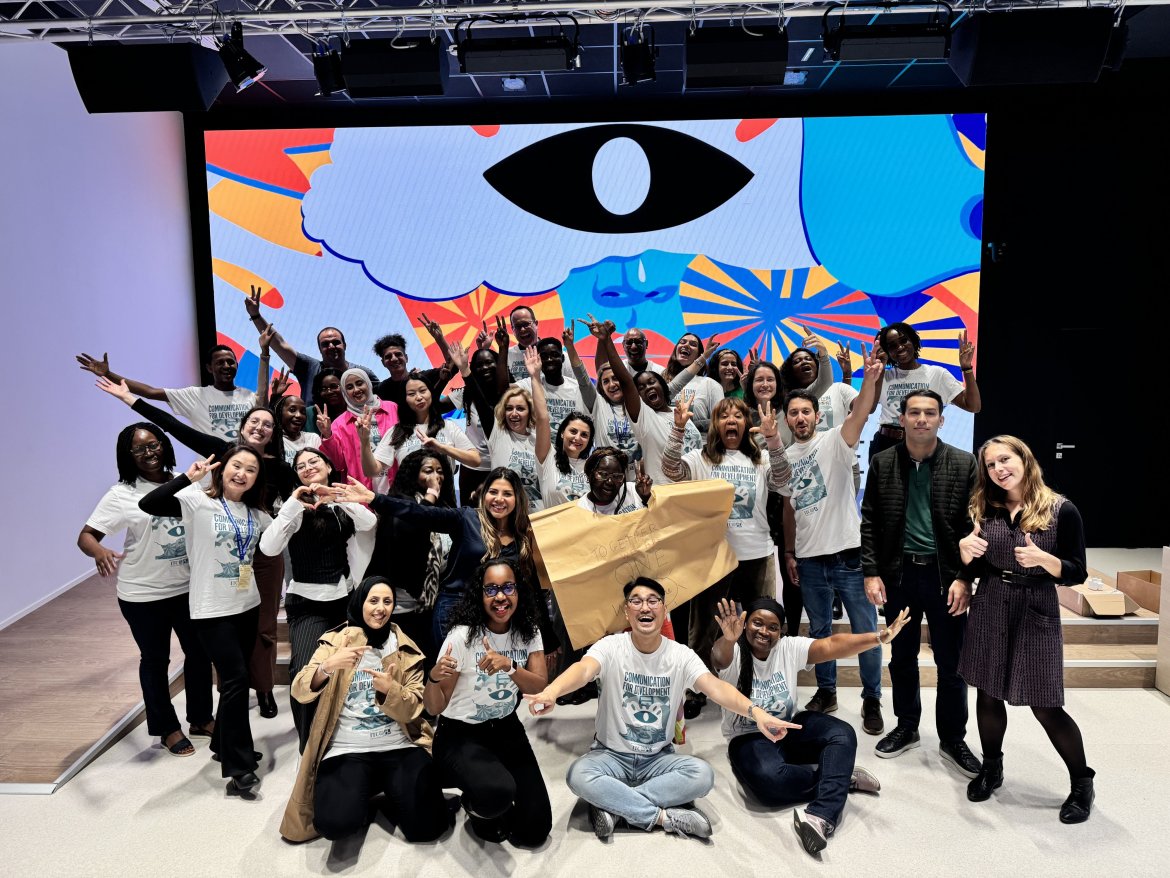
Throughout the programme, participants work in small teams on a realistic communication challenge, selecting one of four communication streams:
- Advocacy Communications
- Donor Communications
- Internal Communications
- Public Engagement Communications
Each team receives a client brief with a communication challenge, target audiences, constraints and expected outcomes. Over four days, participants progressively develop a strategic communication solution by:
- defining communication objectives and audiences;
- developing a communication strategy;
- exploring appropriate communication products and channels;
- developing and testing a communication concept or prototype;
- considering how to measure communication results; and
- presenting their strategic communication solution for feedback.
Learning takes place through a combination of expert insights, practical workshops, coaching and peer learning. Along the way, teams are challenged to adapt their strategies as contexts, priorities and communication needs evolve.
Participants leave with practical tools, templates and a strategic communication approach they can adapt to their own work.
Course structure
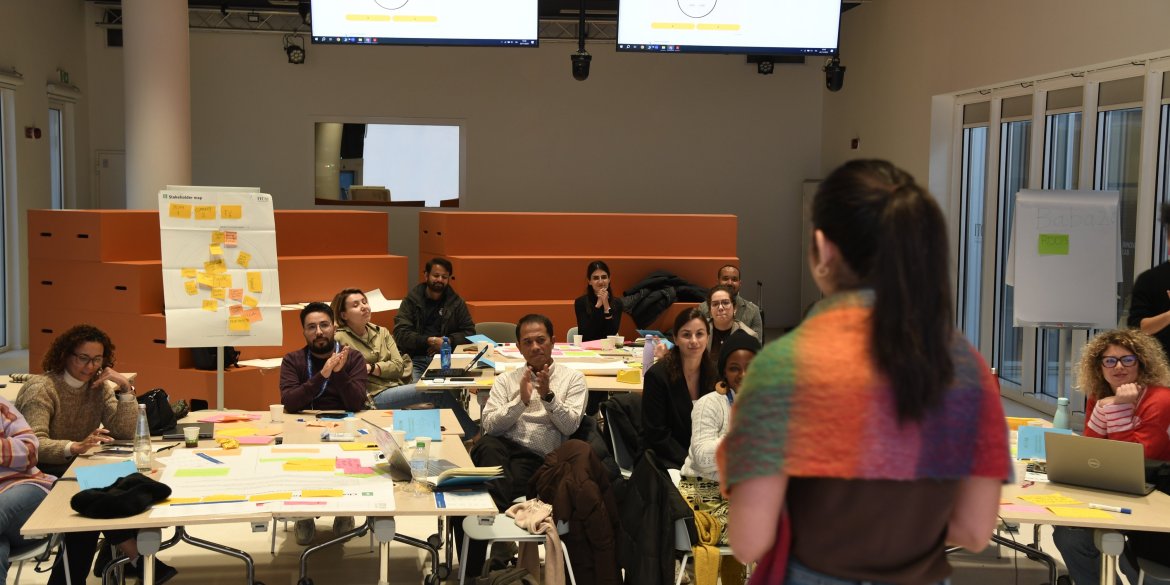
The programme follows a simple rhythm: mornings focus on theory and inspiration, while afternoons are dedicated to practical application. Each day concludes with regular opportunities for teams to share progress and receive feedback.
Detailed schedule
Day 1: Define the Challenge
Morning: The programme introduces Communication for Development and explores what makes communication strategic across different contexts, including advocacy, donor communications, internal communications and public engagement.
Afternoon: Working in teams, participants apply these insights to a communication challenge, defining their objectives, identifying priority audiences and developing key messages. They share their initial strategic thinking and receive feedback to strengthen their approach.
Day 2: Explore the Possibilities
Morning: Participants explore how storytelling, communication formats and channels can be used to engage different audiences. Through an interactive Communication Inspiration Lab, they discover approaches ranging from video, photography and podcasting to social media, design and emerging technologies.
Afternoon: Teams apply these insights to their communication challenge, developing their concept and identifying appropriate products and channels. Through coaching and practical exercises, they also explore how communication strategies can adapt to changing contexts and emerging challenges.
Day 3: Create
Morning: Participants explore how storytelling, content development and visual communication can bring a communication strategy to life, alongside practical approaches to measuring communication results.
Afternoon: Teams move into a collaborative Communication Studio, where they develop and test their communication concepts or prototypes with guidance from communication specialists and feedback from peers.
Day 4: Refine and Present
Morning: Participants explore techniques for pitching ideas and communicating with influence before working with facilitators and experts to refine their communication solutions and presentations.
Afternoon: The programme culminates in a Communication Showcase, where teams present their strategic communication solutions, explain the thinking behind their choices and receive feedback. The programme closes with reflection on key takeaways and how participants can apply their learning in their own professional contexts.
Team
The course is provided by the Learning Innovation Programme of the ITCILO. Massimiliano Leone, Melisa Zelaya, Nina Minadakis, and Arekpitan Ikhenaode will be your facilitators and coaches. They will be joined by a team of international communication experts who will inspire you with personal stories, inspirational talks, and out-of-the box ideas.
Previous speakers
- Roxanna Samii, Former Chief Digital Strategy at UN Environment: Roxanna is a highly accomplished communication professional with extensive experience in international financial institutions and the United Nations. She is a skilled social media strategist with expertise in knowledge management for development.
- Jennifer Hauseman, Former Director of Communication and Information Management at the International Committee of the Red Cross: Jennifer is a seasoned expert in communication and information management, specializing in humanitarian work. She spearheaded modernizing initiatives, digitizing communications and implementing human-centered project management.
- Alessandra Vellucci, Director at United Nations Information Service: Alessandra is a distinguished leader in public information, communications, international relations, and training within the United Nations. She held progressive positions, including Chief of the Intergovernmental Support Service at UNCTAD in Geneva.
Certification
Upon successful completion of the programme, participants will receive an ITCILO Certificate of Achievement, recognizing their successful completion of the Communication for Development programme.
Participants will leave with:
- Practical communication tools and templates;
- A strategic communication approach developed through the course;
- Acommunication concept or prototype
- Expert and peer feedback;
- New approaches they can apply in their own organizations.
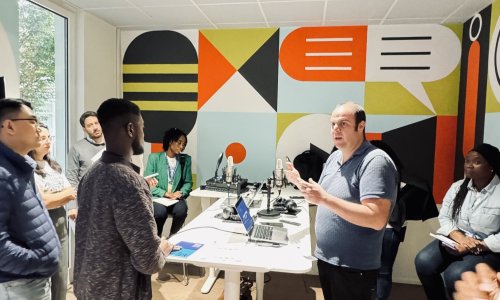
Why join?
Communication is no longer simply about creating content—it's about designing communication that drives change.
Whether you're advocating for policy reform, engaging donors, communicating organizational change or inspiring communities to take action, this programme will help you build communication strategies that are audience-centred, evidence-informed and action-oriented.
Learn from United Nations professionals and international experts. Collaborate with peers from around the world. Develop practical communication solutions to real-world challenges.
Are you ready to design communication that creates impact?
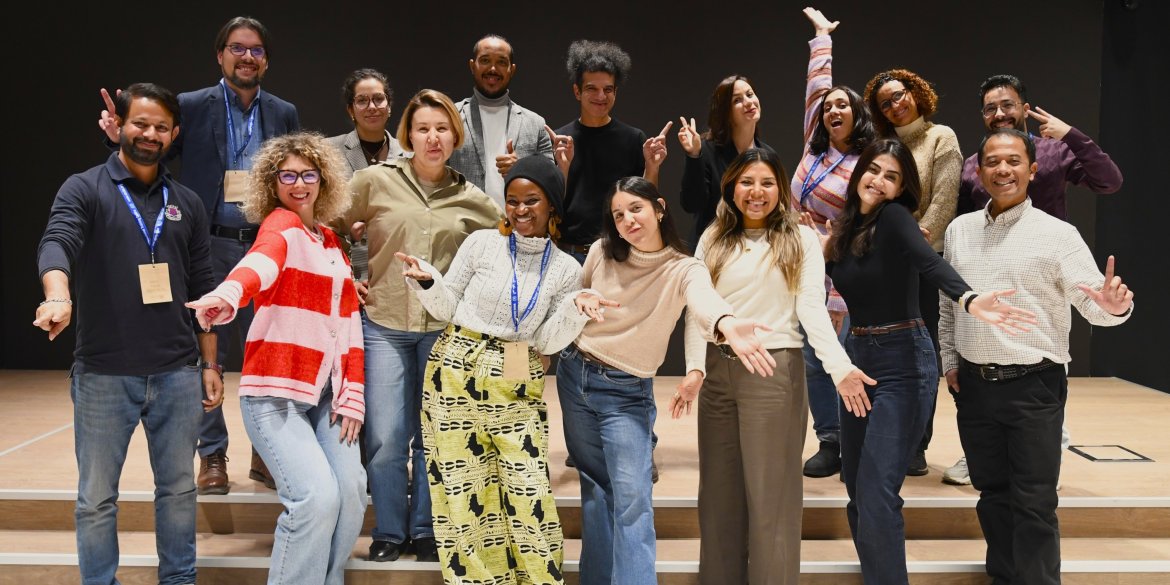
Tailor-made course
Looking for a learning experience tailored to your specific needs? Our Learning Innovation team specializes in creating customized design thinking and communication workshops that cater to the unique requirements of local, national, and international stakeholders.
Whether you need a workshop that addresses specific challenges in your organization or are looking to enhance the communication skills of your team, we can create a programme that aligns with your objectives.
Our customized workshops go beyond the traditional one-size-fits-all approach. We leverage design thinking methodologies to ensure that the learning experience is engaging, interactive, and highly relevant to your context. By collaborating closely with you, we develop a programme that addresses your specific challenges and empowers you to achieve your goals effectively.
Contact our team today to explore the possibilities and learn more about our customized learning experiences.