
Employment Impact Assessment through Social Accounting Matrix Analysis

Photo © pixabay/BusinessStar
Online
Employment Impact Assessment through Social Accounting Matrix Analysis
4–30 Mayo 2026
El curso está disponible en English
Key Features
HANDS-ON ANALYTICS
Apply SAM-based methods through guided exercises using real-world data and policy scenarios
DEDICATED TUTOR SUPPORT
Receive continuous guidance and personalized feedback from expert tutors throughout the programme
RECOGNIZED CERTIFICATION
Earn an ITCILO Certificate of Achievement upon successful completion of all exercises and assessments
Presentación del curso
Employment impact assessment is essential for understanding how economic policies, investments and sectoral interventions affect job creation and labour market outcomes. This online course introduces participants to the ILO's approach to employment impact assessment and provides an in-depth exploration of Input-Output tables and Social Accounting Matrix (SAM) analysis. Participants will learn how SAM-based multiplier analysis captures linkages across economic activities and sectors, enabling the estimation of direct and indirect employment effects resulting from changes in investment, production and demand. Through practical cases and hands-on, data-based exercises, participants will gain the skills to conduct SAM-based analysis, interpret analytical results and use evidence from SAM analysis to inform policy design and programme planning aimed at promoting job-rich growth.
¿Quiénes participan en este curso?
The course is intended for professionals with an interest in evidence-based policymaking and in using quantitative tools, such as Input-Output tables and Social Accounting Matrix (SAM) analysis, to understand the employment effects of economic policies, investments and development programmes. It will be particularly relevant for: - Government officials from ministries of labour, planning, finance, economy and sectoral ministries involved in policy analysis and programme design - Development practitioners and technical specialists from international organizations, development agencies and non-governmental organizations - Policy advisors and consultants involved in economic policy analysis and impact assessment
How is the course organized?
The course is delivered fully online over four weeks through the ITCILO eCampus platform, combining live interactive sessions with self-paced learning activities with tutor individual feedback to ensure both flexibility and engagement.
Each week, participants will benefit from:
- Live expert-led webinars
Two interactive sessions led by subject-matter experts, offering conceptual insights, practical guidance, and opportunities for discussion and exchange. - Self-paced learning materials
Carefully designed resources introducing key concepts, analytical tools, and their application to real-world policy contexts. - Hands-on practical exercises with tutor feedback
Individual assignments using real data, enabling participants to apply Input–Output and Social Accounting Matrix (SAM) analysis in a structured and progressive way.
What will I learn?
- 1. Introduction to Employment Impact Assessment
- 2. National Accounts and the Circular Flow of the Economy
- 3. Employment Creation and the Multiplier Process
- 4. Introducing Exogenous Shocks and Analysing Employment Multipliers Using I-O Tables
- 5. Supply-Use Tables and Social Account Matrix
- 6. Introducing Exogenous Shocks and Analysing Employment Multipliers from a Social Accounting Matrix
- 7. Labour Statistics and Decent Work Indicators
- 8. A Practitioner’s Step-by-Step Guide to Employment Impact Assessment and Discussion of Final Exerc
 Discover the ILO’s approach to EmpIA and understand why it is essential for informed policy and investment decisions. This session explores key concepts, common challenges, and the range of methodologies used to assess how interventions affect job creation and job quality.
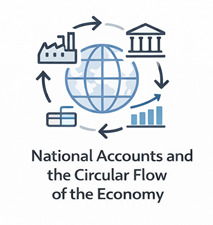 Learn to “read” the economy through national accounts. This webinar introduces the I-O Table and the SAM as powerful tools to capture the structure of an economy and reveal macro-level linkages between economic actors.
 Explore how economic transformation shapes employment outcomes. This session unpacks the logic of the multiplier process, showing how changes in one sector ripple through the economy to generate direct, indirect and induced employment effects.
 Move from theory to practice. In this applied session, participants will simulate policy or investment shocks within an I-O framework and analyse their effects on output and employment.
 This webinar introduces Supply-Use Tables and Social Accounting Matrices, with a focus on understanding how they differ from I-O tables.
 Move from theory to practice. In this applied session, participants will simulate policy or investment shocks within a SAM framework and analyse their effects on output and employment
 Go beyond job numbers. This session highlights how to integrate labour statistics and decent work indicators into EmpIA, capturing both the quantity and quality of employment outcomes.
 Learn how to conduct an EmpIA in practice—from data preparation and modelling to interpreting results and validating assumptions—ensuring robust and policy-relevant analysis. The session also provides an opportunity for participants to present and discuss their final exercises. This is a key moment for consolidating learning, receiving expert feedback, comparing approaches, and deepening understanding through real analytical challenges.