
Managing Employment Disputes Effectively in International Organizations

Image © Alice Lotti
Managing Employment Disputes Effectively in International Organizations
Develop the skills to prevent, manage and resolve employment disputes
10–12 mai 2027
Le cours est disponible en English

How can international organizations manage employment disputes more effectively?
Now in its 10th edition, this course brings together professionals involved in employment dispute resolution from across international organizations. Through practical case studies, expert-led discussions and peer learning, participants exchange good practices on sound administrative decision-making, early and informal resolution, effective internal review, and the prevention and handling of staff conduct matters.
Key features
EXPERT SPEAKERS
Receive guidance from internationally renowned experts from the sector
PEER LEARNING
Share your experience with peers from other international organizations.
PARTICIPATORY APPROACH
Brainstorm challenges and find solutions to common workplace concerns.
Présentation du cours
International organizations are required to provide fair employment conditions and effective mechanisms for resolving workplace disputes. At a time of increasing financial constraints and reduced human resources, preventing escalation, making sound administrative decisions and resolving disputes effectively are more important than ever. For its 10th edition, the training introduces a new academic component on international administrative law, complementing the established practice-oriented workshop in Turin. Together, the two components offer an opportunity to step back from day-to-day practice, examine developments in the law and exchange experiences and good practices with professionals from other international organizations.
Groupes cibles
The training course is intended for all staff involved in conflict prevention and resolution in international organizations, in particular HR and legal professionals, staff of peer review bodies, and managers.
Voices from the programme
Hear directly from experts and participants on what it takes to prevent, manage and resolve employment disputes in international organizations.
Delivered in partnership with
This is a joint ILO-ITCILO training, which has been developed and is organised in collaboration with the ILO Office of the Legal Adviser.
What topics will this course cover?
For its 10th edition, the training will introduce a new academic component on international administrative law, complementing its established practice-oriented workshop in Turin. The programme brings together academic reflection and practical learning through two complementary components.
Academic component
The training begins with a new academic component on international administrative law, designed to complement the practice-oriented workshop in Turin (10–12 May 2027). It offers participants an opportunity to step back from day-to-day practice, examine developments in international administrative law and reflect on their implications for practitioners.
The academic component will be delivered by Anne-Marie Thévenot-Werner, Associate Professor at Paris-Panthéon-Assas University, and Daniel Peat, Assistant Professor of International Law at Leiden University, co-authors of The Law and Practice of International Administrative Tribunals.
The academic component consists of three complementary elements:
1. Online sessions
Four live, two-hour sessions covering:
- 30 March 2027 – Sources of international administrative law
- 2 April 2027 – General principles of international administrative law
- 6 April 2027 – Managing disputes with non-staff personnel
- 9 April 2027 – Recent developments in the jurisprudence
Time: 13:00–15:00 Central European Summer Time (CEST)
All sessions will be recorded for participants unable to attend live.
2. Analytical brief
Participants will be required to prepare a short analytical brief, critically examining a proposition in light of selected jurisprudence and considering its implications for the practice of international organizations.
The topic and detailed instructions will be provided at the end of the online sessions.
Submission deadline: 26 April 2027.
Completion of the online sessions (live or through the recordings) and submission of the analytical brief are prerequisites for participation in the classroom workshop in Turin.
3. In-person session – Turin
The academic component will culminate in a dedicated session with the scholars during the workshop in Turin. Building on the analytical briefs, the session will provide an opportunity to take a broader look at developments in international administrative law and consider what they mean for the effective prevention, management and resolution of employment disputes.
Classroom component
The classroom workshop in Turin consists of six sessions, combining practice-oriented discussions on the prevention and management of employment disputes with a dedicated session building on the academic component.
Session 1: Getting decisions right
Focusing on the fundamentals of good decision-making – from authority, facts and applicable rules to fairness, reasoning and communication.
Session 2 : Making informal resolution count
Making the best use of informal mechanisms to resolve conflict early, prevent escalation and foster a respectful workplace culture.
Session 3: Taking stock: international administrative law in perspective
Bringing together the academic component and written assignments to take stock of key developments in international administrative law and their implications for practitioners.
Session 4: Reviewing decisions effectively
Strengthening internal review processes to identify and correct errors and ensure fair and credible outcomes.
Session 5: Investigating staff misconduct
Addressing key legal and practical issues in misconduct investigations, including fraud and harassment cases.
Session 6: Handling disciplinary matters
Ensuring accountability, due process and proportionality in the handling of disciplinary matters.

What will you take away?
The training will provide participants with an opportunity to:
- Deepen their analysis of evolving trends in international administrative law and their implications for practitioners
- Make better use of informal approaches to prevent and resolve workplace disputes
- Strengthen administrative decision-making and internal review, drawing on applicable legal principles and good practices
- Strengthen their handling of staff misconduct, ensuring effective accountability through sound investigation and disciplinary processes
- Draw on good practices and peer experience to reflect critically on their own practice
Why join this course?
- A fresh perspective on international administrative law — Step back from day-to-day practice, examine developments in the jurisprudence and consider what they mean for the way employment disputes are managed.
- Learning grounded in practice — Work through real institutional challenges with experienced practitioners, drawing on legal principles, case studies and approaches that have proved effective.
- Learn from peers across organizations — Exchange experiences with HR, legal, informal conflict resolution and legal professionals from different international organizations, comparing approaches and learning from one another.
- From legal principles to better institutional practice — Take away ideas for strengthening decision-making, internal review, conflict prevention and the handling of staff misconduct.
- A distinctive mix of academic and practitioner expertise — Engage directly with leading scholars and experienced professionals working across different international organizations.

Accommodation and travel
The course fee includes full board accommodation at the ITCILO campus in Turin, routine medical care, medical insurance, and internet access.
Travel costs are not included in the course fee and remain the participant's responsibility.
However, a free shuttle service between Geneva and Turin is available for interested participants:
- Outbound — Departs Geneva (ILO offices), Sunday, 14:00
- Return — Departs ITCILO, Wednesday, 18:00
For booking and further information on the shuttle service, please contact f.tirone@itcilo.org.
Practical information
- Available places — Places are strictly limited to 30 participants, with a maximum of two participants per organization to ensure equitable access across organizations.
- Language — The entire training programme is conducted in English. A good command of the language is required.
- eCampus — Participants will have access to the ITCILO eCampus, where they will find course materials, recordings of the online sessions, and resources for the analytical brief. The platform will also be used to share the brief's instructions and selected jurisprudence and to submit completed briefs.
- How to apply — Click Apply Now and complete the online form. Registration is confirmed on a first-come-first-served basis, upon receipt of the completed application and a sponsorship letter from the employing organization covering course fees. To encourage diversity of institutional perspectives and meaningful exchanges, a maximum of two participants per organization will be accepted.
- Payment and cancellation — The total fee must be paid in advance. To withdraw, notify the Centre in writing at least 14 days before the course start date. See the full payment and cancellation policy.
Beyond the classroom
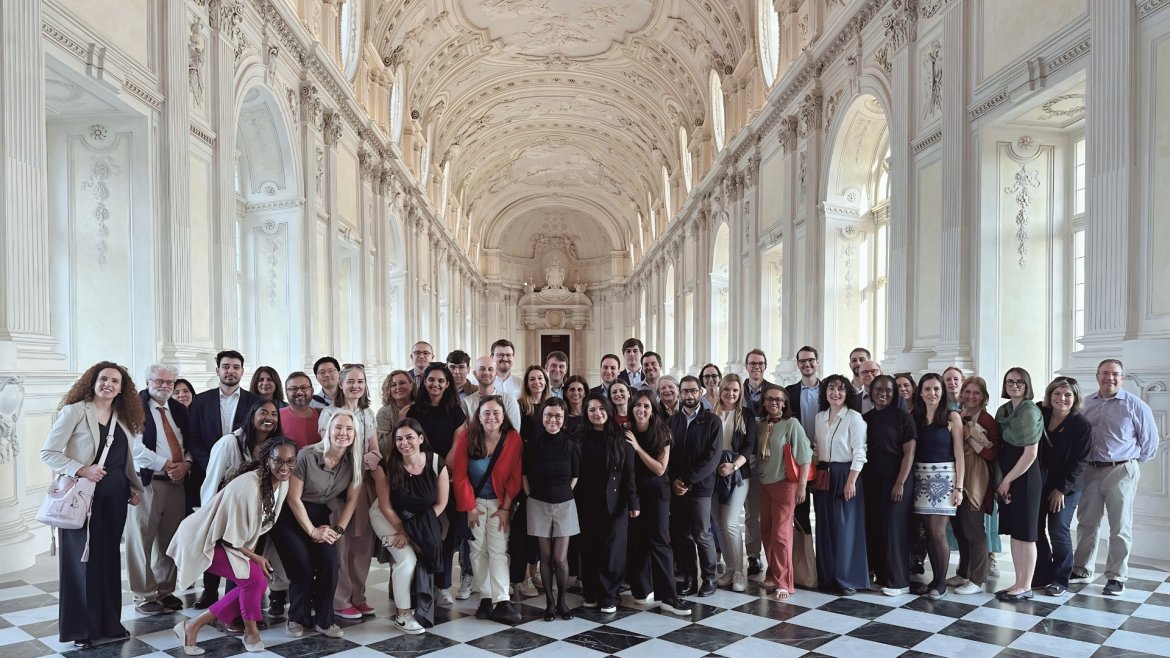
The residential format is designed to foster genuine connection alongside the learning experience:
- Welcome cocktail — evening of Sunday 9 May 2027 — an opportunity to meet fellow participants and tutors as the course begins
- Guided tour and course dinner — an evening dedicated to discovering the beauty of the region together
Set against the timeless beauty of Turin, these moments turn learning into an experience to remember.
Your questions, answered
Do I need prior experience in dispute resolution or HR to attend this course?
The course is designed for professionals already working in roles connected to employment relations, HR, legal advice, internal review, or staff conduct matters within international organizations.
What does the course fee include, and what is not covered?
The course fee includes full-board accommodation at the ITCILO campus in Turin, routine medical care, medical insurance, and internet access. It does not cover travel costs to and from Turin, passport and visa fees, or airport taxes.
What happens if I need to withdraw after registering?
Participants must notify the Centre at least 14 days before the course start date if they wish to withdraw. Cancellation penalties may apply — see the full Payment and Cancellation Policy for details.
Will I receive a certificate at the end of the course?
Yes. Participants who successfully complete the course receive an ITCILO Certificate of Participation. Learn more about ITCILO digital credentials.
Ready to join the next session?
Online : 30 March and 2, 6 and 9 April 2027 — Face-to-face : 10-12 May, Turin, Italy
Limited to 30 places
Start your learning journey
This course is also part of the broader ITCILO Social Dialogue curriculum, spanning conciliation/mediation, negotiation, industrial relations, and more.
Begin your journey in resolving employment disputes in international organizations by exploring the recommended publication "Best practices in resolving employment disputes in international organizations"


