
Can Brain-Sensing Headphones Help Us Learn Better? Inside Our First Neurotech Pilot
Can Brain-Sensing Headphones Help Us Learn Better? Inside Our First Neurotech Pilot
At our AI+ Nonference, participants wore EEG headphones for four days and found out that their brain data does not always agree with how they feel.
27 octobre 2026
Michael Aboya
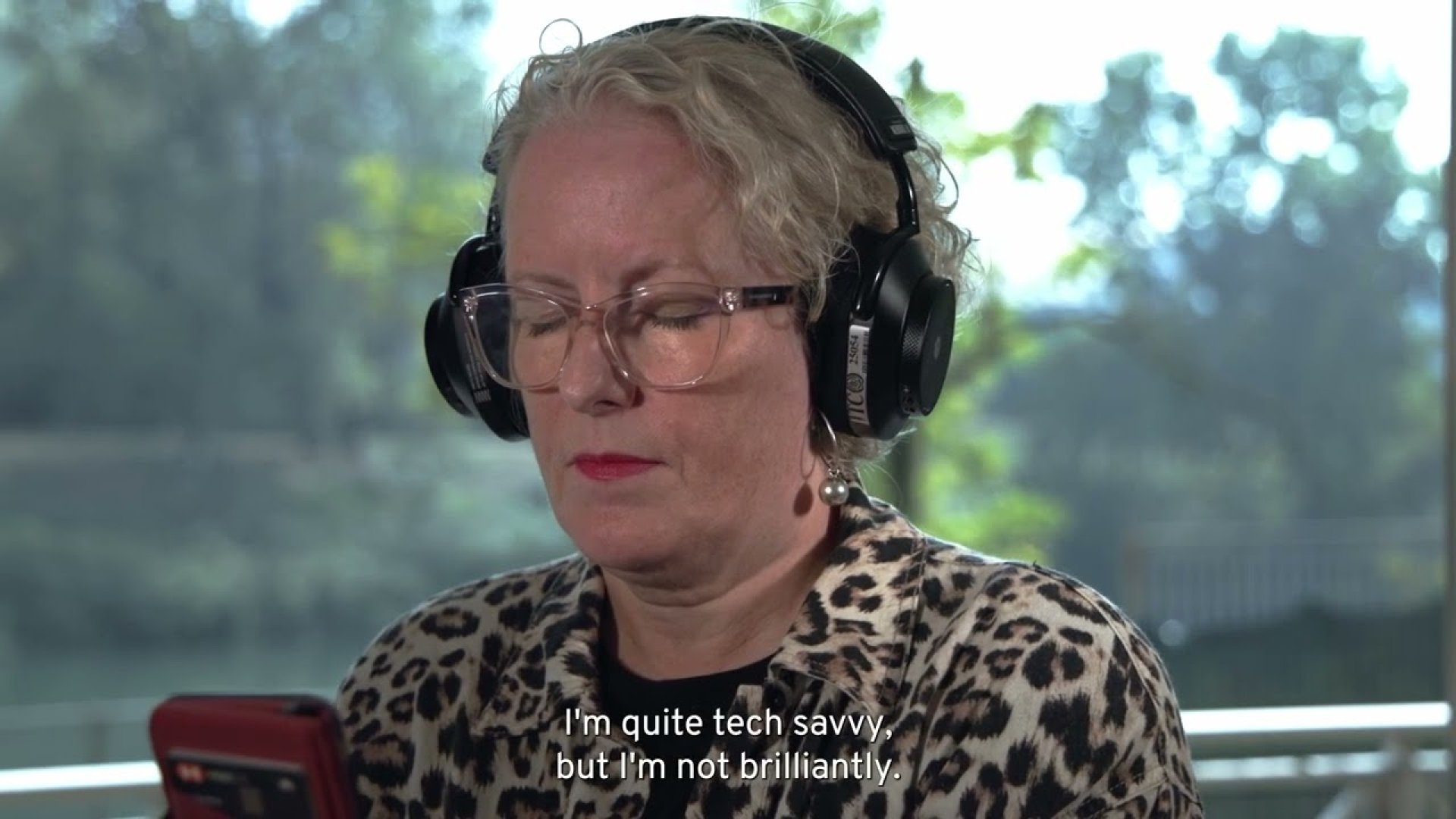
When Oonagh McGirr, founding director of the World Alliance for Micro Credentials Foundation, heard she would be wearing brain-sensing headphones for four days, she was not sure how it would go. “I expected it would be tricky to manage,” she says. “I’m not some sort of tech geek or guru. So I was a little trepidatious.”
She signed up anyway. In a conversation, a colleague who had been using the headphones spoke about what he had learned, and that caught her interest. At an event focused on AI and new technologies, she felt the right thing to do was to put herself in the frame and learn something new, both about the technology and about herself.
The headphones read her brain activity and showed the results on a mobile app, and by the end of the first day, what she saw had already surprised her. “I went home, and I was like, Whoa, my brain is sharp,” she says. “I found it to be very positive, actually.”
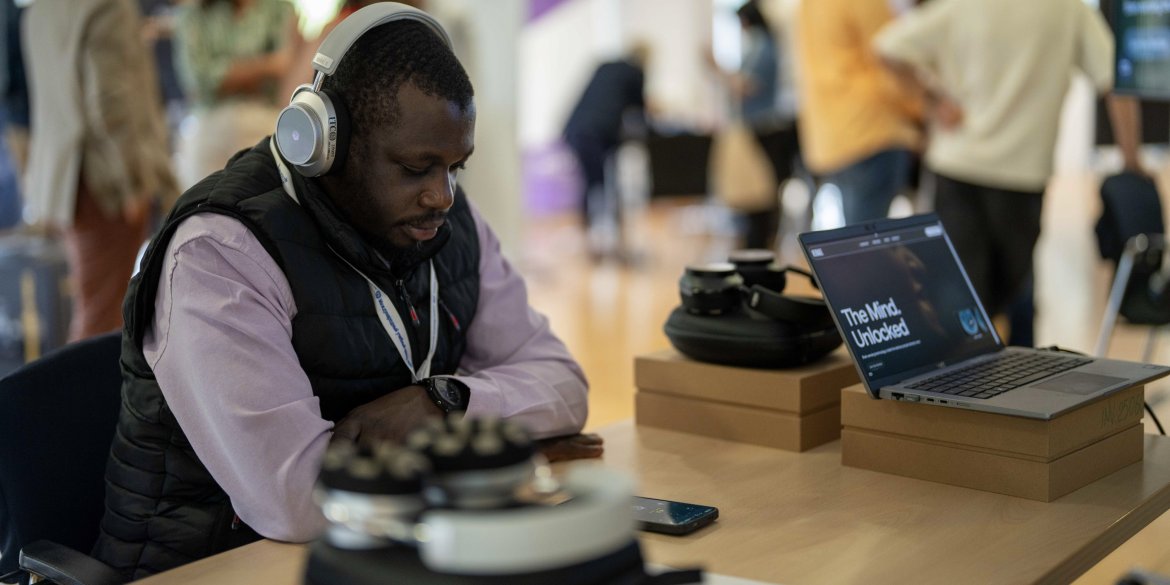
Oonagh was among the volunteers who participated in our first neurotechnology pilot in a live learning environment: the AI+ Nonference which ran from 29 September to 2 October 2026.
The AI+ Nonference brought people together to explore how artificial intelligence interacts with other emerging technologies, and what that means for how we work and learn. Neurotechnology is one of the fastest moving of these. Devices that read the brain’s electrical activity once belonged in hospitals and research labs. Now they fit inside a pair of headphones and promise to tell you how focused you are, how hard your brain is working, and when you need a break.
For a learning institution, that raises questions we cannot afford to leave to the market. Can brain data help people learn better, or does it simply give them one more number to worry about? Who should see it, and who should never see it? We began exploring these questions in 2025 with an earlier one-day pilot, where colleagues tried the device together in a controlled setting.
What is EEG and why does it matter for learning?
Every moment of concentration, effort or distraction produces faint electrical signals in the brain. An electroencephalogram, or EEG, picks them up. Nowadays, consumer devices use fewer sensors and AI to clean up the signal, so EEG can fit inside ordinary objects like headphones. Think of it as STRAVA for the mind. Where runners track their pace, distance and recovery, these devices track how focused you are, how hard your brain is working and how well it has recovered.
For anyone who designs learning, this matters. Attention, mental effort, and rest shape how well people learn, yet learners and trainers can usually only guess at them. Brain data could help people pace themselves and help trainers design better sessions. It could also create new pressure, new surveillance and new ways to judge people. We wanted to understand both sides before the technology arrives in training rooms.
How the headphones and mobile app work
The headphones look and work like ordinary wireless headphones, but they also pick up EEG signals. Each recording is synced to a mobile app on the wearer’s phone, where only they can see it.
Participants used two main types of session.
- Snapshot. A two-minute check that gives a quick picture of how the brain is doing at that moment.
- Focus session. This runs while you work or read, and shows how your focus rises and falls over time.
From these, the app builds simple readings of focus, processing speed, mental strain and how well the brain is handling stress. It can also prompt you, with a voice alert suggesting a break when attention fades, or a soundtrack that grows louder as focus rises. An AI-powered coach adds a short daily suggestion.

Our approach to testing brain-sensing technology
At that earlier one-day pilot in 2025, colleagues tested the device together in a single session, and the results were mixed.
- Some found it hard to match what the app showed with how they actually felt, and thought they were focused when the data said otherwise.
- Others found it a useful prompt to reflect on how they organise their day.
- Several were uneasy about what happened to their data, and felt their permission to share it had not been asked.
- High focus did not always mean better performance. Deeper engagement tended to come from novelty and active tasks.
Because brain data is deeply personal, the pilot also followed a Data and Dignity approach. Participation was voluntary, readings were visible only to the wearer, and participants could pause or stop at any time. ITCILO collected no device data.
Readings happened around sessions rather than during them, so the headphones never got in the way of listening. Participants took two-minute Snapshots before and after contrasting moments of the programme. Each evening they ran a 20 to 30 minute Focus Session alone in their room. On day three, they took a pause test, with a reading before and after a ten-minute meditation.
A paper logbook tied it all together. Before every reading, participants wrote down their own guess, so each number became a moment of reflection rather than a verdict. Each day also brought a new question. Can I read my data? Which learning formats work for me? Does the feedback help me steer my energy? Would I want this technology at all?
What brain data revealed about focus, effort and rest
Over four days at the AI+ Nonference, participants recorded their own guesses alongside the app’s readings, before and after sessions and in the evenings. The logbook entries point to five findings.
How we feel and what our brain shows are not always the same
In one logbook, guesses and readings matched on 10 out of 12 checks. Both mismatches happened at moments of felt tension, when the app recorded balance and no strain.The very first reading, showing sharp cognitive speed and balanced recovery, was better than expected. The gaps pointed less to faulty data than to how difficult it is to judge one’s own mental state.
Different learning formats leave a different mark
On day two, readings were taken after a plenary opening and after an interactive Discovery Fair. The fair was experienced as the more draining of the two, and it produced the biggest change in the app. Yet the data showed the brain handling it well, in better shape than expected. Format and timing, not only content, seemed to make the difference.
Short, deliberate pauses make a visible difference
Break prompts during the evening Focus Session suggested a pause whenever attention dipped. On day three, a ten-minute meditation during the coffee break, with a reading before and after, produced a change visible both in the app and in how ready participants felt for the next session, grounded, focused and relaxed.
Seeing the data builds confidence and helps people pace themselves
By day three, the readings showed focus and balance to be steadier than expected, which increased the sense of control. For anyone moving between tasks that demand different skills, that kind of insight supports better pacing, preparation for each task and time set aside to reflect.
Self-awareness can tip into self-monitoring
The cues supported self-regulation, but they also encouraged closer self-observation, a mix of both. Over the four days, the pauses became something to look forward to. Striking the right balance between awareness and monitoring will be essential for any use of this technology in learning.
Could neurotechnology make learning more inclusive?
Most brain-sensing headphones are marketed as productivity tools, helping busy professionals focus harder and work longer. The pilot pointed to another possible use.
One participant felt this technology could be especially valuable for autistic learners, who may experience emotional or sensory shutdown that others don’t notice until it has already happened. A device that picks up early signs of overload and prompts a pause could help them recognise and manage these moments.
This turns the question around. Rather than asking how neurotechnology can make strong performers sharper, it asks how it could support learners who face the greatest challenges and need the most support. For a learning institution, that may be where its value is greatest.
What comes next for neurotechnology at ITCILO?
With a small group of volunteers, four days and a consumer headset, our pilot’s aim was to gather honest experiences and better questions. It delivered both, and it gave us a first look at what happens when learners see their own minds in data. These insights will guide how we take this work forward, as we continue to explore what brain data can and cannot offer learners.
One question guides everything we do next: How can learners keep full agency over their own learning?
Oonagh’s answer came in the form of a picture. Asked what the headset would be if it were an animal, she said, “A mama bear, holding your hand and telling you to slow down.”
That is the kind of support we want to build. We will take this work forward with partners, carefully and openly. We want to hear from institutions, organisations, and anyone curious about how neurotechnology could support learning and wellbeing at work. You might want to test these tools in your own programmes, share what you have learned, or help shape principles for using brain data responsibly.
If you would like to know more, take part in a future pilot or explore a partnership, get in touch.


