What Can Leonardo da Vinci Teach Us About the Future of Work?
What Can Leonardo da Vinci Teach Us About the Future of Work?
Inspired by the Renaissance, the AI+ Nonference brought fresh perspectives on an AI-driven world.
29 October 2026
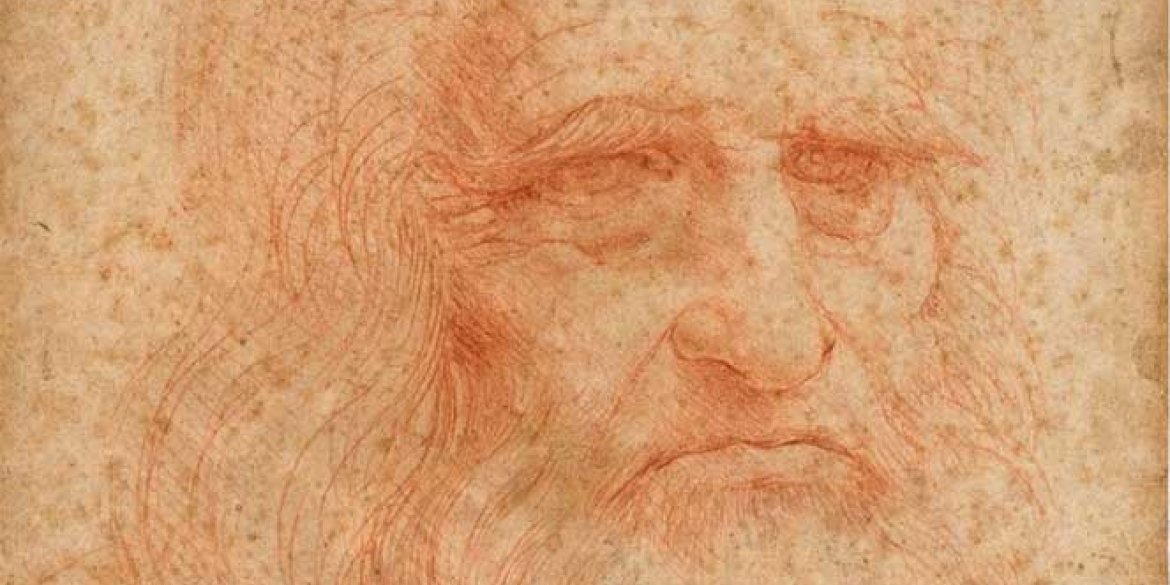
Leonardo da Vinci (1452-1519). We litter this story with quotes often attributed to him.
©Royal Library of Turin
Somewhere in the Royal Library of Turin lies a presumed self-portrait of Leonardo da Vinci. The portrait is sepia toned on textured parchment, and in it, Leonardo stares contemplatively. His hair, long and flowing. His beard, thick. A man of genius and extraordinary versatility, the real jack of all trades and master of all. An anonymous manuscript from the 1500s considers this man “so rare and universal that one can say he was produced by nature through her miracle.”
Leonardo was special for many reasons, but we would say principally for his ability to create new ways for experiencing and understanding the world.
“Once you have tasted flight, you will forever walk the earth with your eyes turned skyward, for there you have been, and there you will always long to return.” - Leonardo da Vinci
Sometime around the year 1487, after a keen interest in bodily proportions, Leonardo completed his rendering of the Vitruvian Man.
Believing the workings of the human body to be an analogy for the workings of the universe, Leonardo’s Vitruvian Man illustrates his study of ideal human proportions and is distinct in its alignment of art, mathematics, science, classicism and naturalism. This alignment reflects his fascination with the relationship between the individual and the wider world, a connection that remains strikingly relevant today, as we continue to place humanity at the centre of a fast-evolving world, just as Leonardo did more than 500 years ago.

Our world is undergoing profound changes, caused by interconnected mega-drivers: the digital transformation is reshaping how we work and learn; the green transition is redefining economies and industries with more sustainable models and practices; and demographic shifts are changing the composition and needs of our societies. At the intersection of these transformations stands artificial intelligence, accelerating change, opening new possibilities and raising important questions about the future of work. As AI increasingly converges with other emerging technologies, the challenge is no longer simply technological. It is also profoundly human: how can we ensure that these transformations lead to fair, inclusive transitions, and contribute to decent work and social justice?
It is first a question of seeing
Leonardo da Vinci embodied the art of seeing differently. Over recent years, ITCILO has been cultivating a similar spirit of curiosity and experimentation. From digital briefs and masterclasses to academic partnerships, a growing ecosystem of initiatives has emerged to understand, anticipate and help shape the combined effects of artificial intelligence and other emerging technologies on the world of work. This journey has gradually brought us to a new way of thinking about technological change: AI+. Not artificial intelligence in isolation, but AI in convergence with emerging technologies. And this is where Leonardo's Vitruvian Man takes on a new meaning.
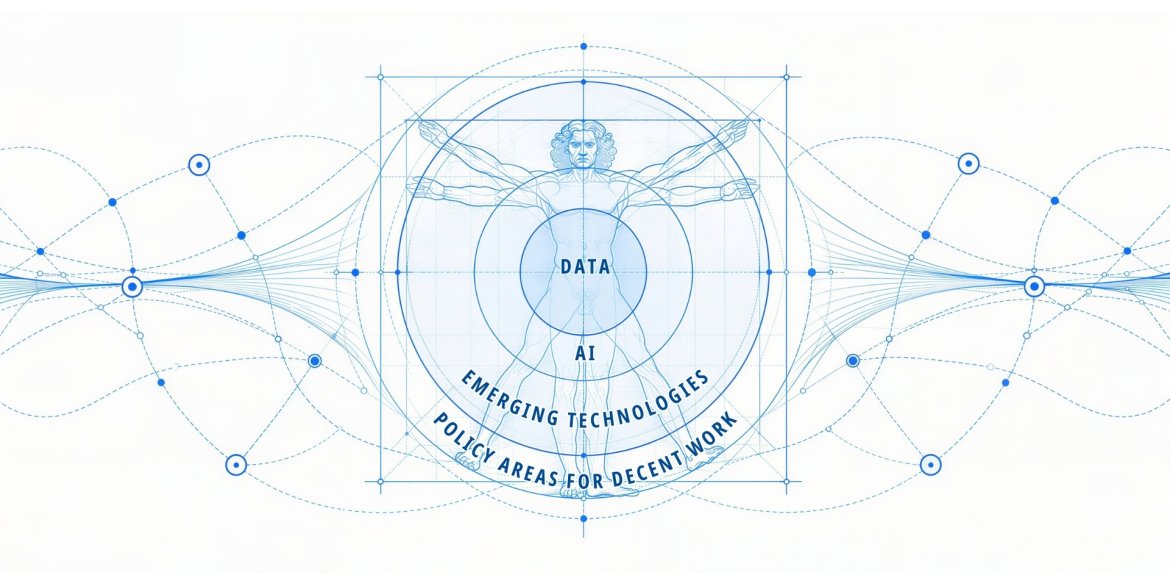
In our reinterpretation, the human figure remains at the centre, nestled among concentric layers of data, AI, emerging technologies and the policy areas that shape decent work. Much like Leonardo sought to understand the relationship between the human body and the wider universe, our AI+ approach invites us to explore the relationships between people, technologies and the systems in which they live, learn and work.
But understanding these convergences requires more than technological expertise. It calls for different perspectives, disciplines and experiences to come together, question assumptions and imagine alternative futures.
The AI+ Nonference event
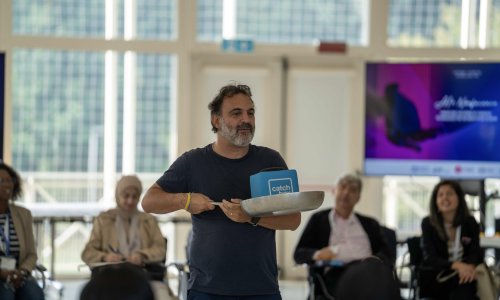
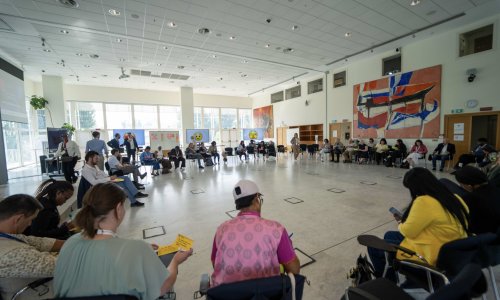
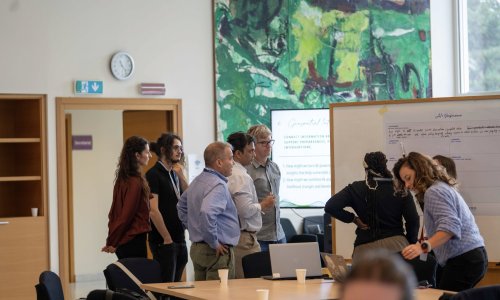
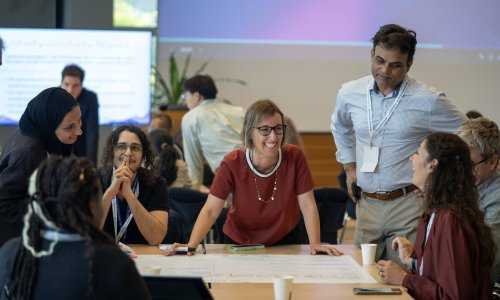
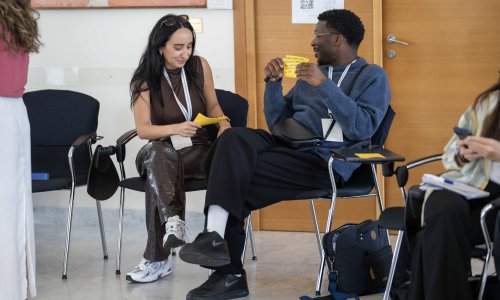
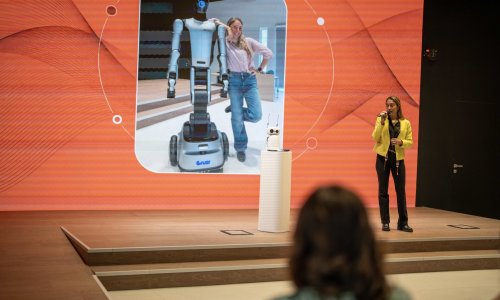
Held at ITCILO in Turin from 29 September to 2 October 2026, the AI+ Nonference brought together researchers, technology innovators, policymakers, education and skills practitioners, representatives of international organizations and development professionals to explore the implications of technological convergence across education, employment and enterprise.
Its innovation lay not only in the format, which replaced traditional presentations with active participation, experimentation and collaborative design, but also in the diversity of the community it convened. By bringing together people with very different expertise, institutional perspectives or assumptions, the Nonference created opportunities to discover unexpected connections and collectively explore new possibilities. This kind of interdisciplinary leaning was one of Leonardo’s strengths, his genius lying partly in his refusal to see knowledge in isolation. As a result, his discoveries happened at the intersection of disciplines, where seemingly unrelated ideas revealed unexpected connections.
Taking a cue from his approach, we brought together three key dimensions of the world of work (education, employment and enterprise) to examine how compounded effects of AI with emerging and established technologies developments affect one or more of them. Through technology discovery, dialogue, debate and collaborative design, participants were invited to move beyond asking “What will AI do to us?” towards a more purposeful question: “What could we do with AI+ to shape the future of work?”
But bringing different fields of knowledge together is only the beginning. The real challenge lies in what we do with those connections. After all, the Renaissance was not simply a period of new ideas, but of new ways of thinking and creating.
So, how do you start a Renaissance?
“Although nature commences with reason and ends in experience it is necessary for us to do the opposite, that is to commence with experience and from this to proceed to investigate the reason. ” - Leonardo da Vinci
This is how to start a Renaissance
The AI+ Nonference experience, in a nutshell.
- Gather your thinkers. Researchers, artists, scientists, educators, entrepreneurs, policymakers, curious minds and a few people who disagree with one another. You cannot start a Renaissance alone.
- Leave the hierarchies at the door. Everyone has something to contribute, and every perspective matters.
- Start with curiosity. Before changing the world, try understanding it.
- Make an interdisciplinary cocktail. Mix tech experts with education, employment and enterprise practitioners and policy-makers.
- Connect the dots. AI + robotics. AI + neurotechnology. AI + geospatial intelligence. And especially, AI + two or more technologies... this is where it gets interesting.
- Add coffee. Even a Renaissance needs a break.
- Ask uncomfortable questions. Follow the ripple effects. Who benefits? Who decides? Who gets left behind? Every invention has consequences.
- Stage a (not so) friendly intellectual battle. Pick a side. Defend it. Listen to the opposition. Change ideas, or maybe not.
- Keep it human. Understanding technology means understanding the people who will live and work with it.
- Make room for the unexpected because things will be happening.
- Sleep on it. Preferably at the end of each day.
- Try your hands on the future. Try a brain-computer interface. Explore virtual reality. Discover what emerging technologies can actually do.
- Take the Renaissance on the road. Somebody say field trip!
- Oh, look! A quantum computer. We know you didn’t say field trip.
- Return with more questions. This is a good sign.
- Find a problem worth solving because not every technological possibility needs to become a solution.
- Open the notebooks. Sketch, map, visualize. Leonardo would be so proud.
- Think again.Think together. Challenge assumptions, exchange ideas, refine, repeat.
- Prototype because perfect is the enemy of good.
- Show your work. Why not?
- Don't declare the Renaissance complete. Keep asking: What if?
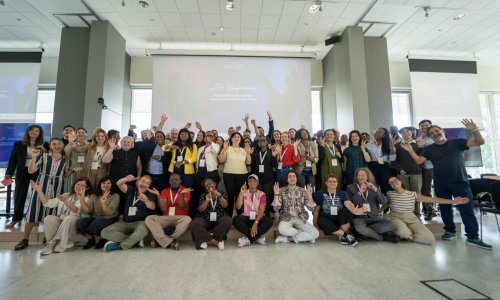
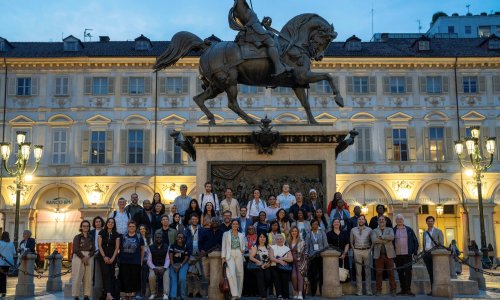
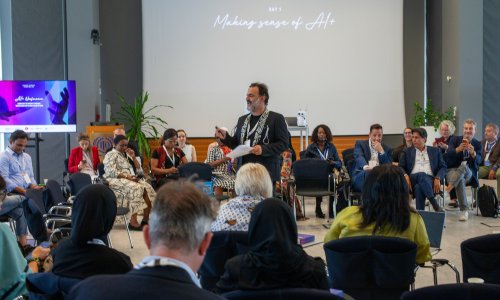
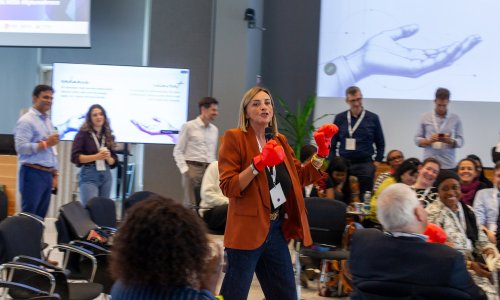
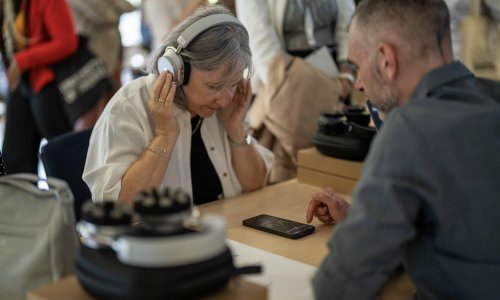
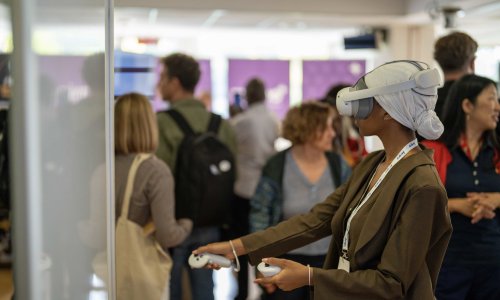
I loved that the Nonference was different. It was a mixed salad of workshop and panellists. The lines were blurred line: the person asking the question becomes part of the panellists. It was so interactive. The movements… It was like a snowball of activities...
Mercy Situmbeko
World Alliance for Microcredentials (WAM), Namibia
To be continued…
Leonardo, in his Vitruvian Man, placed the human figure at the intersection of art, science and mathematics. Today, we mirror this by placing humanity at the centre of innovation and digital transformation. The AI+ Nonference was built around this conviction. Over four days, participants did more than explore emerging technologies. They questioned assumptions, connected perspectives across education, employment and enterprise, and began imagining how technological convergence could translate into meaningful opportunities for people and institutions.
We do it for humans, but also with humans, because it's important to see what everyone brings to the whole community. Because community is about collaboration; it is about getting entangled and staying entangled.
Désirée Ehlers
Ecosystem manager, Quantum for Austria
But a Nonference does not end when participants leave the room
The conversations, connections and ideas generated in Turin are now feeding into ITCILO's broader AI+ journey. The Centre is working to consolidate the opportunities identified through the collaborative design process, explore possible follow-up initiatives with partners, and create new spaces for continued exchange within the AI+ community.
This momentum is also taking shape through new learning opportunities, including the upcoming AI+ in Education Masterclass, alongside ongoing experimentation, knowledge sharing and partnerships that connect emerging technologies with the ILO's mandate for decent work and social justice.
The ambition is not simply to keep pace with technological change, but to strengthen our collective capacity to understand it, anticipate its implications, and shape how it unfolds. And perhaps this is where Leonardo's legacy resonates most strongly: not in having all the answers, but in remaining curious, connecting disciplines, and turning observation into experimentation.
The AI+ Nonference is not a one-off event. It is a Renaissance, an ongoing invitation to see differently, think together and turn possibilities into action.
If you'd like to be a part of it – whether you'd like to experience a Nonference or bring one to your own organisation – we'd love to hear from you.
Learn more.