
Making Social Security Rights Effective: Inspection, Cooperation and Practice
Making Social Security Rights Effective: Inspection, Cooperation and Practice
An ITCILO course explores how inspection can help turn legal entitlements into effective protection
15 Ottobre 2026
ITCILO
A right on paper does not automatically become protection in practice. For social security systems, the distance between the two can depend on questions that are highly practical: Is a worker correctly registered? Has the employment relationship been properly identified? Are contributions being paid? Can institutions detect undeclared work? Do labour and social security authorities have access to the information they need? And what happens when responsibilities are spread across several institutions, or across borders?
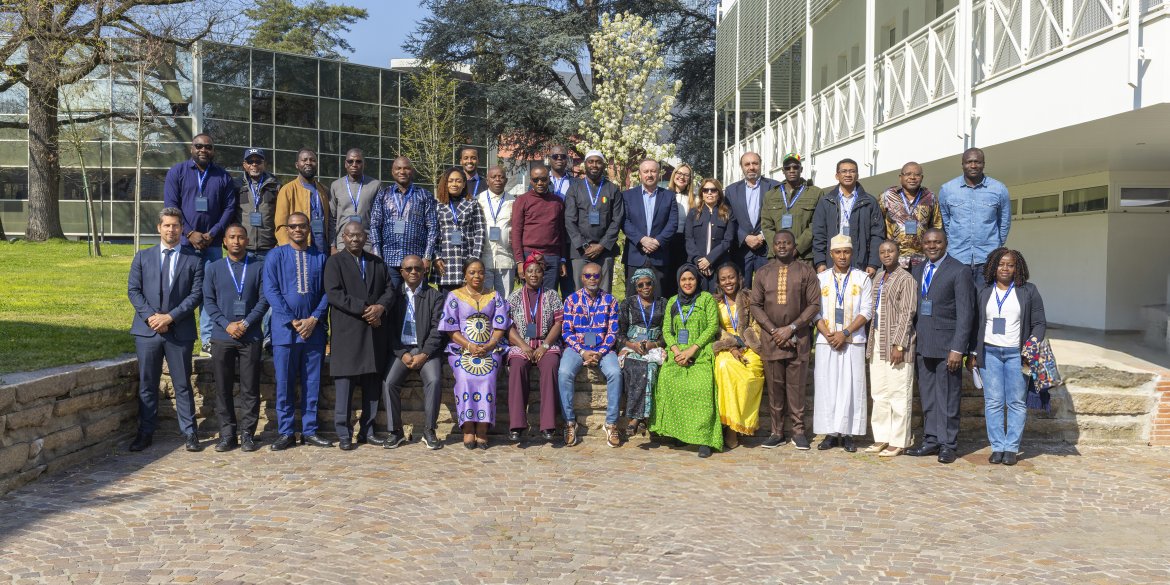
These questions were at the centre of the ITCILO course Social Security Inspection, held in French, in Turin from 23 to 27 March 2026. The residential week formed part of a broader learning journey, with preparatory activities before participants arrived in Turin and a post-training online phase continuing until 17 April 2026.
Bringing together 29 professionals working across labour inspection, social security, public administration, occupational safety and health and related institutions, the course examined inspection as part of a wider effort to make the right to social security effective.
From legal coverage to effective protection
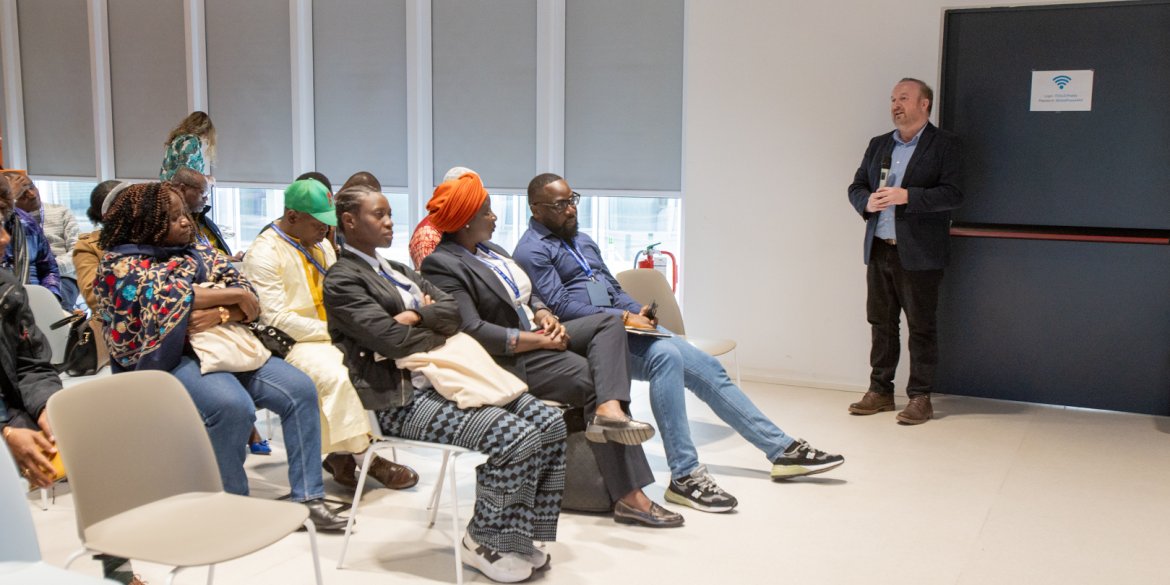
The starting point was the international framework. Participants examined the right to social security, the different dimensions of legal and effective coverage and the continuing gaps that leave large parts of the world's population without adequate protection. The discussions placed inspection within this broader context: not as an isolated control function, but as one of the mechanisms through which legal obligations can translate into actual access to social protection.
This distinction matters. A worker may be covered by legislation but remain unprotected in practice if an employer fails to register the employment relationship, contributions are not paid, the worker is incorrectly classified or the institutional mechanisms needed to enforce rights are weak.
The course therefore connected international social security standards with the day-to-day questions facing inspection and compliance institutions.
The employment relationship as a gateway to protection
One of the central threads of the week was the employment relationship.
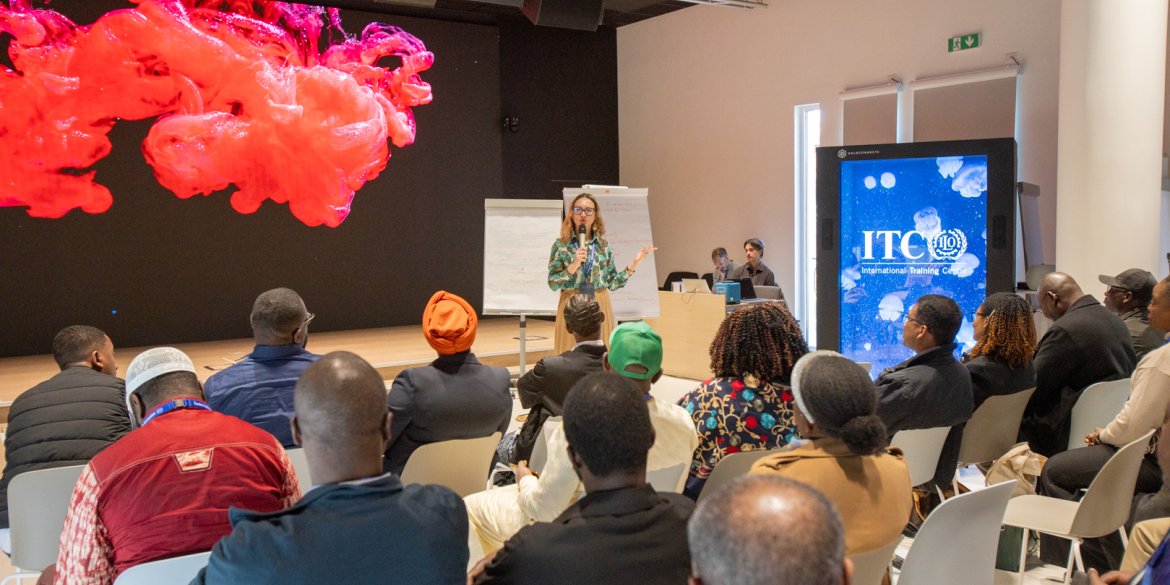
For many workers, it is the principal gateway to rights and benefits under labour and social security legislation. Yet changing forms of employment, multiple contractual arrangements and informality can make that relationship increasingly difficult to identify.
Participants examined the ILO Employment Relationship Recommendation, 2006 (No. 198), the principle of the primacy of facts and the challenges posed by new forms of employment. Through group exercises, they considered what happens when legal classification does not reflect the reality of work, and the consequences this can have for access to social security.
A Challenge Lab pushed the discussion further. Instead of beginning with legislation, participants started with a worker: their working routine, contractual situation, concerns, sources of income and access to protection. They then mapped the institutions and actors surrounding that worker and identified possible regulatory and protection gaps.
The exercise encouraged participants to look at social protection from the perspective of the person who must actually navigate the system; including questions of employment status, working time, occupational safety and health, collective representation and access to social insurance.
Reaching workers beyond the formal economy
The question of informality ran throughout the programme.
Labour inspection systems increasingly need approaches that can reach workers and economic units beyond conventional employment settings while supporting progressive improvements in working conditions and transitions towards formality.
Participants explored an ILO methodology for labour inspection in the informal economy based on preparation, stakeholder engagement, action planning, implementation, follow-up and evaluation. Its emphasis is pragmatic: understand a sector, identify the most significant problems, work with relevant actors, combine advice with enforcement where appropriate, and measure whether interventions are producing improvements over time.

Inspection works through institutions, not in isolation
Effective social security inspection rarely sits within a single institutional boundary.
Depending on the country, responsibilities may be shared among labour inspectorates, social security institutions, tax authorities, occupational safety and health bodies, migration services and other public agencies. Information held by one institution may be essential to the work of another.
The programme therefore placed particular emphasis on coordination and information exchange.
The experience of Spain illustrated how labour inspection, social security and occupational safety and health functions can complement one another, including in relation to affiliation, contributions, undeclared work, occupational accidents and administrative data sharing.
The Italian experience provided an institutional perspective, looking at cooperation among the National Labour Inspectorate, social security and occupational accident insurance institutions, health authorities and other actors.
The European Labour Authority added a cross-border dimension. Its contribution explored cooperation and coordinated and joint inspections in situations where labour mobility and social security obligations extend across national boundaries.
Together, these experiences reinforced a common point: complex compliance problems require institutions that are capable not only of exercising their own mandates, but also of working effectively with others.

Applying the ILO principles of labour inspection
Using the ILO Guidelines on General Principles of Labour Inspection, participants examined the mandate, functions, organization, planning and evaluation of labour inspection systems. The Guidelines underline a broad scope: labour inspection should reach workers and workplaces across sectors, including in both the formal and informal economies, wherever legal provisions concerning working conditions and worker protection can be enforced. This provided a common institutional framework against which participants could compare different national arrangements.
A World Café made those differences part of the learning process. Participants rotated between discussions on three questions: the principal challenges facing social security inspection in their countries, opportunities for strengthening it, and changes in national social protection landscapes requiring greater attention from inspection systems.
The result was less a search for a single model than an exchange about how common principles can be applied in different institutional realities.
From investigation to prevention
Inspection is also closely linked to prevention.
A two-part sequence on occupational accident and disease investigations took participants through the purpose and methodology of an effective investigation: preparing before entering a site, collecting evidence, establishing a chronology, identifying immediate and underlying causes, determining preventive measures and preparing an appropriate report.
The emphasis was not simply on establishing what happened. An effective investigation seeks to understand why it happened and what needs to change to prevent recurrence.
This link between social security, occupational safety and health and labour inspection was deliberately maintained throughout the programme. Workplace accidents may trigger compensation and social security responsibilities, but they are also sources of information for prevention, compliance and institutional learning.
Giving inspectors practical tools
The final part of the course turned from principles to the instruments that make an inspection system operational.
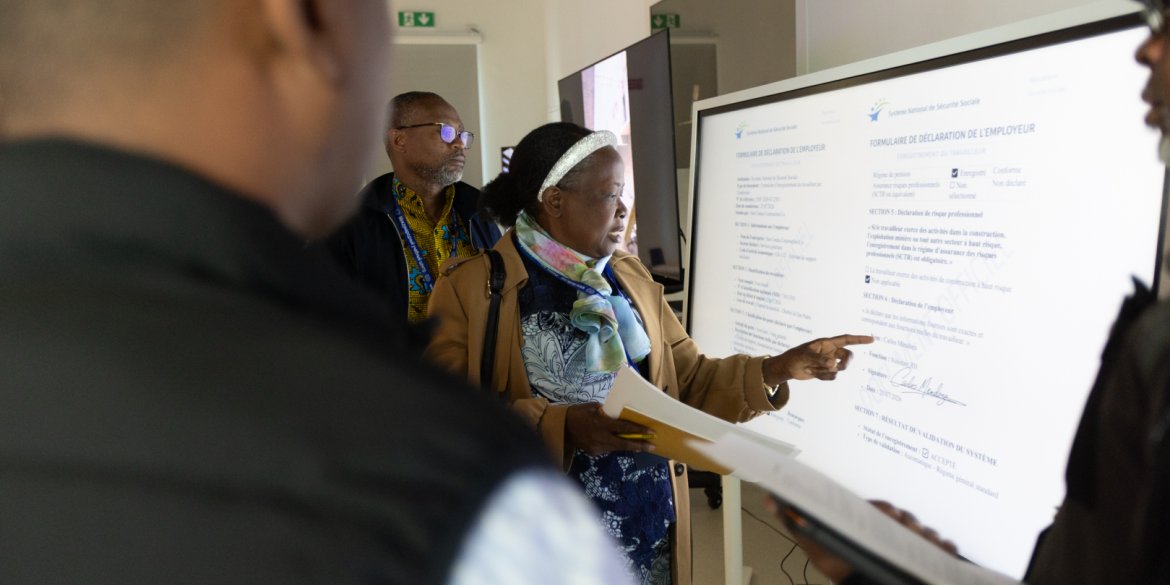
Participants reviewed the role of information management systems, inspection manuals, checklists, reporting templates, notices, guidance for inspectors and forms used by employers and other stakeholders. Such tools can help inspection services standardize procedures, preserve institutional knowledge, improve planning and targeting, document findings and follow up corrective measures.
The discussion on digital systems came with an important qualification: technology should respond to the objectives and needs of the inspection system, not the other way around. Systems need to be usable, sustainable and appropriate to national institutional capacity.
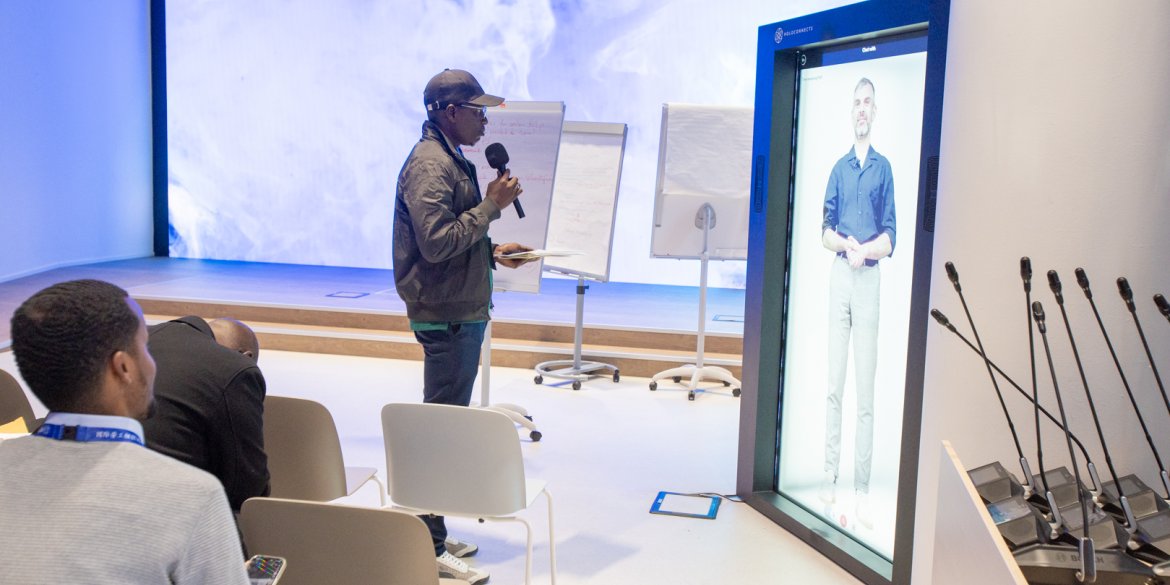
Participants then entered the ITCILO Innovation Lab for immersive exercises using AI-supported avatars. The objective was to practise the interpersonal dimension of inspection: asking questions, listening carefully, responding to information and exercising professional judgement in simulated situations.
Participants returned to institutions ranging from labour inspectorates and ministries to social security funds, regional organizations and bodies responsible for health and social protection. Many expressed an interest in continuing their learning through further specialization in social protection and labour inspection.
Several participants also expressed, both formally and informally, their appreciation for the learning opportunity and their intention to apply the knowledge, tools and approaches acquired during the course in their day-to-day work upon returning to their institutions.
This connection between learning and institutional application captures the broader purpose of the programme.
Effective social security requires more than legislation. It requires institutions capable of identifying where protection breaks down, coordinating across mandates, supporting compliance and taking action where rights are not being respected.
When inspection systems work effectively, the distance between a right established in law and protection experienced by a worker becomes smaller.