What will we do when we grow up?
What will we do when we grow up?
Children imagine the future of work, 60 years after the ITCILO was founded
20 Fevereiro 2026
© ITCILO/Davide Tosco
While turning 60, the International Training Centre of the ILO continues to explore how learning can support dignity, fairness, and social justice in the world of work. One initiative marking this anniversary took a deliberately different approach: it brought children into the conversation.
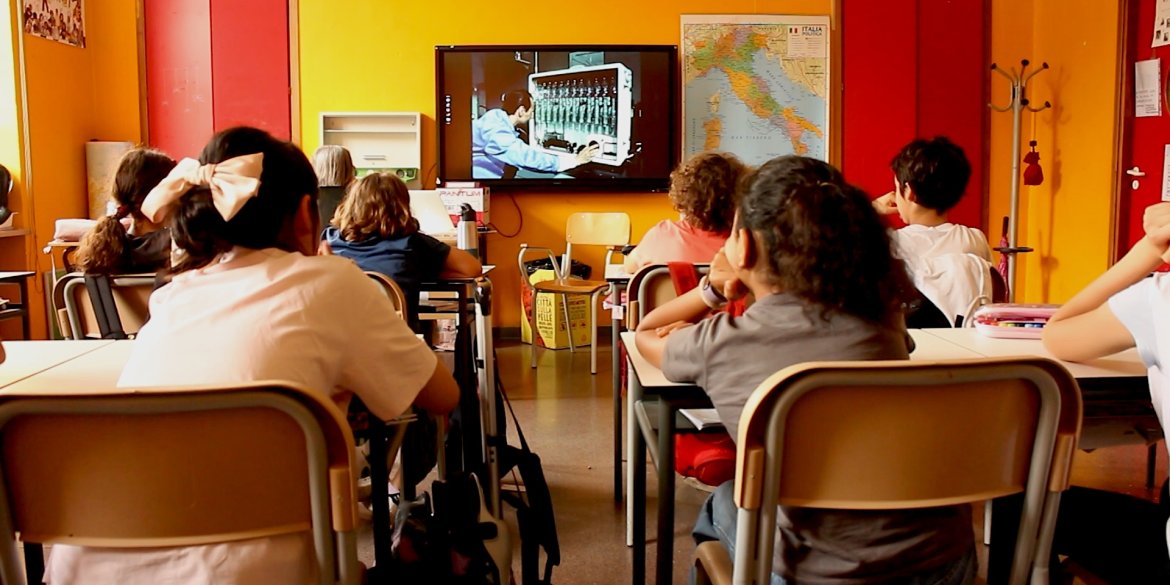
Cosa faremo da grandi? (What will we do when we grow up?) is a podcast and animated documentary developed with a primary school class in Turin, Italy, produced by RAI Radio 3 in collaboration with ITCILO as a two part documentary (aired in December 2025). The project was created with Class 5G of the Tommaseo Primary School, involving 25 pupils aged ten and eleven.
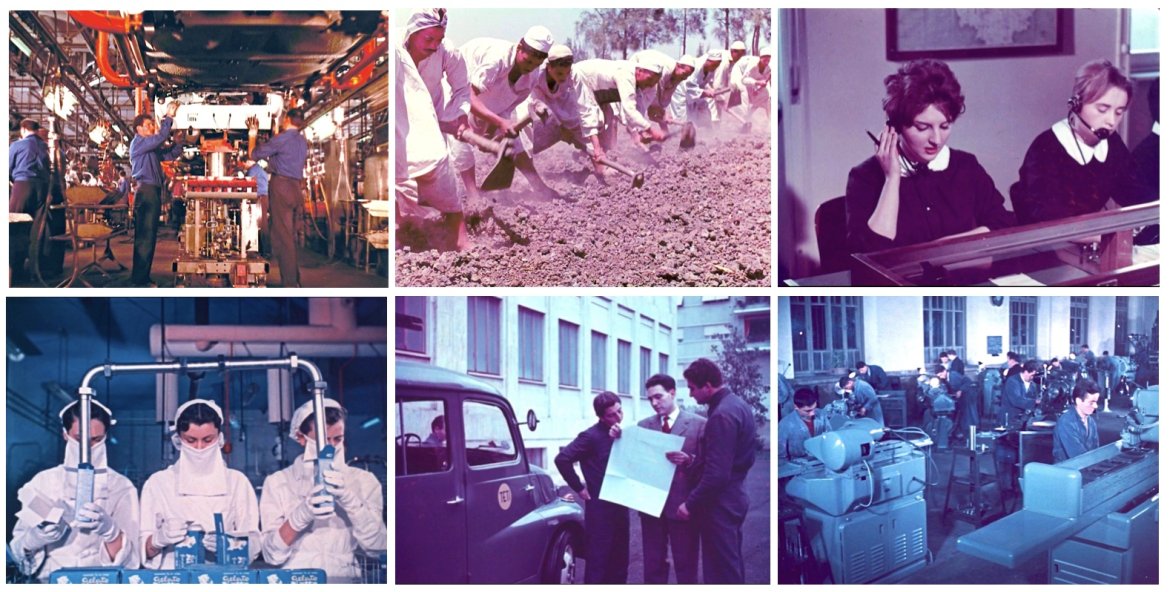
© Archivio Nazionale del Cinema d’Impresa
To look back at how work has changed over time, the pupils were shown archival images of work from the past.
From their classroom, children talk about the kind of work they would like to do when they grow up. One pupil says work is good “when you do something that helps people,” while others talk about being treated properly and feeling safe at work. As they explain what this means, they speak about health, safety, and time. Helping people, they say, should not make you ill or put you in danger, and work should leave time for family life. “Exploitation is when someone uses another person to make a profit,” says one pupil.
Daniela Vassallo, the teacher who guided the class through the project, describes school as “the place where children begin to understand the world they live in,” including work, rights, and social responsibility, long before they enter the labour market.
© ITCILO/Davide Tosco
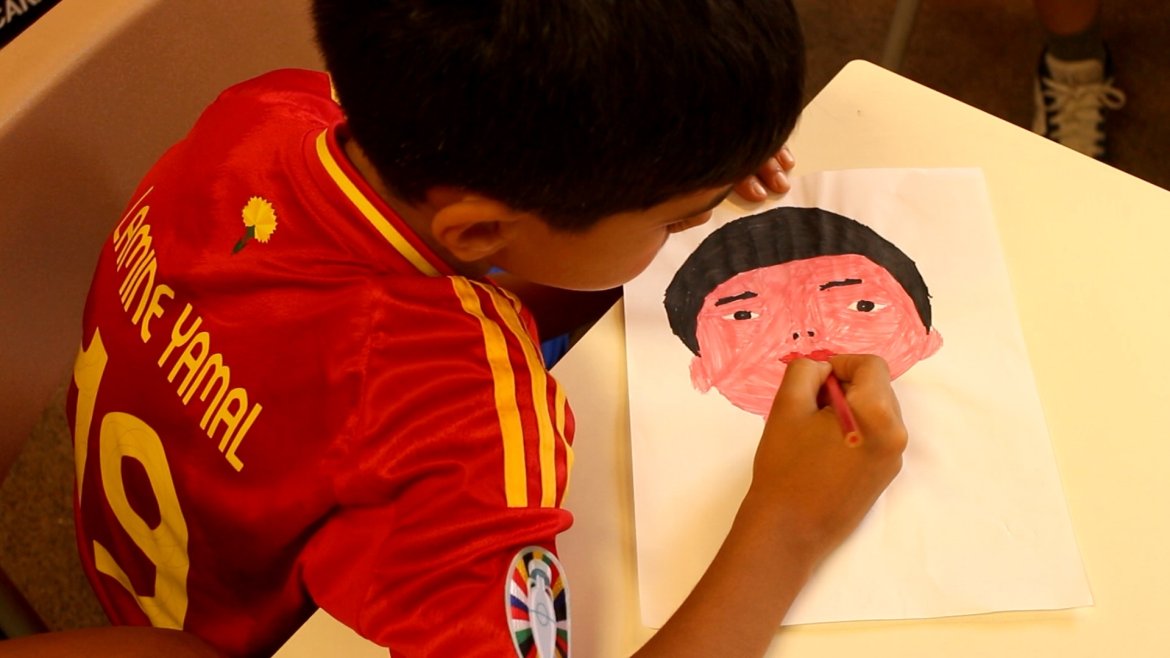
A pupil from the 5G class at Tommaseo Primary School draws a self-portrait, later animated for the short film.
To connect these reflections with lived experience, we included the voices of workers.
Michele spent more than forty years working in a factory in Turin. He describes long days on the production line, repeating “always the same movement, for hours,” at a pace that left little room to slow down. Looking back, he explains that work often meant choosing “between going on economically and protecting your health.”
Aldo’s experience is very different, but the risks are familiar. He works as a food delivery rider and is paid per delivery, with no guaranteed income. “If I don’t work, I don’t earn anything,” he says. “If I’m sick, I don’t earn anything.” Much of his working time is spent on the road, exposed to traffic, weather, and pollution.
These experiences echo the concerns raised by the children and point to challenges the Centre has worked on for decades. In the podcast, ITCILO’s Deputy Directory Paola Babos explains that “the objective of the Organization is to improve working conditions so that everyone can access decent work, in all countries of the world.” While the world of work has changed significantly, she notes that “there are new risks and new inequalities that we need to pay attention to”. Talking about the Centre’s long-standing presence in Turin, she adds: “For 60 years, here at the UN Campus, we have been working on issues such as health and safety at work, the prevention of labour exploitation, gender equality, the role of young people, and social protection.”
The documentary also highlights how rights at work are defended collectively. Trade unionist Annamaria Poggio explains that “rights at work are never guaranteed on their own.” Pay, safety, and working time depend on shared rules and organization. “Without collective action,” she adds, “workers are often left to deal with risks and pressure individually.”
The focus then shifts to how work itself has changed. Francesco Profumo, former Italian Minister of Education, notes that careers are now less stable, with people moving between jobs and sectors. In this context, “learning cannot stop at the end of formal education, but needs to continue throughout life”.
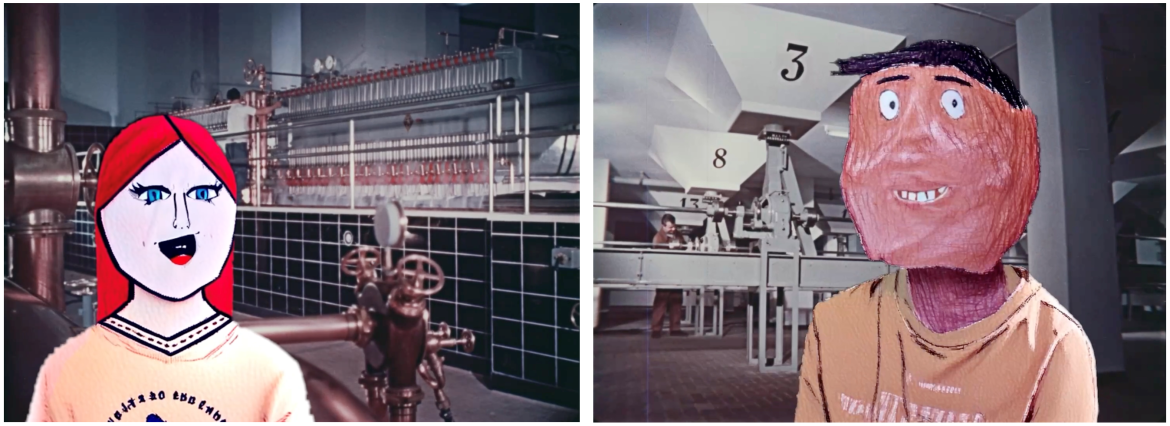
© ITCILO/Davide Tosco
Stills from “Cosa faremo da grandi?” combining the children’s animated drawings with archival images in the background.
The animated documentary developed through a series of workshops that involved the children throughout the process. Archival footage of work in the past was used to spark discussion and reflection. The children then created self-portraits, which were animated and combined with excerpts from the podcast, archival material, and interviews.
Davide Tosco, who was responsible for the classroom activities and radio direction, underlines that “children are surprising in their ability to get to the heart of things, bringing together analysis and imagination.” Their reflections on work, he says, “speak of fundamental values that adults often take for granted, showing how fertile dialogue between generations can be when talking about the future.”
Cosa faremo da grandi? was developed through creative workshops coordinated by Aiace Torino and supported by the Italian Ministries of Culture and Education (CIPS - Cinema e Immagini Per la Scuola), in collaboration with the International Training Centre of the ILO, the Archivio Nazionale del Cinema d’Impresa of Ivrea, and the Conservatorio Giuseppe Verdi of Turin.
Watch the short film!
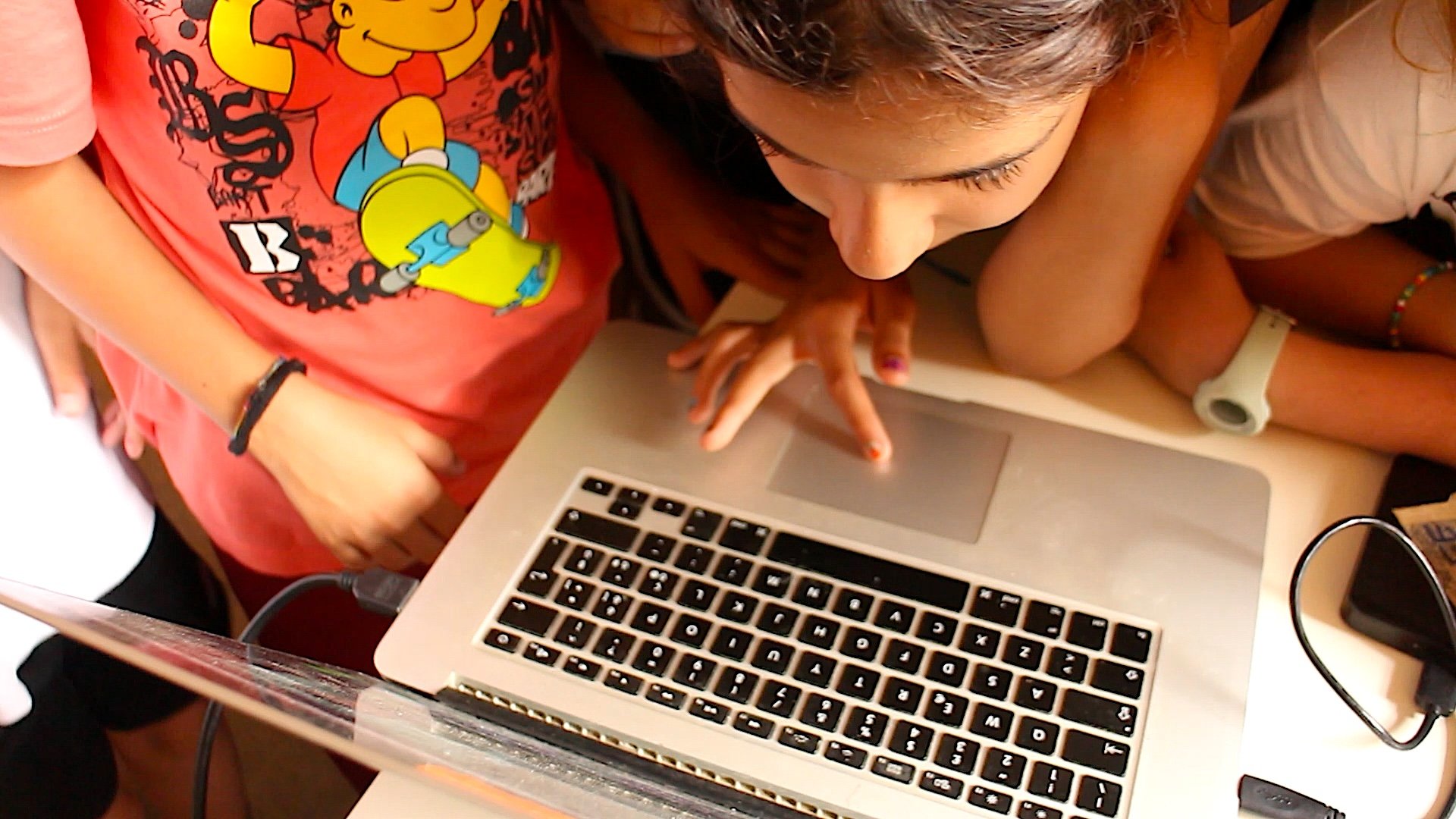
Listen to the two-part podcast here.
The podcast is available in Italian.


