
Conciliation/Mediation of Labour Disputes - Module 1

Image © Alice Lotti
Online
Conciliation/Mediation of Labour Disputes - Module 1
foundational knowledge
19 Abril–7 Mayo 2027
El curso está disponible en English
Can you turn a workplace conflict into common ground?
Build the foundational knowledge and practical skills to prevent and resolve labour disputes through conciliation and mediation. Guided by ILO principles and standards, this online course is your entry point into the ITCILO Conciliation/Mediation Learning Path — the first step toward the ITCILO internationally recognised certification.
At a glance
FORMAT
Online
DURATION
35 hours over 3 weeks
Prerequisite
Introduction slef paced
Outcome
ITCILO Certificate of Participation
Presentación del curso
Consensus-based approaches such as conciliation and mediation provide effective and practical solutions to labour disputes. While rights-based adjudication remains essential, there is growing recognition of the value of processes that help parties reach mutually acceptable agreements.
Conciliation and mediation enable disputing parties to find common ground, reduce differences, and build more cooperative relationships. Because outcomes are jointly agreed rather than imposed by a third party, they are more likely to be respected and implemented.
Guided by the principles and values of the ILO, this course equips participants with the knowledge and practical skills needed to prevent and resolve labour disputes through conciliation and mediation.
Participants will explore conflict dynamics, learn key conflict resolution approaches and principles, become familiar with the ITCILO four-step conciliation/mediation process, and strengthen their essential interpersonal and communication skills.
¿Quiénes participan en este curso?
The course is designed for staff of labour-dispute agencies and of ministries of labour involved in dispute prevention and resolution, employers' and workers' representatives, industrial relations experts and practitioners, labour lawyers, as well as conciliators/mediators.
Important requirement: all participants must be fluent in English, have a stable internet connection and all necessary equipment to take part in the live sessions (good internet connection, laptop or device with camera, microphone and audio setting).
Admission requirements
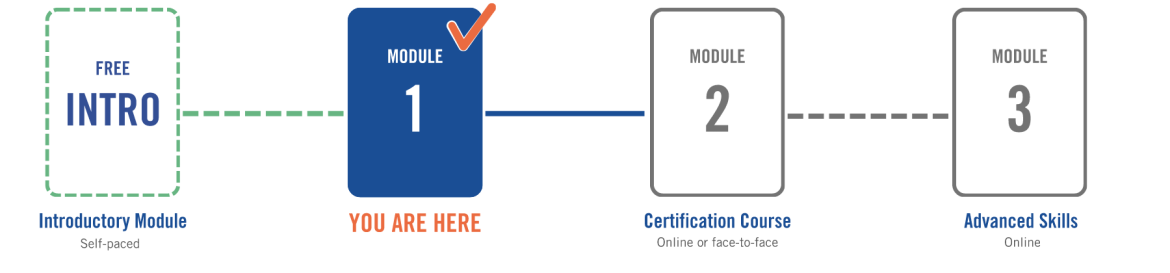
The ITCILO Conciliation/Mediation Learning Path is a structured progression of courses designed to take practitioners from foundational knowledge to internationally recognised certification in labour dispute resolution. It begins with a free self-guided introduction and advances through three modules — each building on the previous. Module 1 is your entry point into this learning journey.
To take part, all participants must be fluent in English and have the stable internet connection and equipment needed for live sessions
What will I learn?
1. Conflict dynamics and conflict management
The nature of labour conflicts, their causes and escalation patterns, and frameworks for conflict analysis and management — grounded in ILO guidance on collective bargaining and labour relations.
2. Principles of conciliation/mediation
The foundational principles guiding practice, aligned with ILO standards on labour dispute prevention and resolution.
3. Communication and interpersonal skills
Applying active listening, effective questioning, clear communication, empathy and trust-building techniques to create a constructive environment for conciliation and mediation.
4. Process and problem-management skills
Effectively managing the different stages of the ITCILO conciliation/mediation process: Preparation, opening, exploration, option generation and bargaining and agreement. Supporting parties in moving beyond positions to identify underlying interests, explore options and develop mutually acceptable solutions.
5. People-management skills
Managing relationships and interaction between the parties, including group dynamics, power imbalances, emotions and high-conflict situations, while maintaining impartiality and fostering constructive engagement.
6. Role-plays and practical exercises
Live simulations evaluated in real time by the tutor, using case studies drawn from real labour dispute contexts across different regions and sectors.
Meet your tutors

Louise Aubertin
Director, Conflict Prevention and Labour Relations Improvement Program
Federal Mediation and Conciliation Service, Government of Canada
Louise has directed the Conflict Prevention and Labour Relations Improvement Program at the Federal Mediation and Conciliation Service since 2015, following an 11-year career as a training and communications consultant to major firms and two decades as a training manager at Microsoft, Apple and AT&T.

Ebrahim Patelia
Director, Mediate Works (PTY) Ltd
Ebrahim is a director at Mediate Works (PTY) Ltd and a consultant at Cliffe Dekker Hofmeyr. He has over 25 years’ experience in dispute resolution, legal advisory services, training and process design. His experience uniquely integrates the practice of law, dispute resolution and academic work.

Malcolm Currie
Independent Consultant, Mediator and Assessor
Malcolm founded Strathesk Resolutions after 11 years as a union negotiator. Engaging with employers in private, public and third sectors, he developed expertise in negotiation, partnership, resolving disputes and tackling individual cases, skills grown from 15 years advising and influencing countryside managers over land-management and joint projects.
What will I be able to do?
By the end of this online course on conciliation/mediation of labour disputes, you will be able to:
- Apply the foundational principles of conciliation/mediation of labour disputes in professional practice
- Analyse conflict dynamics and select appropriate resolution strategies for different dispute types
- Facilitate conciliation and mediation sessions using the ITCILO four-step process
- Demonstrate key soft skills — active listening, reframing, and interest-based negotiation
- Navigate power imbalances, impasses, and high-conflict situations effectively
- Uphold the ethical standards and neutrality required of professional conciliators and mediators
- Engage with a global network of practitioners in alternative dispute resolution and social dialogue
How does the course work?
This course runs for three weeks, requiring approximately 35 hours of engagement, including self-study. Participants access the course through the ITCILO eCampus portal, available on computers and portable devices.
Learning combines three main components:
1. Live sessions
Held on Tuesdays, Wednesdays, and Thursdays (Italy time). Attendance is mandatory and recorded.
2. Coursework and assignments
Practical exercises assigned after each live session and reviewed live in the next.
3. role-play exercises
Live simulations evaluated in real time by the tutor.
Why join this course?

Learn by doing, with expert guidance
Practice through live role-plays, real case studies, and group exercises — evaluated in real time and guided throughout by internationally recognised conciliators and mediators.

A diverse global network
Join professionals from around the world working in social dialogue, collective bargaining and labour relations to exchange experiences and good practices in alternative dispute resolution.

Gateway to ITCILO certification
Module 1 is the required first step toward Module 2 — the ITCILO Certificate of Achievement, assessed against the internationally recognised ITCILO Matrix of Competences.
Practical information
Language requirements
The entire training programme is conducted in English. A good command of the language is required. This course is also available in Spanish.
Technical requirements
Stable internet connection; computer or laptop with working camera, microphone, and headset; a quiet environment for all live sessions.
Attendance policy
Live sessions are held on Tuesdays, Wednesdays and Thursdays (Italy time). Attendance and active participation, with the camera on, are required for at least 75% of the live sessions and will be recorded.
How to apply and enrol
Complete the online application form via Apply Now before the deadline. If sponsored, attach a sponsorship letter stating the full fee. Successful applicants are notified individually after review.
Payment and cancellation terms
The total fee must be paid in advance. To withdraw, notify the Centre in writing at least 14 days before the course start date. See the full payment and cancellation policy.
Note on 2027 pricing
2027 prices have not yet been published. As a reference, the 2026 edition of this course was priced at €1,020. A similar amount, with possible minor adjustments, can be expected for 2027 — final pricing will be confirmed on this page soon.
Your questions, answered
Do I need prior experience in conciliation/mediation to join this course?
No prior experience is required. Module 1 is designed as a foundational course and is the recommended entry point for anyone wishing to develop professional skills in conciliation/mediation of labour disputes. Participants with some background in industrial relations or dispute resolution will also find it a valuable opportunity to formalise and deepen their knowledge using the ITCILO methodology.
How much time do I need to commit each week?
The course runs for three weeks and requires approximately 35 hours of total engagement — roughly 10 to 12 hours per week. This includes mandatory live sessions held on Tuesdays, Wednesdays, and Thursdays (Italy time), as well as individual coursework and assignments to be completed between sessions.
What happens if I miss a live session?
Attendance and active participation in at least 75% of the live sessions, with the camera on, are mandatory and will be recorded in order to receive the Certificate of Participation. All live sessions will also be recorded, and the recordings will be made available on the course platform.
Can I progress to Module 2 after completing this course?
Yes. Successful completion of Module 1 is the required prerequisite for Module 2 — the Certification Course on Conciliation/Mediation, which provides formal assessment and internationally recognised certification of your skills against the ITCILO Matrix of Competences.
Ready to strengthen your conciliation/mediation skills?
Applications open · 19 April – 7 May 2027 · Online
Your conciliation/mediation learning path
This course is your entry point into the ITCILO Conciliation/Mediation Learning Path, part of the broader ITCILO Social Dialogue curriculum.


