
A Suitcase from the Future
A Suitcase from the Future
Eighteen months after a group of cultural and creative thinkers explored possible futures in Turin, a suitcase arrived. Inside were five objects and questions you cannot ignore.
20 Novembre 2026
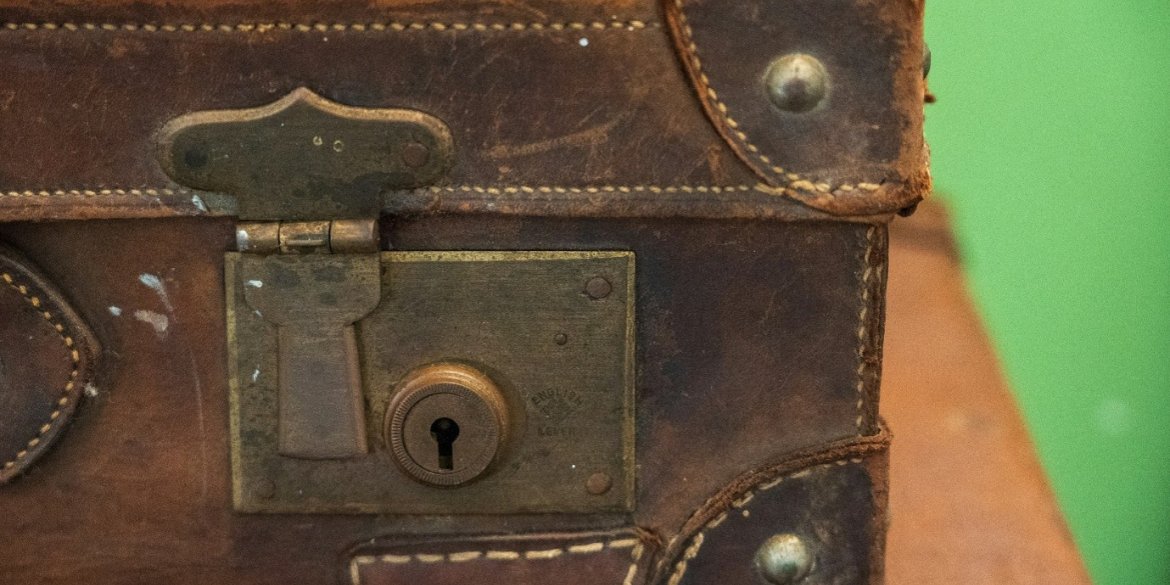
The suitcase was waiting outside my office on a grey morning, looking as though it had taken the scenic route through several decades. Five luggage tags hung from its handle. One was in French, another in Spanish, then Chinese, Arabic and Bahasa Indonesia. On the lid were the ITCILO, British Council and UNCTAD logos. It looked official enough to be worrying, so I did what any sensible person would do when confronted with unsolicited baggage from the future: I made tea before opening it.
I recognised the combination of names. Eighteen months earlier, ITCILO and the British Council had led a three-day foresight workshop in collaboration with UNCTAD. I had witnessed 30 cultural and creative professionals, researchers, entrepreneurs and policy thinkers from more than 15 countries stop behaving like conference participants and begin acting like travellers.
For three days, the Innovation Lab in Turin became four different futures. One belonged to content creation and advertising, another to design and architecture, a third to cultural heritage, and the fourth to the performing arts. The people in the room had brought experiences from across Africa, Asia, Europe and the Americas; each future shifted as those experiences met, contradicted one another and occasionally refused to fit into the same canvas.
The rule was simple: do not ask what will happen. Ask what might follow if the world turns out this way.
We had explored how people would live, create and work; which occupations might emerge; where work would happen; what conditions would surround it; how value would circulate; and which policies would be required when old categories stopped making sense. The facilitators called these the Workverse, Workplace, Workonditions, Workonomics and Workolicy; a vocabulary that sounded comic until one realised that our existing language was no longer doing the job.
We had not sent anything into the future, at least not through an approved procurement procedure. Yet the suitcase was here.
Inside, on top of the lining, lay a card.
What then?
Beneath it were five objects.
The first was attached to the French tag: a job description printed on a single sheet of paper
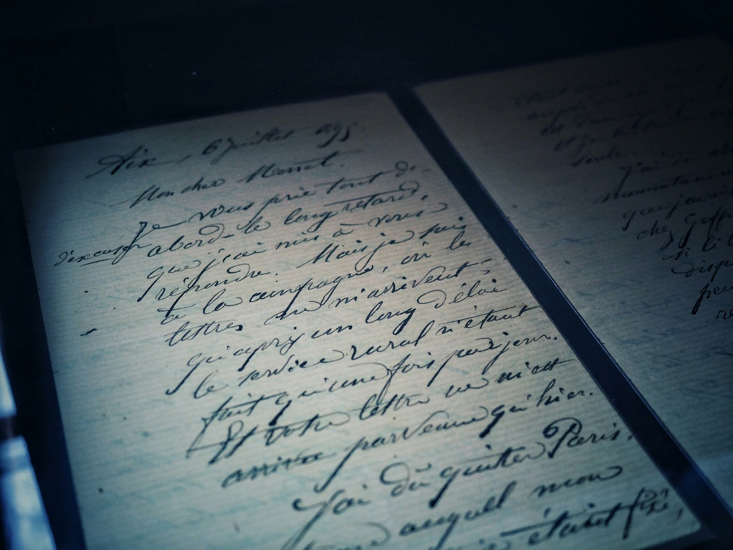
The title was difficult to translate. The position appeared to combine cultural mediator, systems designer, storyteller, AI supervisor, community facilitator and entrepreneur. A successful candidate would need to understand cultural history, digital tools, human behaviour, ecological limits and the workings of public institutions. They should be able to collaborate with machines without becoming overly impressed by them, move comfortably between disciplines, detect bias, build trust and explain complicated matters to people who had already attended too many meetings.
“Excellent communication skills” were, naturally, required.
I remembered the conversations in Turin about jobs that did not yet have names. Participants had imagined digital heritage officers, cultural guardians, creative facilitators, sustainability strategists and new kinds of professionals working between art, technology, education, health and civic life. They had also questioned the habit of calling empathy, curiosity, improvisation and ethical judgement “soft” skills, as if anything so difficult could be soft. In the worlds they explored, these became power skills: not pleasant additions to technical expertise, but part of the expertise itself.
When the vacancy was imagined, it belonged to a possible future. Reading it eighteen months later, I found little in it that seemed extravagant. The job title remained unusual, but the combination of capacities did not. Any organisation dealing seriously with artificial intelligence, cultural diversity, public trust and environmental transition might already need such a person. Most would simply divide the work between five departments and hope they spoke to one another.
The second object was a plain metal key with a Spanish label
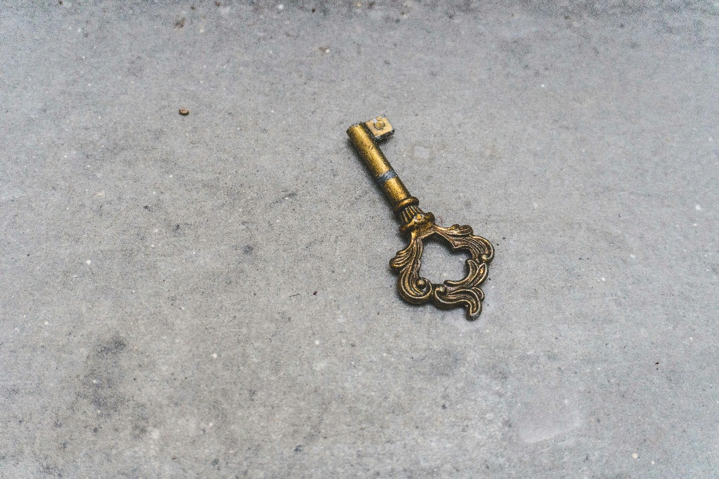
I tried it in the office door, a cupboard and one particularly uncooperative drawer. Nothing.
Perhaps it was not intended for a conventional lock.
In the workshop’s future worlds, the creative workplace had escaped from the office, studio, theatre and museum. Work happened in temporary spaces, shared laboratories, neighbourhood hubs, digital environments and places that had not previously been considered workplaces at all. Participants imagined artists embedded in communities, designers involved in public decisions, performers working in education and care, and creators collaborating across borders through immersive technologies.
The report even refers to “virtual watercoolers”, a phrase that captures the rather touching institutional belief that spontaneity can be scheduled online.
Yet the key was not only about where creative work happens. It was about who can enter. A building may be open while its equipment remains unaffordable. A platform may be accessible while the connection is unreliable. A creative hub may welcome everyone in principle and still feel designed for somebody else.
The future workplace, participants suggested, would depend as much on shared tools, data, networks, bandwidth and community trust as on walls and furniture. The distinction between physical and digital infrastructure was already beginning to blur; the question of access was not.
I put the key aside. It probably worked. We had simply not built the door yet.
The third object, bearing the Chinese tag, was a payslip in a red envelope
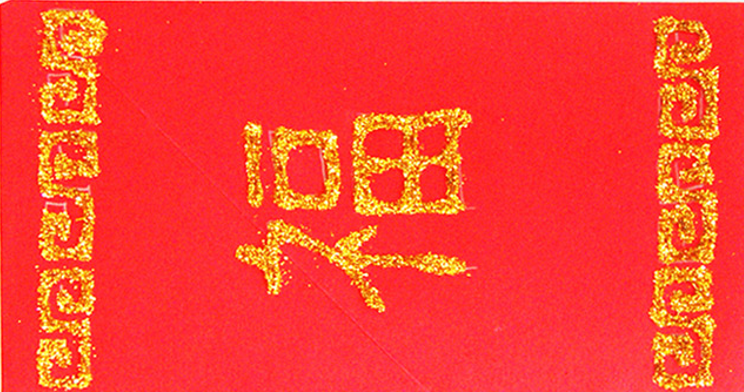
An English glossary had been tucked behind it, which was fortunate for both me and the accuracy of this story. The arithmetic was unusual.
There were entries for research, preparation, rehearsal, experimentation, cultural knowledge, emotional labour and community relationships. One line recorded time spent developing ideas that had not become products. Another recognised care. Near the bottom was a space marked social value generated.
No figure had been entered. This was less an administrative oversight than a challenge.
Much of creative work happens before, around or underneath the visible output. A performance contains rehearsal; a design contains discarded versions; a cultural project rests on relationships that took years to build. Yet payment systems often recognise the final product while treating the labour that made it possible as an atmospheric condition.
Participants had repeatedly pulled our discussions back from abstract enthusiasm. In many contexts, creative professionals were already navigating informal work, fragmented income, limited social protection and the immediate need for safety and fair pay. Before asking how technology might release human creativity, they reminded us, one should ask who has the security to experiment in the first place.
The payslip also raised an awkward question about measurement. We regularly describe culture as economically, socially and politically valuable, then reach for indicators capable of counting only a narrow part of that value. The future sender had written a note in the margin:
You knew it mattered. Why did you count so little of it?
It was an impolite question. The future may not have had much media training.
The fourth object was an Arabic-language passport with no country on its cover
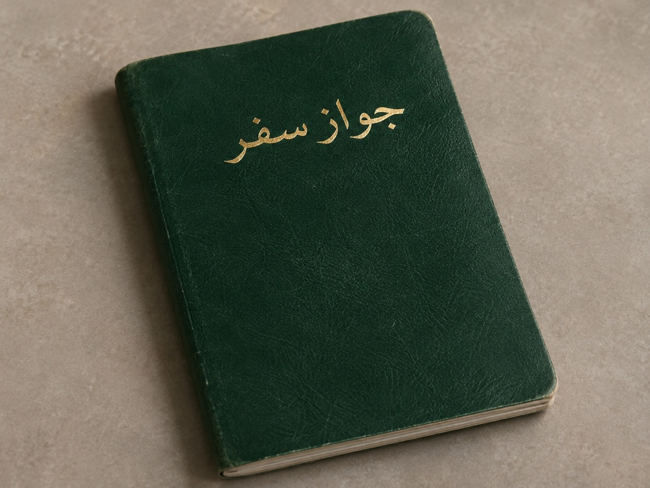
Inside, the usual fields had been replaced. It recorded creative practices, skills, collaborations, professional credits and languages. Several borders had been crossed. The space for social protection remained blank.
A song can travel around the world in seconds; the musician who made it may still spend weeks collecting documents.
In Turin, participants had imagined creative passports, portable professional recognition, new forms of collective representation and even a legal status adapted to the freelance, mobile and project-based reality of cultural work. They asked whether social protection could follow a worker across borders, whether informal workers could gain rights without being forced into unsuitable employment categories, and how unions, cooperatives or professional networks might represent people whose “workplace” was spread across several platforms and jurisdictions.
The passport exposed a peculiar arrangement: the creative economy was celebrated as global, while many of the systems surrounding its workers remained firmly national. Content travelled. Rights hesitated at customs.
The final object, wrapped in a note written in Bahasa Indonesia, was a piece of bamboo

After the job description, key, payslip and passport, I had expected something involving holograms. Instead, the future had sent gardening material.
Bamboo had appeared during the workshop as a metaphor for the capacities that people and institutions might need: rooted in place, flexible under pressure, regenerative and able to grow without poisoning its surroundings. It was a useful correction to the assumption that the future must always arrive as a device.
Artificial intelligence, immersive media, blockchain and digital twins ran through the scenarios. But whenever participants followed those technologies into everyday life, they arrived at older and more human questions. Who gets to create? Who is recognised? Who is paid? Who is protected? Whose knowledge becomes data, and who controls what happens to it? Can an economy become more digital without becoming more extractive? Can creative work become more flexible without making workers more precarious?
The piece of bamboo offered no answer. It merely seemed confident that survival and rigidity were not the same thing.
Only then did I notice a false bottom in the suitcase.
Underneath lay the practical explanation that the future, for dramatic reasons, had withheld: the English report and five new translated editions, prepared by ITCILO and the British Council. Exploring Future Challenges & Opportunities for Culture & Creative Economies was now ready to travel in French, Spanish, Chinese, Arabic and Bahasa Indonesia.
Translation is sometimes treated as the final stage of a publication: the ideas have been developed, the document completed, and now somebody must make it available elsewhere. That seems too modest here.
A future discussed only in English is not global; it is simply English with ambition.
As these editions travel, readers will recognise different signals, challenge different assumptions and connect the report’s questions to realities that were not present in the Turin room. Some will decide that the futures we imagined were too optimistic. Others may find them too cautious. They may notice absences, introduce different forms of work, and ask what creativity, fairness or technological change mean in their own contexts.
Foresight is not meant to win an argument with the future. It is meant to improve the conversation we have with the present.
I returned the five objects to the suitcase, placed the translated reports beside them and removed the old address label. The case had spent long enough travelling back to us.
Its next journey is outward.
Somewhere, in another language, at the links in this page, you will open it and add something we never thought to pack.


