
NONFERENCE

NONFERENCE
Where participants fuel the agenda and learning turns into action
The course is available in English
Less presentations, more conversations. Less monologues, more dialogues. Less broadcasting, more brainstorming. A Nonference is everything a conference is not
Key features
INNOVATIVE DELIVERY
Methods push the boundaries of traditional conferences, highlighting participatory and co-creative sessions.
HANDS-ON PRACTICE
Group work focuses on real, problem-based scenarios drawn from the participants' needs and objectives.
COMMUNITY-DRIVEN
Agendas, activities, and overall objectives are set from the ground up, ensuring a relevant experience for all.
Who attends this course?
A Nonference works best when people from very different professional worlds converge on a shared challenge, building upon the collective intelligence. The more varied the room, the richer the ideas. Expect to meet:
- Practitioners motivated to bring hands-on experience from the field
- Companies and organizations ready to turn ideas into action
- Experts and researchers who ground discussions in evidence
- Newcomers and outsiders curious to ask the questions no one else thinks to ask
- Communities and stakeholders directly shaped by the issue at hand
What is it?
Think of a space that inspires, sparks learning and ideas, fosters meaningful connections, and leads to tangible outcomes. That’s a Nonference. This out-of-the-box learning format opens up innovation ecosystems through participant-driven agenda-setting. Formats themselves become part of the experience, including more visual and interactive approaches for practice-oriented, engaging learning experiences that drive collective intelligence.
How does it work?
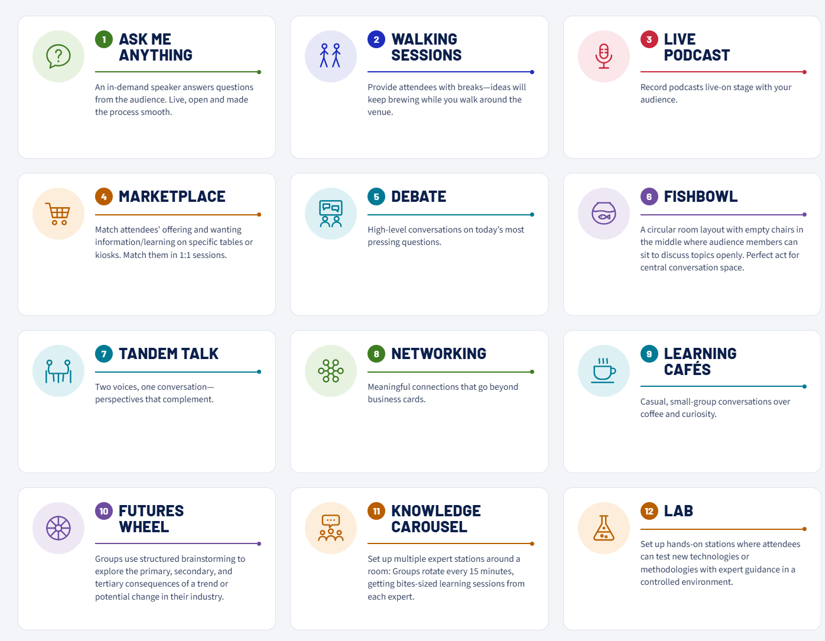
As an inherently unconventional gathering, a Nonference shatters traditional conference formats, emphasizing intentional serendipity, spontaneous interaction, and collaborative creativity. Nonferences aim to maximize engagement within a dynamic and interactive environment. Formats may include, but aren’t limited to:
Where does it happen?
Forget rows of chairs facing a stage. At a Nonference, the space is part of the method, where learnscapes are in constant evolution, shifting the learning experience. Each session holds the potential to change the dynamic based on how the room is physically set up. Imagine stepping into a space with circular amphitheatre seating; you’re inclined to engage in open dialogue and exchange. Or imagine dedicated islands; you’re ready to network and co-create with your fellow groupmates.
Why does it work?
The ITCILO Nonference format is rooted in the Turin Learning Approach. The pedagogical framework, built on relevance, quality, and impact, already holds that learning should be experiential, with at least 60% of time devoted to participation, exchange, and practice. A Nonference turns that dial all the way up. It also builds on other core ingredients of the approach: methods are learner-centred, diversity adds value, knowledge is shared and created among participants, and networks continue long after the event ends. See Linkedin post.
The format also draws on Dr. Will Schutz’s FIRO model (Fundamental Interpersonal Relations Orientation), which explains why people open up in some rooms but not others. We all want to feel significant, competent, and likeable, and we all fear being ignored, humiliated, or rejected. When fear wins, creativity and collaboration shut down. A Nonference is designed to keep it at bay: a participant-driven agenda ensures everyone is included, shared ownership of the activities gives participants control, and informal, playful spaces build the openness that honest conversations need. The result is a room where people bring their best thinking, and where ideas can truly cross-fertilize.
What does a Nonference look like in action?
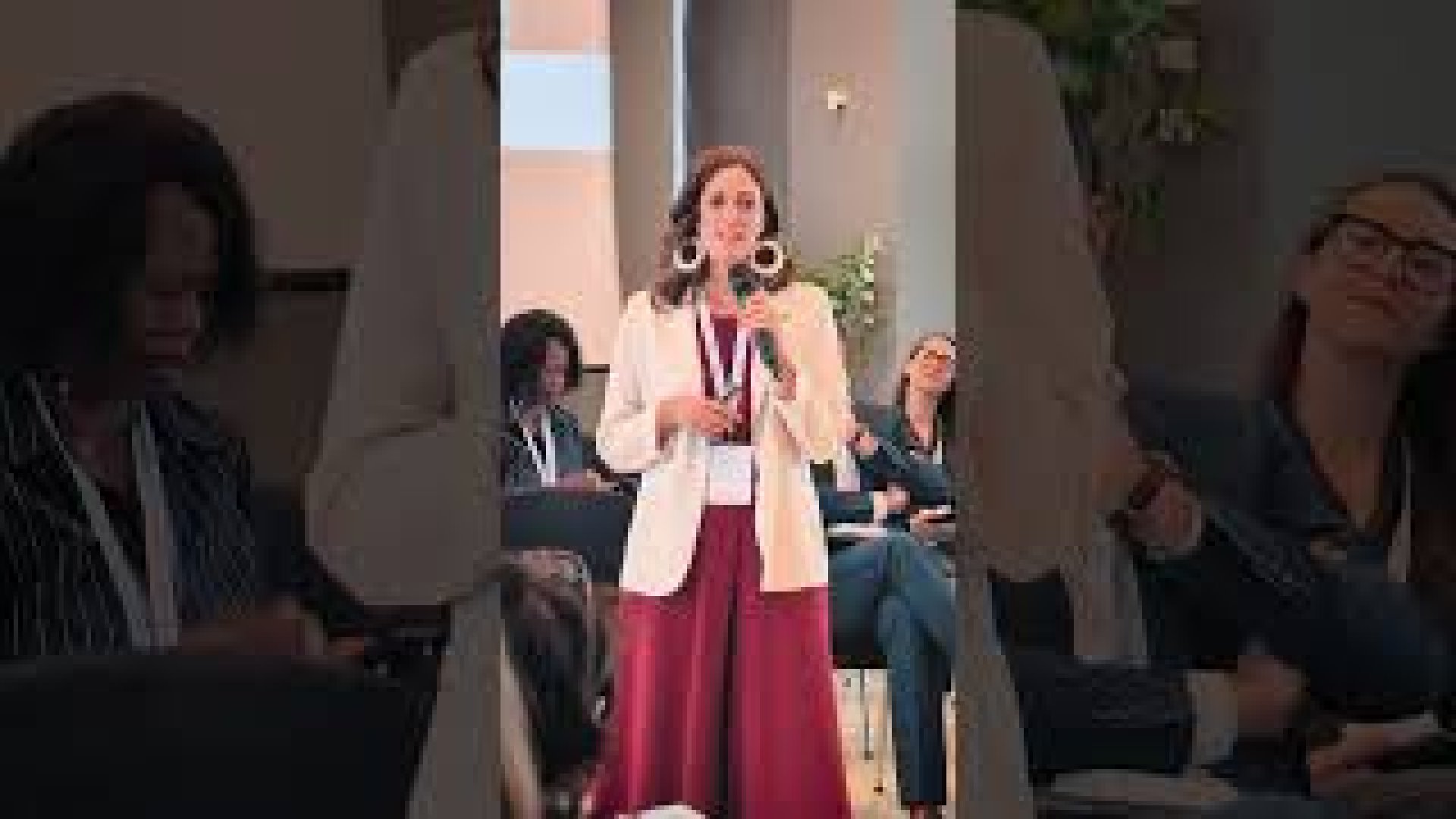
Recently, the ITCILO hosted a Nonference to explore how multiple emerging technologies interact in today’s world of work. The event brought together academia, the public sector, companies, and training institutions to shape fair digital transitions rooted in social justice. Participants engaged in hands-on pathways leading to concrete takeaways through a series of methods and principles that made the event truly community-driven.
What makes a Nonference a Nonference?
Built from the feedback shared by past participants, here are some key ingredients:
- Spectators turned spect-actors. The line between experts, organisers, and attendees disappears. Panels turn fluid as audience members step in, and experts speak with simplicity rather than from a podium.
- Variety by design. A deliberate mix of backgrounds, disciplines, and regions meets an equally varied mix of methods, from co-design labs and knowledge fairs to improv and movie nights. The richer the room, the richer the exchange.
- Always on the move. Participants walk, switch settings, and explore new locations, from campus spaces to local incubators and the city itself. As one participant put it, there was “not one dull moment.”
- Serious topics, relaxed atmosphere. An informal, convivial, and often fun environment creates a safe space where people feel free to share ideas, ask questions, and build on each other’s thinking.
- Swag that surprises. Forget the tote bag you’ll never use. Every item in a Nonference pack has a job to do in the next activity, from reflective teabags to future-self postcards, turning the goody bag into a survival kit for learning.
- From ideas to output. A participant-driven, responsive agenda leads to hands-on creation and tangible results, such as prototypes and pitches developed in real time.
- City breaks. Learning out of the venue and into the city. Study visits to research hubs, incubators, and companies bridge research and practice, while even dinner can become a discovery, like a walking tour of Turin’s historic cafés.
- Connections that last. Participants leave with new networks, communities of practice, and partners to keep the work going.
Ready to host a Nonference?


