
Inside the Lab: How Immersive Simulations are Reshaping the Future of Labour Inspection
Inside the Lab: How Immersive Simulations are Reshaping the Future of Labour Inspection
Academy on Labour Administration, Labour Inspection and Workplace Compliance – ITCILO, Turin
2 Dezembro 2025
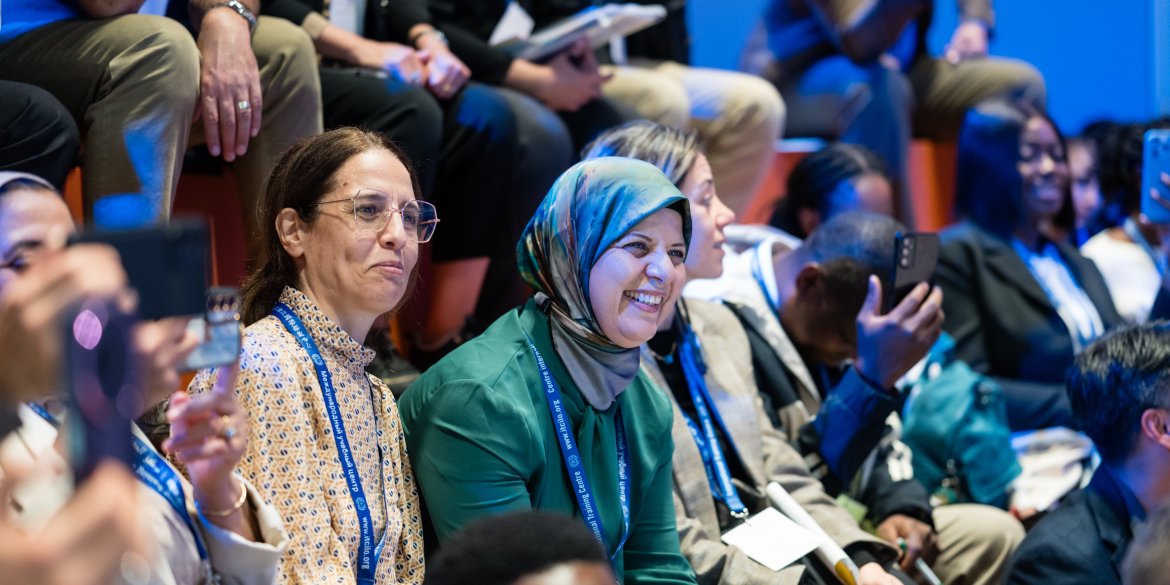
When participants walked into the Innovation Lab for the first time, many expected a regular training session. Instead, they found themselves in something that looked more like an actual worksite than a classroom — low lighting, reconstructed work areas, scattered evidence, recorded voices of fictional workers, and a situation developing around them.
"This was my first experience like this," said Nazmul from Bangladesh, smiling after finishing the exercise. "At first I thought it would be a machine exercise… but when I came here, it felt human."
The goal was straightforward but ambitious: to let inspectors practice their work before facing high-risk or sensitive situations in the real world.
As the Activity Manager, Olena Vazhynska from the Social Protection, Governance and Tripartism Unit, put it: "Think of a pilot who crashes the plane many times in a simulator before ever flying for real. That was our logic."
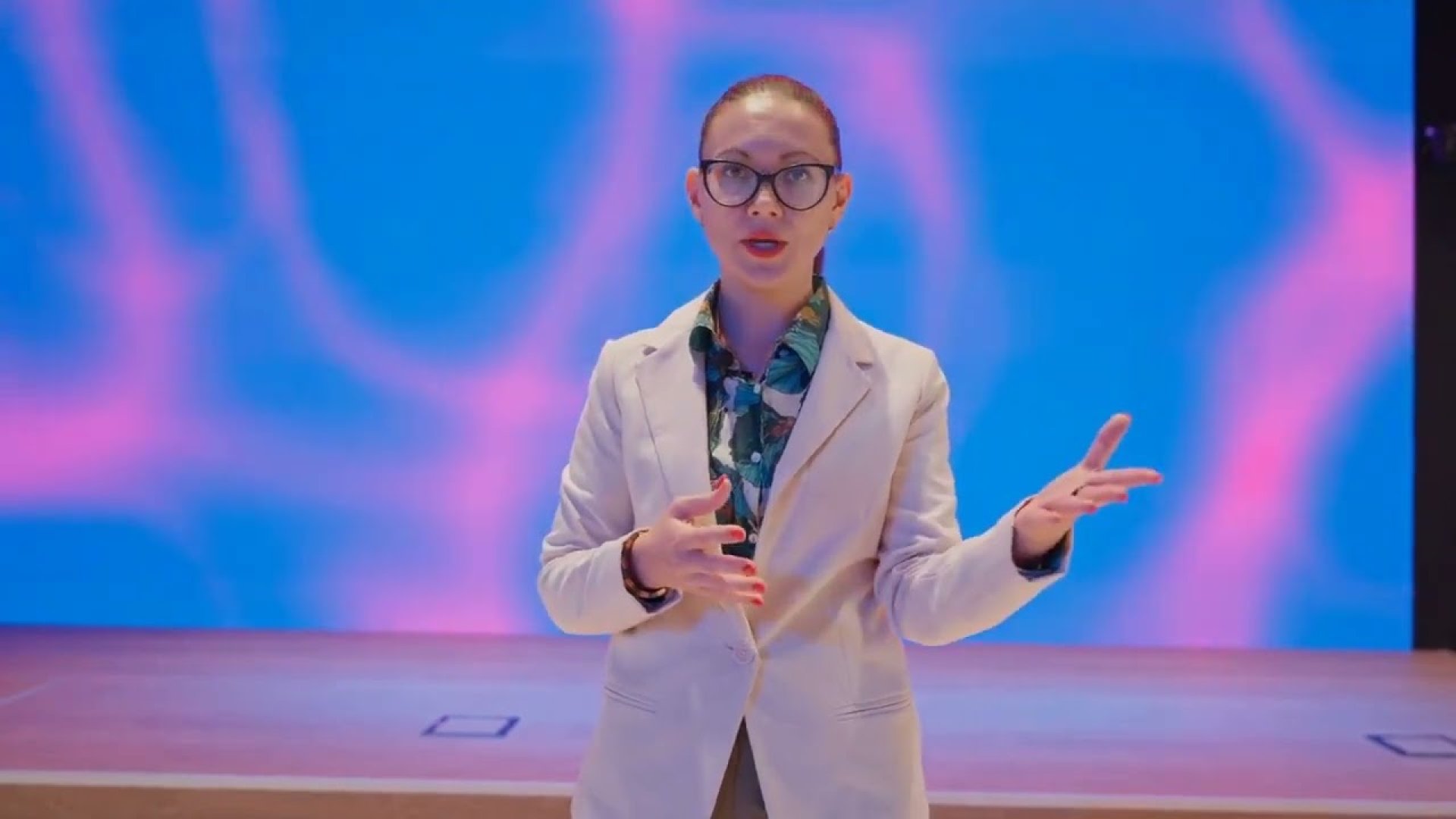
Over two weeks, inspectors entered three different worlds — a construction accident, an informal agricultural supply chain, and a hospital dealing with psychosocial risks — each built to capture the complexity, urgency, and uncertainty of actual inspections.
Context: Why Immersive Training Matters for Labour Inspection
Labour inspection is one of the most complicated and demanding public functions in the world of work. Inspectors need to enforce a wide and changing mandate, including:
- the general principles of labour inspection,
- the Fundamental Principles and Rights at Work — child labour, forced labour, occupational safety and health, non-discrimination and freedom of association,
- safety and health across sectors such as construction, agriculture, mining and manufacturing,
- the investigation of occupational accidents and diseases,
- compliance in new forms of employment,
- and approaches to formalization in informal economies.
In practice, this means going into places that are unpredictable, sometimes unsafe, often emotional, and always shaped by real lives and livelihoods.
Inspections can happen on a factory floor one day, a remote farm the next, and a hospital ward the day after.
Inspectors have to read body language, spot hidden risks, look at evidence, handle conflict, interview workers who don't want to talk or are afraid, and deal with situations involving trauma, exploitation, or immediate danger.
But even though the stakes are high, recreating these realities in a standard classroom is almost impossible.
A lecture can't recreate the tension of a defensive employer.
A PowerPoint slide can't reproduce the chaos of an accident scene.
And bringing trainees to actual worksites — especially those involving child labour, informality, or unsafe conditions — is rarely possible in a training setting.
This raises a basic question for any inspectorate or training institution:
- How do you teach inspection without a real inspection?
- How can inspectors practice before they face sensitive or high-risk situations?
This challenge became the starting point for the immersive learning initiative launched at the Academy on Labour Administration, Labour Inspection and Workplace Compliance in Turin.
The Approach: Building a Safe Space to Practice
To tackle these challenges, the team decided to create three immersive experiences that would put participants into fictional situations resembling real labour inspection field visits. Participants were asked to understand the context, gather evidence, spot problems, and craft questioning lines for interviews to build recommendation reports. Each experience followed the same logic: watch, explore, discuss, interview, and conclude — just like in the field, but with the freedom to pause, question, and try again.
Here's how it worked.
Act I — Entering the Story
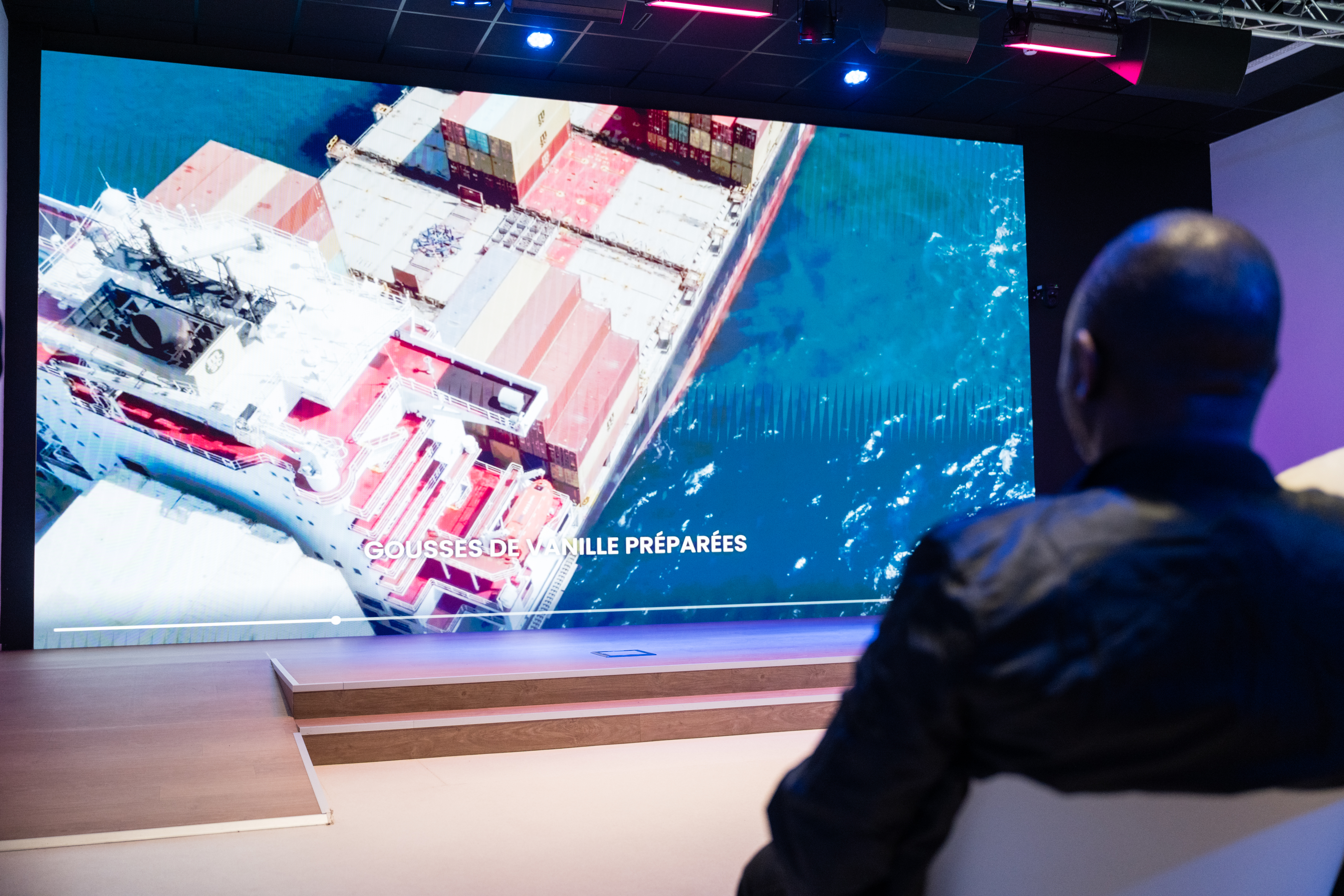
Every scenario started in the Cinema Room, where a short film introduced the context and emotions behind the case.
For some participants, this moment alone made a difference.
Angela Rodríguez, part of the SPGT team who built the experience, described it as: "The moment when participants stop being learners and start becoming inspectors inside the story."
Whether it was the sound of a collapsing ladder at a construction site, the smoky atmosphere of a vanilla curing shed, or the exhaustion on the face of an ICU nurse, the films got participants to look not only at facts but at human consequences.
The numbers later confirmed it: 86.9% of participants said the Cinema Room helped them engage right away with the experience.
Act II — The Evidence Room: Touch, See, Listen, Deduce
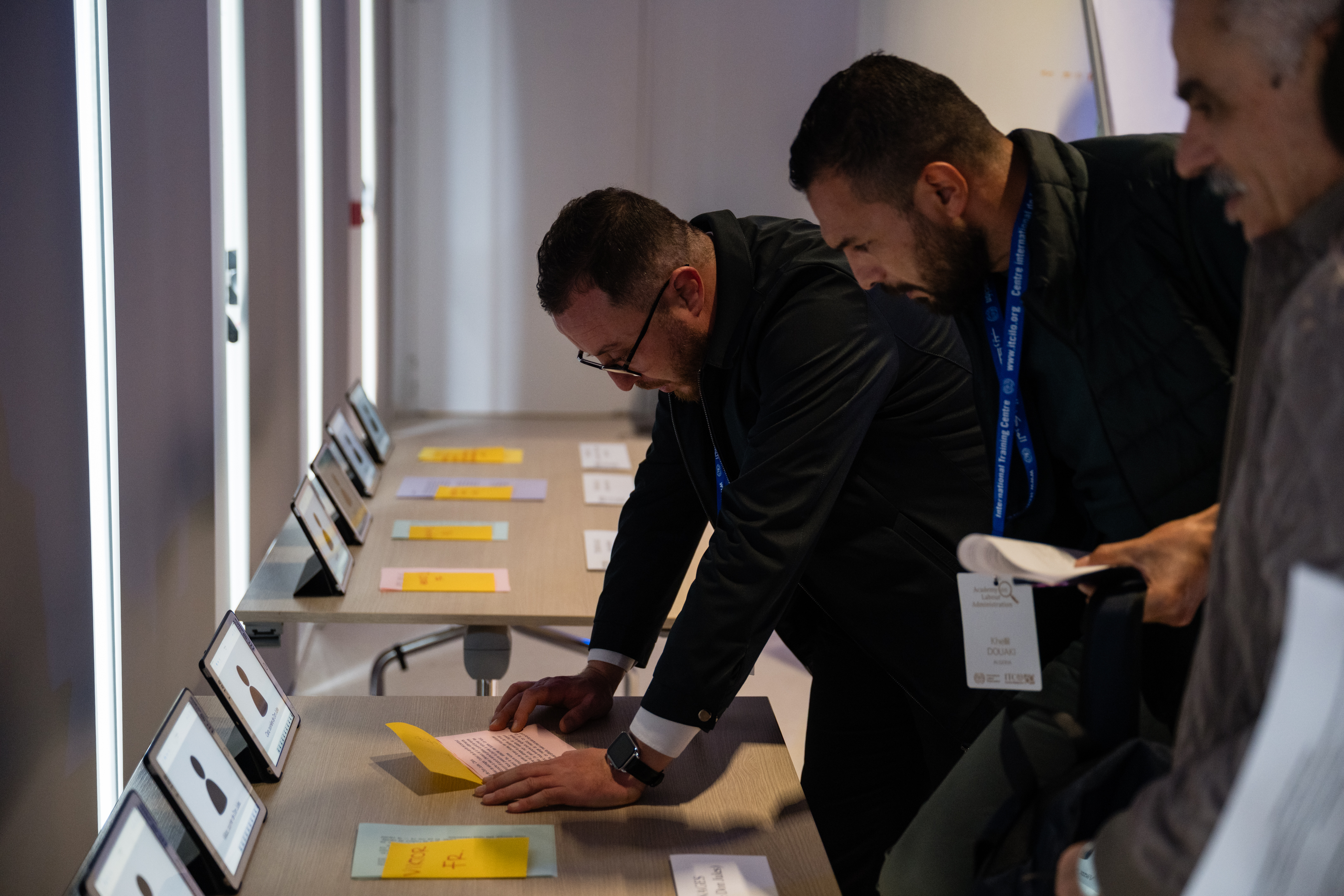
Walking into the Evidence Room felt, as one participant put it, "like entering the scene of a real inspection."
Here, the immersive design was at its strongest.
Participants looked at:
- cracked helmets and dented buckets from a construction accident,
- payroll notebooks listing children as workers,
- worn gloves and pesticide bottles with missing labels,
- CCTV screenshots from a hospital ward,
- WhatsApp messages showing hostility at work.
They listened to testimonies from injured workers, frustrated colleagues, and overwhelmed supervisors.
They compared photos, looked at contradictions, argued over interpretations, and tried to figure out root causes.
One inspector emphasized how much this mattered: "You have to practice in a safe environment. That is very, very important."
The Evidence Room became a place where inspectors could slow down — something rarely possible during a real inspection — and train their eye for detail.
The data showed this impact:
- 90% strengthened their ability to analyze evidence,
- 87% improved in detecting violations,
- 80% said the scenario felt challenging and realistic.
Act III — Working as a Team
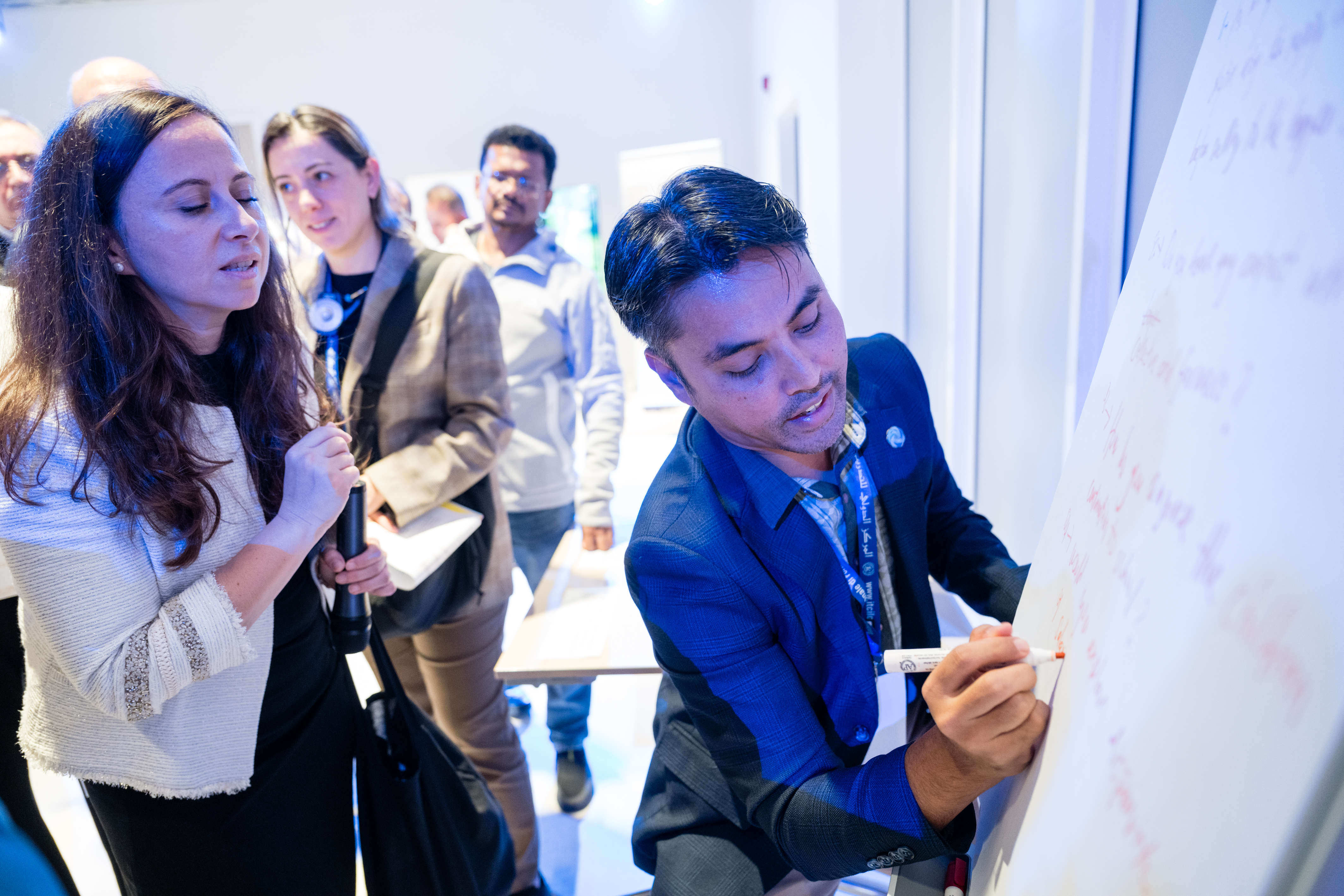
As evidence piled up, participants moved into group discussions.
Participants discussed their understanding of the situation, doubts were shared, competing interpretations were defended.
A facilitator described this moment as the "living heart" of the experience: "This is where participants realize that inspection is not only technical — it is collective, strategic, and human."
Participants mirrored real inspection dynamics: choosing spokespersons, lining up stories, working through disagreements, refining inspection strategies.
88% said this phase strengthened their teamwork and communication skills.
Act IV — Facing the Interview (Human or Digital)
Only after the story, the objects, the voices, and the analysis came the final step: the interview.
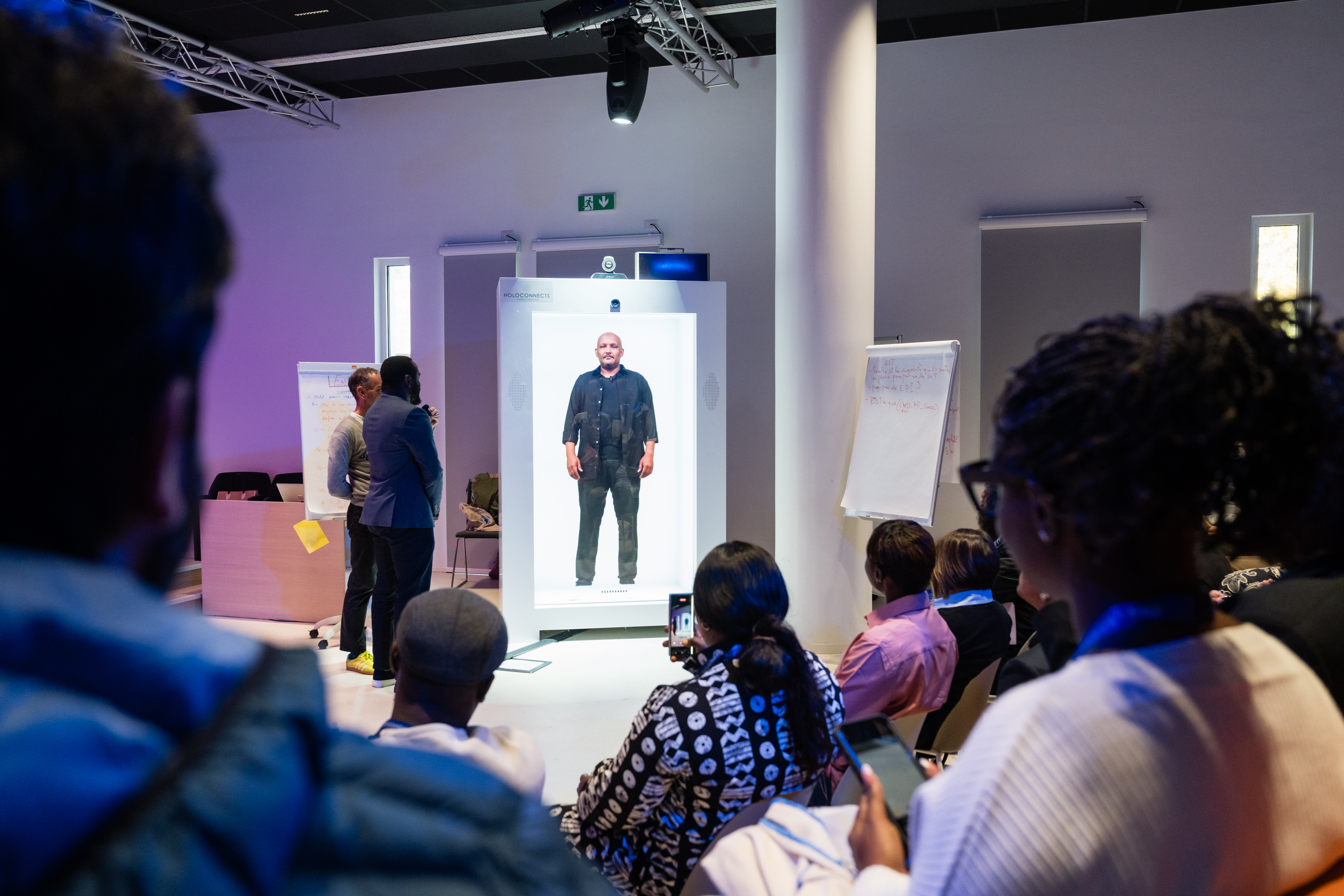
In all scenarios, the interview phase was done with a holographic AI avatar — designed to act like a defensive supervisor, a hesitant middleman, or an exhausted nurse.
But the avatar wasn't the main point. It was the final piece of an entire investigative puzzle.
One participant captured it well: "It was the first time many of us could put interview training into practice. Doing it here means we won't do it for the first time in real life."
The technology impressed many, but not because it was flashy.
Rather, because it served the learning.
As a senior inspector noted: "When I started inspecting, I was using Polaroid cameras. Now we have this technology. The progression is huge — but it's only useful because it helps inspectors improve."
Why It Matters
For many, the immersive experience wasn't just an activity.
It was a change in how inspectors see their work — and themselves.
Michael, Deputy Inspector General of Labour of Guinea, reflected: "AI and innovation are now part of our working activities. I'm going home with full knowledge and experience."
Another participant emphasized the value of realism: "When we practice like this, we return to our countries more prepared — not only with knowledge, but with confidence."
Angela, looking at the future, imagined dozens of new scenarios: forced labour, platform work, sexual harassment, OSH risks in new industries.
"This is a game changer for the future of learning."
And a participant summarized the experience in the simplest way: "This training gives us a safe place to make mistakes — so we don't make them on a real site."
What Came Out of It
By the end of the Academy:
- 95% said they learned more by doing,
- 93% felt more motivated,
- 90% viewed the immersive methodology as a major advancement,
- and many asked for similar scenarios to be integrated in national training systems.
The immersive approach didn't replace traditional training — it expanded it.
It gave inspectors a space to feel the weight of responsibility, the complexity of field realities, and the human stories behind every violation.
They didn't leave the Innovation Lab with just answers.
They left with sharper instincts, deeper empathy, and renewed purpose.
Because labour inspection is not only about enforcement.
It is about entering someone else's world — often at its most vulnerable — and knowing how to act.
And sometimes, to learn that, you need to step inside the story first.


