
Stay Human, Be Emotionally Smarter
Stay Human, Be Emotionally Smarter
The story behind the SENSIT Toolkit
16 October 2026
When in August 2025 I came back to my desk after more than two years of sabbatical, I was asked what I wanted to do. I was somewhat confused. I wanted to do what I have done for the last 20 years, and I am good at: facilitate processes and learning across regions and help people find their way out of complex pathways (the list is actually longer, but I am trying to be concise here).
Then I understood that maybe it was not enough.
The question stayed with me, and I kept thinking about it. And here is a lesson I learned: if you have a thought, let it sediment. Turn it in your mind as if it were a candy, and sooner or later the juice will come out.
In a world doing AI, I chose EI
I looked around. In the Learning Innovation Programme at ITCILO, across the ILO - and, it seemed, everywhere in the world - people were talking about AI and doing AI. Most of them were excited: AI could help us do almost everything better and faster and often “for free”. Here and there, a few voices were raised about its dark side: what it is fed, its addictive nature and, most importantly for us ILO, its impact on the world of work and social justice.
But something else started to concern me. How do we remain human in the time of AI? How do we make sure people still think and write with their own words, keep their own soul and, above all, value their unique emotions?
That is when I knew: in a world where everyone is doing AI, I wanted to do EI - emotional intelligence, together with its companion, intercultural intelligence (EQ+CQ). I wanted to support trainers, teachers and facilitators – who work in intercultural landscapes - in staying human, so that they can help others do the same and thrive.
“People will forget what you said, people will forget what you did, but people will never forget how you made them feel.” - Maya Angelou
Becoming emotionally smarter means valuing the emotions we feel, the way we react to them, and the gestures and actions that follow. For Global Facilitators, this is a core competence: to practice ourselves and to help others develop.
Thirty years of theory, one new cycle
With two outstanding student researchers, Giovanni Bassi and Kristijan Cucukov, we started an investigation. Emotional intelligence is not new - it has been with us for some thirty years. People value it even more now precisely because they feel they need it more than ever.
We went back to the most relevant theories of emotional and intercultural intelligence, and we created our own model, the SENSE Cycle: a facilitation model for Global Facilitators. It accompanies anyone who wants to exercise their emotional intelligence through five steps, where every step is a competence to develop and/or strengthen:
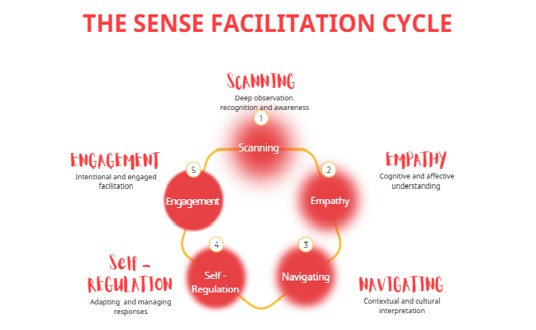
- Scanning — noticing other people’s emotions, and your own.
- Empathy — the cognitive and affective understanding of what others are going through.
- Navigating — reading the emotional and intercultural context you are in.
- Self-regulation — how you react to those stimuli and manage yourself.
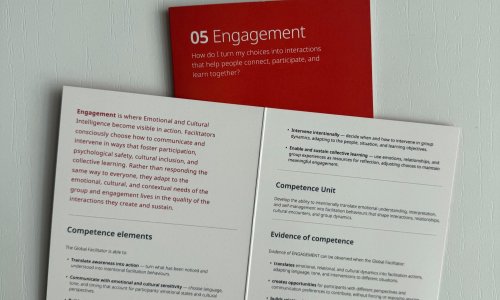
- Engagement — helping others manage themselves and stay mindfully present in the process you facilitate.

“Anyone can become angry; that is easy. But to be angry with the right person, to the right degree, at the right time, for the right purpose, and in the right way, that is not easy.” - Aristotle, Nicomachean Ethics
Ubuntu Kokoro, the Global Facilitator in all of us
Every journey needs a guide. Ours is Ubuntu Kokoro. Ubuntu comes from Southern Africa and means that a person is a person through other people. Kokoro, the family name, is a Japanese word for the combination of heart, mind and spirit.
Ubuntu Kokoro has no gender and no age, does not see very well and has a huge heart.
“It is only with the heart that one can see rightly; what is essential is invisible to the eye.” - Antoine de Saint-Exupéry, The Little Prince
Ubuntu Kokoro is a master in sensing. He is any of us, Global Facilitators, who work in an intercultural landscape, as everyone does today: who we are, and who we want to become.

Open the box: A game that makes you feel
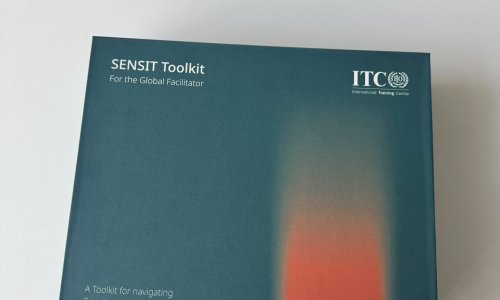
The SENSE Cycle is the heart of the SENSIT Toolkit. Like Dixit, it plays with evocation and metaphor. Its name is the past tense of the verb to sense - from the Latin sentire, to feel. But it also means sense it, feel it now, make sense of what you have felt, and act today.
For each of the five steps/competence of the SENSE Cycle, the toolkit offers a description and a set of activities: 21 activities in total. Some are grounded in emotional or intercultural intelligence theory, some draw on neuroscience, some adapt existing methodologies, and some were created from scratch for SENSIT. The activities help Global Facilitators to explore and discuss (unconscious) Biases and to exercise a defined set of Skills per competence. The Skills come as a puzzle: put all the pieces together – competence by competence - and you have all the skills the Global Facilitator exercises along the SENSIT path.
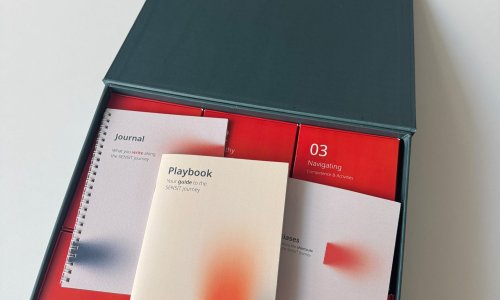
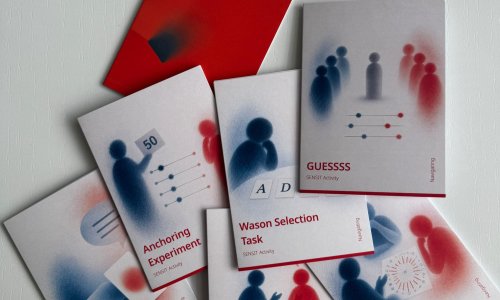
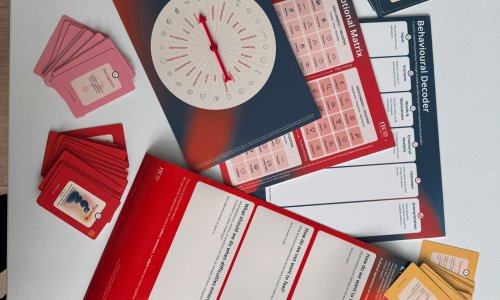
The activities bring five Tools to life: the Emotional Matrix, the Emotional Manifesto, the Emotions Spinner, the Behavioural Decoder, and the SENSIT Deck. The deck has four suits: emotions, behaviours, drivers, and unknown. Played together or separately, they help people create, unpack and recreate emotional pathways, and picture how they could act the next time a thought emerges, or an emotion takes over.
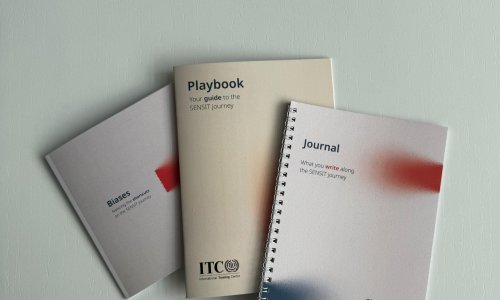
As they take their journey along the SENSE Cycle, Global Facilitators can keep a Journal in a dedicated booklet, to write down what they notice, feel and learn along the way. The same booklet includes a Glossary with the words of the SENSIT journey.
Wherever there are people
The SENSIT Toolkit is a set of resources for any facilitator, teacher or trainer who wants to become emotionally and interculturally smarter. You can use it as a participant. You can use it as a facilitator, a trainer, or as a teacher with your students: at university, in high school, in college or in vocational training institutes.
Wherever there are people, the SENSIT Toolkit comes in handy.
“My humanity is bound up in yours, for we can only be human together.” - Desmond Tutu
Interested in using the toolkit or exploring how it could benefit your organization?
Get in touch with us to learn more about the toolkit or discuss tailor-made training opportunities designed around your needs.
Stay Human. Be Smarter. Sense It.


